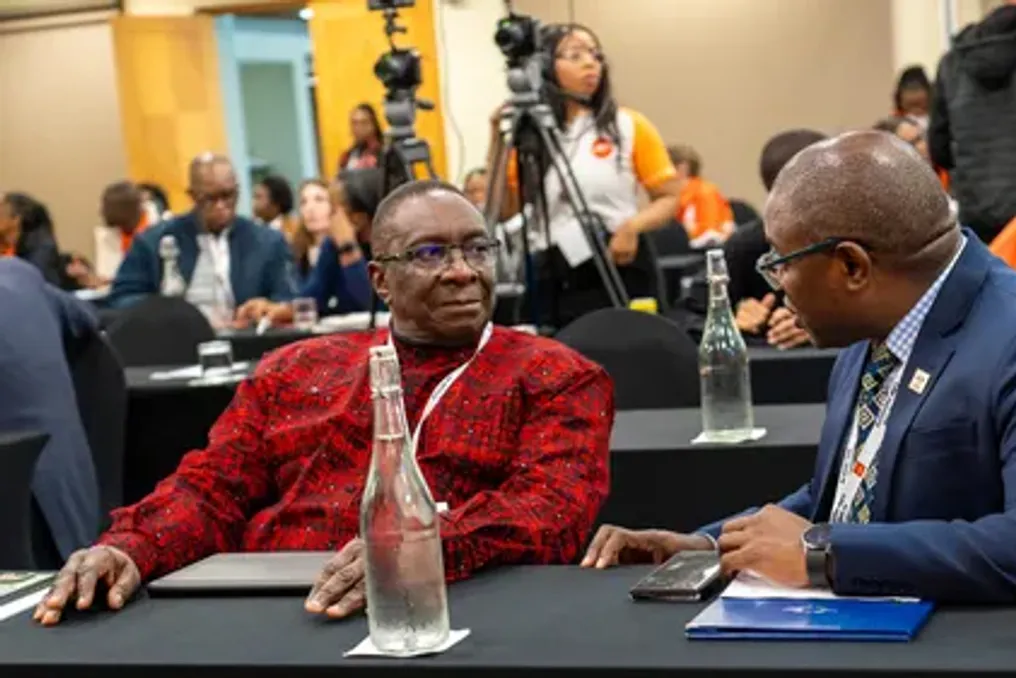
At the inaugural conference of the University of Johannesburg on artificial intelligence and law, participants discussed the impact of AI on the legal profession and the justice system in South Africa. The main conclusion was that despite AI's potential to transform courts, the final decision must remain with a human.
Current State of Judicial Digitization
The three-day event, organized by the UJ Institute for AI and Law, emphasized that technology is already part of the South African jurisdiction. Digital case management, electronic filing of court documents, and the use of AI for legal research are already changing methods of administering justice.
Participants acknowledged AI's ability to increase efficiency, reduce delays, and improve access to justice. Nevertheless, they agreed that AI should serve only as a support tool, not a replacement for human judgment, constitutional values, and the independence of the judiciary upon which the rule of law rests.
Position of the Deputy Chief Justice
In his opening remarks, Deputy Chief Justice Dustan Mlambo noted that South African courts have entered the digital age, and the responsible application of AI has become one of the primary tasks of the justice system. He stressed that the discussion has shifted from the question of implementing technologies to ensuring that they strengthen, rather than undermine, constitutional democracy.
Mlambo stated that the constitutional question is whether the use of new technologies will preserve human dignity, equality, openness, accountability, and, crucially, human discretion. He also mentioned that platforms such as Court Online and CaseLines modernize judicial administration by enabling electronic record-keeping and improving access to court services.
However, he warned that technological progress must not come at the expense of constitutional rights, judicial independence, or public trust. While AI can expand access to justice, he cautioned against risks associated with algorithmic bias, privacy issues, unequal digital access, and over-reliance on automated systems.
He added that any technological innovation must be assessed by a simple principle: the court must be not only fair but also visibly fair.
Opinion of UN Representatives
Professor Tshilidzi Marwala, Deputy Secretary-General of the United Nations and Rector of the UN University, highlighted the enormous potential of AI to expand access to justice through document automation and more efficient court management. However, he warned that these benefits will only become a reality if governments, industry, and legal institutions create governance frameworks that address algorithmic bias, digital access inequality, weak oversight, and the growing digital divide.
Marwala also urged participants to distinguish between technical accuracy and truth, warning that AI systems can confidently generate incorrect answers.
Role of Higher Education
Concluding his speeches, Professor Letlhokwa George Mpedi, Rector and President of UJ, emphasized the critical responsibility of universities in shaping how AI serves society. He noted that as economies, legal systems, and public institutions transform, higher education must bring together lawyers, technologists, politicians, and industry representatives to ensure that innovations contribute to human development while remaining firmly rooted in constitutional values, ethical guidance, and the public good.