The South African construction industry has undergone significant changes due to criminal activity, prolonged power outages, and weak economic growth. These factors have led to the decline of some of the country's largest contractors while simultaneously creating opportunities for smaller firms, which now play a much more substantial role in the sector.
Industry Challenges
According to Statistics South Africa, the industry has faced numerous difficulties over many years, including low economic growth rates, insufficient investment, power supply issues (load shedding), labor shortages, the Covid-19 pandemic, and criminal activity.
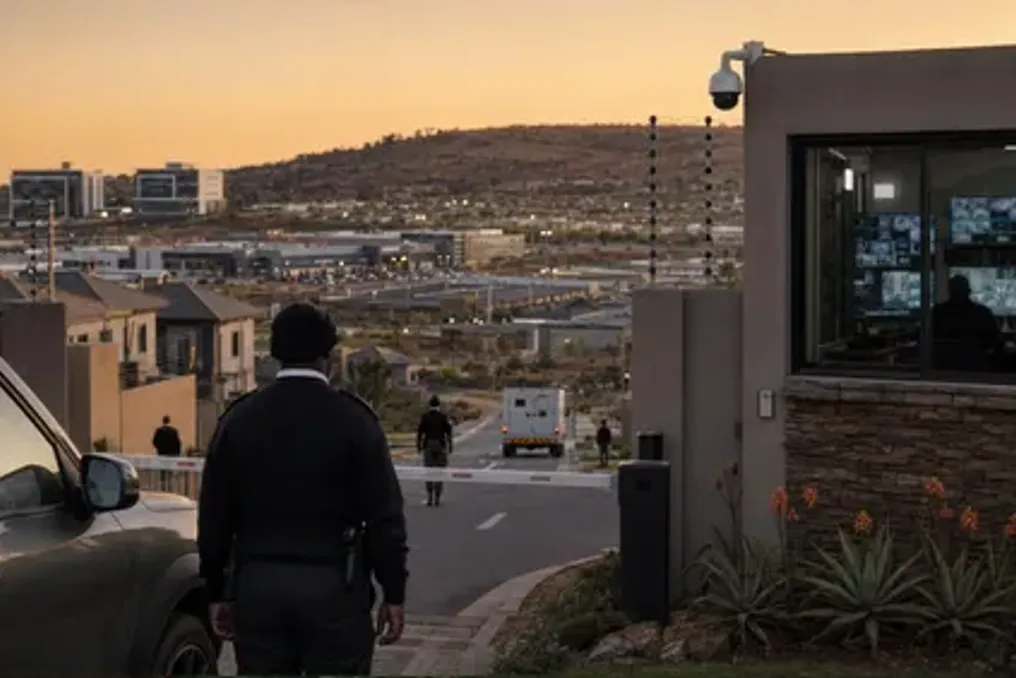
One manifestation of this criminal activity has been the emergence of so-called 'construction mafia' groups. The law firm Cliffe Dekker Hofmeyr reported that these organized groups are increasingly targeting construction projects using methods of blackmail, intimidation, and site intrusion. This results in project delays, increased costs, and undermined investor confidence.
The difficult business conditions coincided with the bankruptcy or restructuring of some of South Africa's largest construction companies, such as Group Five and Basil Read, as well as major reorganizations at Murray & Roberts, fundamentally altering the structure of the entire industry.
World Cup Scandal
This decline was exacerbated by a scandal involving collusion. In 2009, the Competition Commission began investigating alleged anti-competitive practices among construction companies involved in building stadiums for the 2010 FIFA World Cup. Allegations included bid rigging, price fixing, and artificial profit inflation across at least six stadiums.
Companies involved in the settlement process included Murray & Roberts, Aveng, WBHO, Group Five, and Stefanutti Stocks. In June 2013, the Competition Tribunal reached a settlement with 15 builders, imposing fines exceeding 1.5 billion rand. Furthermore, the University of Cape Town noted that the City of Cape Town filed civil lawsuits amounting to 428 million rand against companies that colluded on the Greenpoint stadium tender. The University indicated that the stadium's initial budget was 2.9 billion rand, but the final cost reached 4.5 billion rand.
Construction Sector Contraction
The contribution of construction to South Africa's gross domestic product peaked at 4.2% in 2008, after which it began a steady decline to 2.3% by 2025. In real terms, the industry volume decreased from 156 billion rand in 2016 to 99.1 billion rand last year, according to Stats SA.
The latest Stats SA report on the construction industry for 2024 shows that small and micro-enterprises accounted for 32.2% of total construction revenue in 2024, up from 25% a decade ago. Their contribution to employment has also significantly increased: in 2024, small and micro-enterprises provided 55.3% of all construction jobs, compared to 40.6% in 2014. Only micro-enterprises were responsible for 44.8% of sector employment.
The statistical agency notes that the overall employment level in the construction industry has fluctuated over many years but does not show a clear long-term trend, and large enterprises are becoming less significant in the construction sector.
Income Distribution and Regions
Parallel to this, the dominance of the industry's largest companies has gradually weakened. In 2014, the top 100 construction firms generated 40% of the industry's total revenue. By 2024, this share had dropped to 26.7%, indicating a less concentrated industry structure with income distributed among a larger number of enterprises.
Nevertheless, large companies remain important players, accounting for 43% of the industry's revenue in 2024, although they occupy only 21.4% of the jobs. Small, medium, and micro-enterprises employ the remaining 78.6% of the workforce in the industry. Gauteng remains the center of construction in South Africa, providing 35.3% of service revenue, 32.8% of wages, and 26.2% of employment. However, Gauteng's share of industry activity has declined since 2020, while the Western Cape and KwaZulu-Natal have expanded their presence.
Signs of Sector Recovery
Signs of recovery are being observed, although the sector still lags significantly behind previous peak figures. In 2024, employment increased by 12.5% to 539,056 people compared to the 2020 baseline, but remained below the 592,125 recorded in 2017. Building construction showed the largest increase in jobs, adding 22,947 jobs between 2020 and 2024. Average annual wages and salaries also rose from 150,541 to 171,316 rand during this period.
According to Stats SA, the results indicate that over the last decade, the industry has become less concentrated, with small firms playing an increasingly important role in generating revenue and creating jobs.