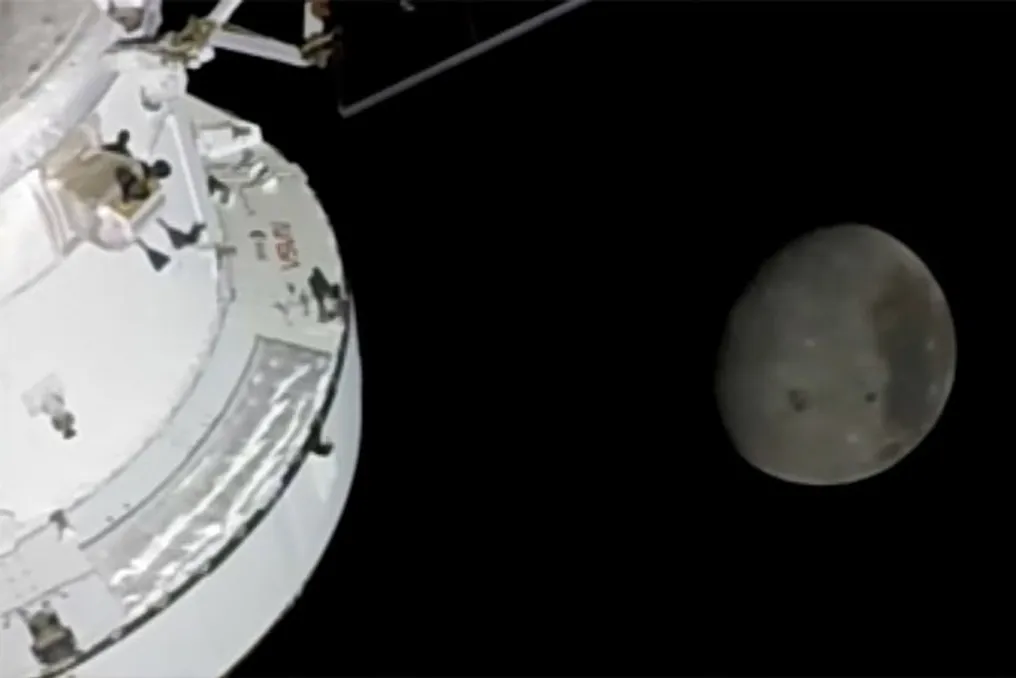
Recent analysis of samples collected on the far side of the Moon has shown that Earth's magnetosphere directly influences how solar wind affects the lunar surface. The study, published in Nature Geoscience, demonstrates that the two hemispheres of the Moon are exposed to solar particles at different speeds and energies, leaving distinct traces on the lunar regolith.
Lunar Regolith as an Archive of Solar Bombardment
Researchers utilized regolith delivered by the Chinese Chang’e-6 mission. Solar wind is a continuous stream of high-speed charged particles that bombards the Moon's surface over billions of years. The regolith, a layer of soil and rock fragments covering the Moon, functions as a natural archive of this bombardment, preserving volatile elements arriving from the solar wind, including noble gases such as helium, neon, argon, krypton, and xenon.
Because these gases are chemically inert, they serve as highly reliable indicators for studying how solar wind has integrated into the lunar regolith over time.
Comparison of Far Side Samples
Until recently, the lack of samples from the far side of the Moon prevented a direct comparison of solar wind impact on both hemispheres. This situation has changed thanks to the Chang’e-6 mission, which returned 1.935 grams of regolith collected in the South Pole-Aitken basin, located on the Moon's hidden side. These samples allowed for the first direct comparison of solar wind deposition processes between the Earth-facing side and the opposite side.
The research team, led by postdoctoral researcher Zhang Xuhang under Professor He Huaiyu, both from IGG, analyzed the isotopic composition of noble gases in these samples. Scientists from the University of Science and Technology of China and the team responsible for the volatile payload of the Chang’e-7 mission also participated in the study.
Differences in Far Side Isotopic Composition
During the analysis, scientists discovered noticeable differences in the isotopic composition of neon in the far-side samples. The average ratio of 20Ne to 22Ne was 11.34 ± 0.22, significantly lower than what was found in all previously collected near-side lunar samples. According to the researchers, this result approaches the theoretically expected isotopic composition after intense fractionation caused by the solar wind. This indicates that the hidden side underwent more intense isotopic fractionation, promoting the enrichment of the heavier isotope.
Differences were also observed in the behavior of krypton and xenon. In laboratory experiments involving gradual heating, xenon from the solar wind in the Chang’e-6 samples was released predominantly at high temperatures, forming a single release peak. In contrast, samples previously collected by the Chang’e-5 mission on the near side of the Moon showed two distinct peaks, with noticeable release at both low and high temperatures.
The authors note that this behavior suggests that solar wind ions penetrated significantly deeper into the regolith of the far side, proving that this region was subjected to higher-energy particles.
Earth's Magnetosphere Slows Solar Wind
To explain this difference, researchers attribute the phenomenon to the so-called 'speed control' effect exerted by Earth's magnetosphere. During its orbital movement, the Moon periodically passes through the magnetospheric bath—a transitional zone around Earth's magnetosphere. In this area, the solar wind slows down, reducing its typical speed from about 400 kilometers per second to around 200 kilometers per second.
This slower solar wind primarily reaches the side of the Moon facing Earth, causing particles to penetrate less deeply into the ground. The far side, conversely, remains constantly turned away from Earth and is therefore exposed to undisturbed solar wind, allowing higher-energy particles to reach deeper layers of the regolith.
Based on the analyses, researchers suggest that about 25% of the total solar wind impact recorded at the Chang’e-5 landing site was due to this magnetosphere-slowed wind. The Chang’e-6 landing site, however, was not subject to this protective effect.
Significance of the Discovery for Magnetospheric History
The authors argue that this study provides the first direct empirical evidence, based on far-side lunar samples, that Earth's magnetosphere controls the speed of solar wind reaching the lunar surface. This effect is preserved in both particle penetration depth and the isotopic signatures of noble gases present in the regolith. Researchers also state that these noble gases can act as 'fossils' recording the interactions between Earth's magnetosphere and the solar wind throughout history.
When combined with paleomagnetic data, these traces may offer a new method for reconstructing the evolution of Earth's magnetosphere over millions of years. The team believes that the findings demonstrate that the interaction between the Sun, Earth, and Moon is more complex than previously thought, opening a new window for understanding these ancient dynamic processes.