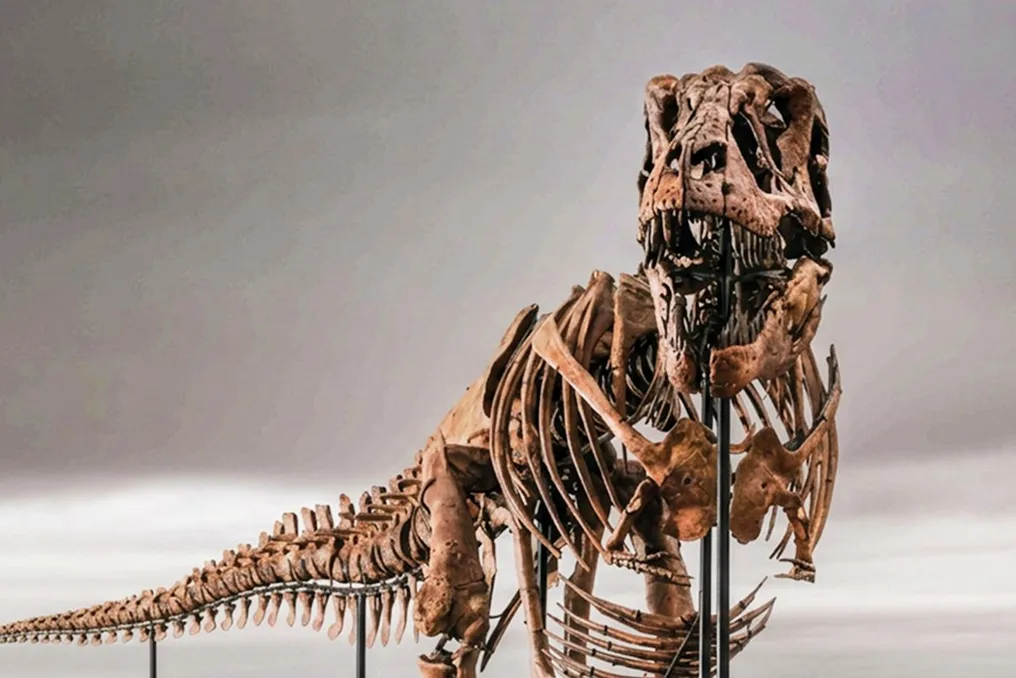
The fossil of a tyrannosaurus named 'Gus' achieved its dream, spending 67 million years underground before appearing in New York and becoming the most expensive dinosaur sold at auction.
Auction Results
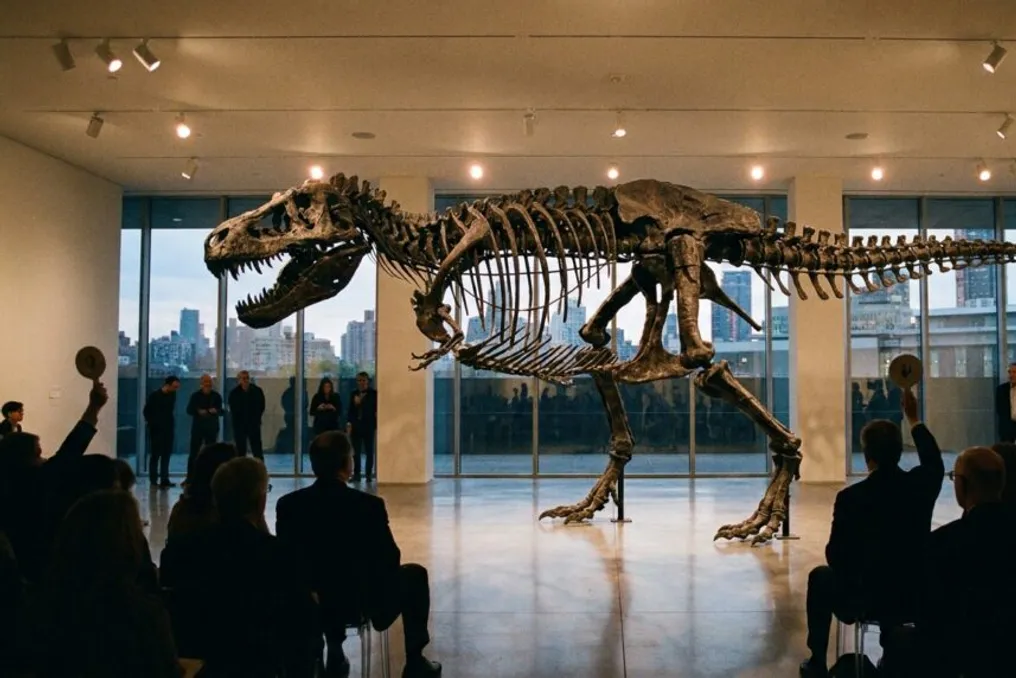
Sotheby's auction house sold the tyrannosaur skeleton on Tuesday for $50.1 million (equivalent to R820.6 million), including commissions. The bidding lasted 10 minutes and involved seven buyers, including one anonymous telephone bidder.
The auction house expected the price for 'Gus' to be between $20 and $30 million. However, the final price significantly exceeded the previous auction record for dinosaurs, which was set in 2024 when a Stegosaurus named Apex was sold by Sotheby's for $44.6 million (R730.5 million).
Discovery History and Skeleton Features
This skeleton, approximately 67 million years old, received the nickname 'Gus' after the late rancher Gary 'Gus' Liking, who lived in Harding County, South Dakota, and owned the land where the specimen was found. He passed away in 2022, one year after the excavation of the fossil began.
According to Sotheby's, 'Gus' includes 183 bone elements, as well as 30 rare abdominal ribs known as gastralia. The official lot description states that the skeleton is completed by about 61% in terms of bones and 75–80% in terms of bone mass, and it has an 'exceptionally well-preserved skull' containing all six tooth rows. The skull is so heavy that Sotheby's displayed the actual specimen separately in the lobby, while a replica head was placed on the mounted skeleton.
Excavation and Condition Assessment
CBS News reports that Thomas Hightcamp led the excavations, while The Guardian claims that the commercial firm Theropoda Expeditions conducted the work. Sotheby's Vice President Cassandra Hatton called the result 'the work of many years,' noting that 'Gus' is not only an exceptional find but also a specimen that was 'researched, documented, prepared, and cared for with true perfection.'
The bones also bear traces of a complex life and possibly a difficult afterlife. Sotheby's notes that the skull and the right tooth row show signs of tyrannosaurid bites, as well as healed fractures in several ribs and gastralia.
Scientific Significance of the Find
Paleontologist Professor Richard Butler of the University of Birmingham told The Guardian that fossils sold to private individuals may 'be lost to research' if they do not end up in a recognized museum collection.