According to a senior executive, the Air India group plans to receive between 50 and 60 new aircraft over the next eighteen months, continuing its transformation program despite challenges related to supply chains and the geopolitical situation.
According to a senior executive, the Air India group plans to receive between 50 and 60 new aircraft over the next eighteen months, continuing its transformation program despite challenges related to supply chains and the geopolitical situation.
Following the acquisition of the loss-making Air India by the Tata group in January 2022, the airline is implementing an ambitious transformation plan. Nipun Aggarwal, Commercial Director of Air India and Chairman of Air India Express, noted that 'tons of lessons' have been learned over the past years, and that the project is complex and not easy.
He emphasized that the industry has faced a number of difficulties, including multiple 'black swan' events that could not have been foreseen at the beginning of the transformation journey. These problems include issues with supply chains, airspace, oil price volatility, and geopolitical factors.
Air India has encountered various obstacles, including the fatal crash of its Dreamliner last June, which resulted in 260 fatalities. The airline has embarked on a five-year large-scale transformation plan, and Aggarwal reported that most of the planned activities, including fleet renewal and investments in MRO (Maintenance, Repair, and Overhaul), are being implemented.
Nevertheless, there are delays in aircraft deliveries and retrofitting. Despite external circumstances that have significantly impacted the company, Aggarwal expressed optimism, stating that they remain on track to achieve their goals.
The Air India group has an order for nearly 600 aircraft, and less than ten percent of them have been delivered so far. This order will be valid until the middle of the next decade. Aggarwal forecasts that between 50 and 60 aircraft will be added annually over the next seven to eight years. He specified that deliveries will begin to accelerate at the end of the current year, and then in the following year, ensuring a steady flow of both wide-body and narrow-body models—approximately 10-15 wide-body and 45-50 narrow-body per year.
Approximately 50-60 aircraft are expected to be received in the next 18 months. Regarding modernization, Air India Express plans to complete the retrofitting of its entire fleet into a single harmonized fleet by March of next year, while Air India's wide-body aircraft will be modernized over two to three years. Retrofitting the Dreamliner or Boeing 787 is expected by mid-next year, whereas the Boeing 777 will require more time.
Aggarwal also mentioned that deliveries of Boeing MAX 8 are already arriving, and the company will be one of the first customers to receive the MAX 10 after certification, which is expected to begin early next year. Previously, Air India faced operational issues with older wide-body aircraft, but this period, according to the Commercial Director, is behind them, and modernization is gaining momentum.
Due to high oil prices and the Middle East conflict, Air India has reduced some services. However, Aggarwal reported that network recovery is underway since the second half of this year. In the Middle East region, a 90 percent level has already been reached, and most reductions in Europe and the US, made in August-September, have already resumed. He predicts that within a couple of months, the airline will return to the level it was before the war began.
Furthermore, Air India is investing in improving the customer experience at all touchpoints, focusing on new standards for crew and airport staff service, as he believes that hardware will not bring significant benefit without good software for equipment operation.
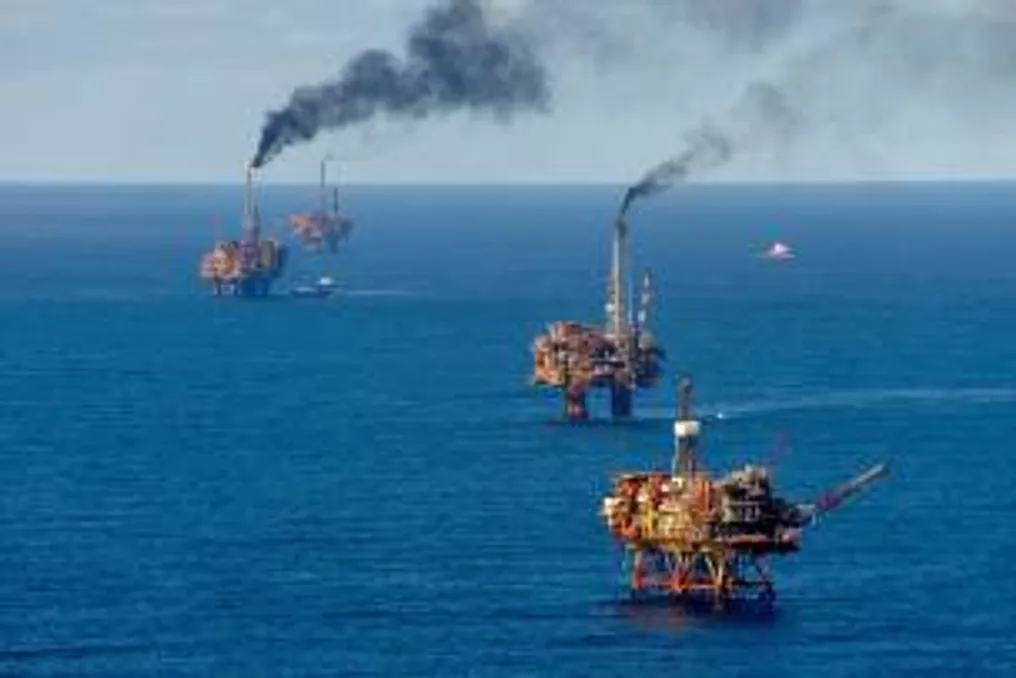
US President Donald Trump reacted positively to the decision by the new UK Prime Minister Andy Burnham to fully open up the oil fields in the North Sea.
The White House chief called these fields one of the best sources of raw materials in the world, noting that the reserves there could last for hundreds of years and many areas have yet to be explored.
According to Trump, this step is capable of pulling the United Kingdom out of an economic crisis and turning it into one of the richest countries in the world by initiating an influx of investments and new jobs in the country.
The US leader also deemed completely absurd the fact that London spends billions of dollars annually purchasing oil from Norway. In an interview with journalists, he stated: 'The potential of the UK is very high, but it all starts with the beginning of oil production in the North Sea.'
Renewed conflicts in the Middle East and rising oil prices have complicated the decision-making process regarding the interest rate by the South African Reserve Bank (SARB) this week. Investment experts warn that inflation risks remain high.
The new surge in global oil prices, triggered by the escalation of conflict in the Middle East, has added another layer of uncertainty ahead of the SARB's Monetary Policy Committee (MPC) meeting this week. Investment managers note that the central bank faces one of its most difficult interest rate decisions in recent months.
Brent crude surpassed the $90 per barrel mark after renewed military actions between the United States and Iran over the past weekend. This has reignited concerns regarding inflation, financial markets, and the global interest rate outlook.
The Reserve Bank will announce its latest interest rate decision on Thursday, one day after the release of South Africa's June inflation data. Mike van der Weshuizen, a portfolio manager at CAM Asset Management, believes the central bank's decision remains unpredictable, although markets appear to be leaning towards another hike or at least a tighter policy stance.
According to van der Weshuizen, the upcoming MPC meeting is likely to be very tense. Currently, there is about a 60% probability of a rate hike or at least a hawkish tone from the Governor. He added that while the June inflation data will be closely scrutinized, it is unlikely to drastically change a decision that was likely already largely formed.
Van der Weshuizen noted that the Reserve Bank is particularly concerned about core inflation, which excludes food and energy costs, as well as inflation expectations. He emphasized that core inflation remains persistent and is forecast to be around the upper end of the range, possibly closer to 4% for June. This is important because SARB focuses not only on current inflation but also on how it might change later in the year.
A key issue for the central bank remains its confidence in the low inflation target. SARB has made significant efforts to anchor inflation expectations closer to 3%. When inflation fell last year, expectations dropped, which reassured SARB. However, as the expert warned, long-term inflation expectations have started to rise again, reaching around 4%, which is at the upper limit of SARB's new acceptable band. A stronger argument is that SARB may raise rates to rein in these expectations once more.
Despite the heightened inflation risks, van der Weshuizen pointed to compelling reasons why the Reserve Bank might keep rates unchanged. One such argument is the significant drop in oil prices since the last MPC meeting, as well as the stability of the South African rand. Lower oil prices and a strong rand should help mitigate some of the inflationary pressure.
Nevertheless, he cautioned that the resumption of instability in the Middle East could quickly reverse these improvements. 'The game-changer is the resumption of the conflict and what that could mean for oil. Brent crude is still below SARB's oil assumption for 2026, but SARB must communicate how it views the oil price forecast and what that means for inflation.'
Neil Wilson, an investment strategist at Saxo UK, stated that the weekend escalation fundamentally changed market forecasts. He noted that the Middle East conflict apparently expanded and intensified over the weekend when the US attacked an Iranian nuclear facility. Wilson observed that Brent crude jumped above $90 per barrel as traders priced in growing risks to energy infrastructure and shipping through the Strait of Hormuz.
He concluded that any understanding agreement is effectively meaningless in the Strait of Hormuz, and the Persian Gulf's energy infrastructure is once again in a combat zone with all associated market risks. Risks now seem shifted towards higher and more prolonged energy prices, inflation, and rates.
The resurgence in oil prices has also led to a rise in global bond yields as investors re-evaluated inflation expectations and central bank policy prospects. Wilson reported that higher fuel costs are already beginning to affect businesses and consumers. 'Reflecting the Middle East uncertainty, Ryanair's profit fell by a third as the company battles lower fares and higher fuel costs. Summer fares look weak as consumers are nervous about the impact of the war with Iran and the economy.'
For consumers considering replacing their mobile phone, this is an opportune moment to monitor Samsung promotions available on Amazon. Three models from the Galaxy line offering excellent cost-benefit have been gathered, suitable for users looking for a large screen, a satisfactory camera, and good performance in daily use.
The most robust version of the Galaxy A17 was launched with 8GB of RAM and 256GB of internal storage, ensuring ample space and fluidity for performing multiple tasks simultaneously. Its 50MP main camera can capture images with a good level of detail, while the 6.7-inch screen provides an immersive experience for watching videos or playing games. Furthermore, the IP54 protection certification guarantees resistance against dust and splashes during daily use.
For those who do not require such high memory capacity but wish to enjoy the features of the Galaxy A17, there is a more economical alternative: the version equipped with 4GB of RAM and 128GB of storage. This model maintains the 50MP camera and the wide 6.7-inch screen, in addition to having IP54 protection, which contributes to greater durability in daily life.
The Galaxy A07 establishes itself as a reliable choice in the entry-level category of the Galaxy line. This device offers a functional balance with 4GB of RAM, 128GB of storage, and a 50MP main camera, all accompanied by a good 6.7-inch screen. The black model has a sober and elegant design, making it an interesting option for daily use without requiring great power.
It is important to note that the stock of these promotions may change at any time. If any of these models have sparked interest, it is recommended to access the corresponding link to confirm availability before the commercial conditions change.