All Blacks coach Dave Rennie expressed enthusiasm about the team's upward momentum early in his tenure, but warned that the upcoming four-match series against South Africa would present a completely different level of difficulty.
All Blacks coach Dave Rennie expressed enthusiasm about the team's upward momentum early in his tenure, but warned that the upcoming four-match series against South Africa would present a completely different level of difficulty.
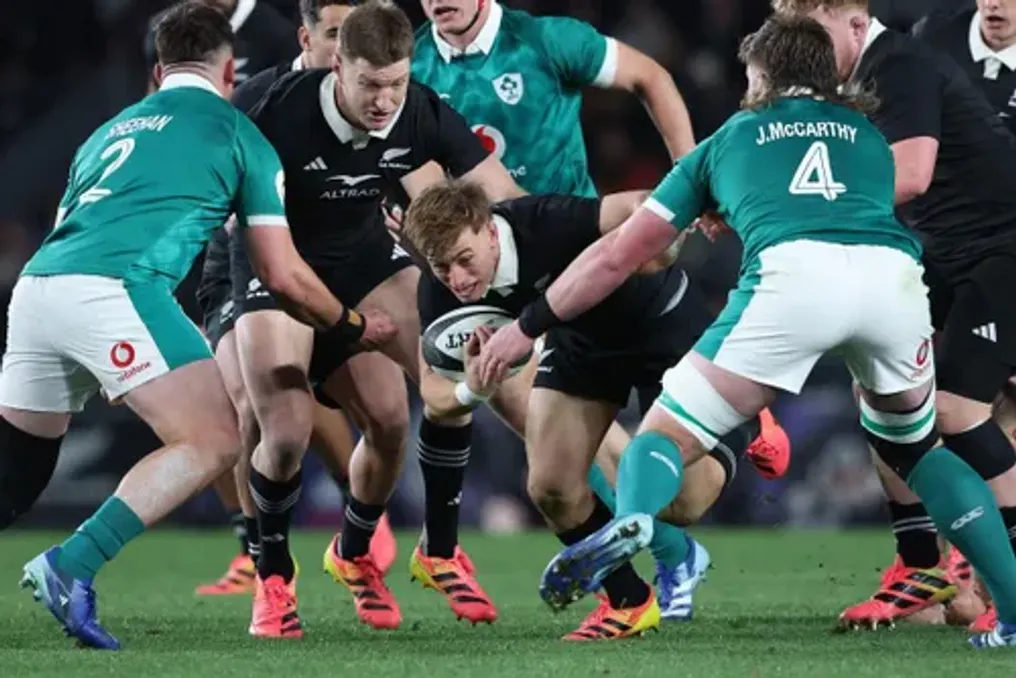
New Zealand won three consecutive matches in the Tri Nations Championship, defeating Ireland 40-21 in Auckland. Rennie noted that this game demonstrated improvement compared to the victories over France and Italy, proving the All Blacks' more cohesive and confident play compared to the two-year period under predecessor Scott Robertson.
Scott Robertson led a team that achieved 20 wins in 27 matches, but was dismissed by New Zealand Rugby management due to a lack of confidence that the national team could regain its status as the world's best.
In all three matches under Rennie, the All Blacks maintained a high-speed approach, predominantly playing with the ball in hand. Greater physical power was added to the squad against Ireland, which, according to Rennie, will be useful in confronting the World Cup champions, the Springboks.
After the Auckland match, Rennie stated: 'We put a lot of detail into our game, the guys really took it on board. I am very happy, I think we are in a good position.' He continued: 'This is another beast, South Africa. We are going there and we will do everything possible. What is exciting, I suppose, is that we will come out of Africa regardless of the results, but in a much better state.'
Winger Will Jordan benefited from Rennie's approach, scoring six tries in three matches and becoming the record holder for tries in matches for the New Zealand squad. Jordan emphasized that the 40 points scored against the strong opponent Ireland showed the team's attacking threat. He noted: 'I felt that was definitely the most complete performance, I thought the other two games had good moments. But there are no illusions about what awaits us (South Africa). It will be great.'
The tour will begin with matches against provincial teams Stormers in Cape Town on August 7th, after which the team will leave South Africa for the fourth and final match on September 12th in Baltimore, USA. Damian McKenzie, an experienced fullback, commented that Rennie has established himself as an ambitious coach and a perceptive selector. McKenzie highly praised the inclusion of rising player Ruben Law from Wellington Hurricanes at winger for all three matches in July, which allowed for the exclusion of deserving number 10 Beauden Barrett.
Despite numerous socio-economic difficulties, the people of South Africa have maintained the ability to smile. Thanks to their resilience, sense of humor, and indomitable spirit, they continue to overcome life's challenges with laughter.
South Africa is a country that greets crisis in the morning and falls asleep laughing. The lights dim here, but jokes turn on; the economy stumbles, but the lifestyle industry thrives; unemployment rises, but creativity explodes. We live in a constant state of contradiction, and it is this contradiction that sustains us. This is not just a characteristic of the national personality, but a proven survival strategy.
Although every society has its tensions, in South Africa, they have reached extreme levels. They exist side by side, like mismatched furniture in a cozy room. This nation has learned to hold two opposite truths simultaneously without collapsing under the weight of this contradiction. Crisis acts as the bass line, and humor as the melody; together they form the rhythm of daily life.
The people of South Africa follow an unwritten cultural rule: do not show your problems. This is a philosophy woven into the daily maintenance of visible normalcy. It is seen in the woman who looks impeccable after morning negotiations with taxi drivers, amid water outages and while paying school fees. It is seen in the man who dresses stylishly, even if his bank account sends out warning signals. It is seen in the young creator publishing content about an easy life, while behind the scenes, they carry the burden of the family.
They create an appearance of ease while living in difficult circumstances; they demonstrate composure while moving through chaos; they maintain stability even when the ground beneath them shakes. This is not necessarily vanity, but rather a necessity for survival. It is the conviction that dignity must be protected at all costs, and the refusal to let difficulties define the image they present to the world. The people of South Africa understand that appearance is not a deception, but a kind of armor.
The contradiction is profound: people live in a state of high stress but display effortless self-control. They carry national anxiety but move through the world with humor, style, and a peculiar emotional choreography that hides cracks. This is not a denial of reality, but a discipline—a way for the country to insist on humanity in conditions that constantly threaten to destroy it.
This is why shopping malls remain full, jokes remain sharp, and social media looks like a carefully edited landscape floating above a complex reality. They do not want to look like their problems because that feels like capitulation.
Upon entering any mall on a Saturday, you can see a full parking lot and bustling restaurants. The number of elite residential complexes is growing, and gyms and health studios are packed. The aesthetic of 'easy living' dominates Instagram and TikTok. South Africans meticulously curate their lives, like stylists, even when the economic foundation beneath them is shaking.
All this happens in a country where food inflation is high, wages are stagnant, and the middle class feels itself melting monthly. The cost of living crisis is not a theoretical concept; it is experienced, felt, and visible in the grocery aisle, in the queue for petrol, and in the growing list of monthly deductions against unchanged salaries.
The people of South Africa face many problems, including high unemployment, rising cost of living, and the realities of life in one of the world's most unequal societies. Nevertheless, as the author argues, thanks to humor, resilience, and outstanding ingenuity, they continue to cope with these difficulties and find ways forward.
It seems irrational until you try to understand the psychology of the situation. When a country feels unstable, people invest in micro-stability: in carefully designed spaces, controlled environments, and moments of comfort. South Africans do not ignore the crisis; they negotiate with it, carving out pockets of normalcy in a landscape that refuses to be normal. Going to a restaurant becomes a small act of defiance, and a gym membership becomes a form of emotional insurance, while a weekend trip is a temporary suspension of national anxiety.
The contradiction is powerful: economic pressure increases, but the lifestyle culture flourishes. It is an escape as an economic strategy, an attempt by the middle class to hold onto its dignity in a country that constantly threatens to take it away.
Youth unemployment is not just a statistic; it is a national trauma. Millions of young people have never had formal employment. The labor market is structurally broken. Traditional paths to success have collapsed. The promise of post-apartheid prosperity has not materialized for the generation that grew up believing in it.
However, if you look at your phone, you can see that creators from South Africa dominate TikTok, YouTube, Instagram, and streaming platforms. These are vloggers from townships, trendy micro-brands, comedians, podcasters, gamers, dancers, and entrepreneurs. An entire generation is building a career based on their personality, humor, and digital ingenuity. They do not wait for calls from HR departments or for the economy to recover; they invent work because the old economy refuses to hire them.
This contradiction is brutal yet inspiring: mass unemployment coexists with a boom in the creator class. The formal economy has closed the door, and the digital one has opened a window through which youth squeezed in with ring lights, editing apps, and humor that refuses to die. This is not a fleeting trend, but a structural shift—the emergence of a new informal digital sector operating outside traditional employment frameworks. It is the young generation of the country refusing to be defined by the statistics describing their suffering, but not by their potential.
South Africa has one of the highest crime rates in the world. Everyone knows someone who has been robbed, kidnapped, or assaulted. This is a national anxiety that lies just beneath the skin. You feel it when you double-lock the gate, when you check the rearview mirror at night, when a loved one is late, and your mind races searching for all possible reasons.
Nevertheless, this same country is famous for its hospitality. They welcome strangers warmly, greet people in queues, and offer tea before solutions are even offered. They host gatherings with generosity often exceeding their budgets and treat guests like family members, yielding seats even when their own lives seem overflowing.
This is one of the strangest contradictions in the national character: they live in fear but behave openly; they carry trauma but still choose kindness. They know danger firsthand, but they insist on being a hospitable people. This is not naivety, but a cultural instinct, a belief that community is the only true defense. The people of South Africa understand that hospitality is not just social behavior, but a form of resistance, a way to refuse to be defined by crime. They live with danger but refuse to become dangerous; they live with fear but refuse to become afraid.
Every crisis instantly turns into a meme: power outages, potholes, political scandals, water shortages. Nothing escapes the national machine of humor. South Africans laugh not because things are funny, but because the alternative is despair. Humor is not trivial; it is a political and psychological tool for survival. It is a way of processing trauma without drowning in it, a way of remaining human in a country that tests humanity daily.
This is an emotional contradiction: they live in chaos but laugh like champions. Humor is not a distraction, but a coping mechanism. It is a way to reclaim power in situations where citizens often feel powerless. If you can laugh at a crisis, you can survive it; if you can turn dysfunction into a joke, you can prevent it from becoming a wound.
Public services are collapsing: trains don't run, water systems fail, municipalities falter, and the police operate inconsistently. The state retreats from its duties year after year, and the gap between constitutional promises and real life widens.
But society moves forward. Private security systems thrive, community patrols are organized, and security coordination happens through neighborhood WhatsApp groups. Informal transport systems move millions of people daily, and micro-logistics deliver food, medicine, and goods faster than official couriers. South Africans create parallel systems because the official ones have stopped functioning. It is not perfect or sustainable, but it is reality, and this is how the country survives.
South Africa is not stable, but it is adaptive; it does not prosper, but it is inventive; it is not safe, but it is deeply alive. It is a nation that refuses to collapse, even when collapse seems inevitable. It absorbs crisis and transforms it into creativity, takes dysfunction and turns it into innovation, and pain into humor.
These contradictions are not signs of national confusion; they testify to national resilience. They reveal a society that has learned to survive by bending, but not breaking. They show a people who understands that stability is not the absence of crisis, but the ability to get through it without losing oneself. South Africa survives because its people have mastered the art of living between fire and laughter. It is not an easy or predictable life, but a life defined by ingenuity, courage, and the refusal to give up.
All Blacks coach Dave Rennie made five changes to the team's starting lineup for the Nations Cup match against Italy. He also altered the bench composition.
Leroy Carter unexpectedly earned a spot in the starting six at left wing for the upcoming match in Wellington, replacing Caleb Clarke. Billy Proctor was also included in the squad at outside centre. Furthermore, prop Tyrel Lomax, lock Tupu Va'a, and flanker Wallace City were added to the fifteen players.
Among the six new faces on the bench are German-descent forward Anton Ziegler and winger Josh Murphy, both of whom could make their debut. Rennie noted that some players and combinations deserve a second consecutive appearance, while others received a chance due to merit.
Rennie emphasized that the team is 'strong' and expresses 'respect' for Italy. He added that since Italy has shown the ability to beat any team within the Six Nations tournament, they have prepared for a difficult encounter. It should be noted that Italy has never managed to defeat New Zealand in 17 previous attempts; the teams last met in Turin in 2024, where New Zealand won 29-11.
Meanwhile, Wallabies coach Joe Schmidt admitted feeling 'anxiety' after naming newcomer Declan Meredith as the starting playmaker against France. This decision was made amid injuries to Carter Gordon and Ben Donaldson.
The twenty-seven-year-old playmaker from the Brumbies was first included in Australia's squad before the Nations Cup against Ireland last week but did not make the bench then. Now he leads the ten in the upcoming Brisbane match, as Gordon and Donaldson, who played last week, are out with calf strains.
Schmidt stated that 'suddenly finding oneself in such a situation is a big ask.' He clarified that Declan spent about ten days with the team, which allowed him to gain confidence and provide some continuity. However, he added that he always has concerns about someone new coming onto the field and having to lead the game, noting that 'it is very difficult to achieve stability' due to the large number of changes at the playmaker position.
Gordon will also miss next week's match against Italy. The long-term prognosis for Donaldson, who conceded two critical late penalties in the demoralizing loss to Ireland 33-31 in Sydney, remains uncertain. Meredith will play alongside familiar Brumbies teammate Ryan Longerman at scrum-half against the French side, which lost to New Zealand 34-32 in the Nations Cup.
Schmidt concluded that the team has worked hard to improve after missed opportunities last week and is confident they can perform better on Saturday, knowing they will face the reigning Six Nations champions.
Kanan Moody, a player for the Springbok team, issued a warning to Scotland ahead of the Nations Cup match scheduled for Saturday at Loftus. He emphasized that the sign installed in the Loftus Versfeld tunnel, alerting guests to Pretoria's altitude, is well-founded.
The sign states: 'Altitude. 1 350 m. This is important,' and Moody believes the Boks team should utilize this home-field advantage during the Nations Cup match. The Boks team has been in high-altitude conditions for the last six weeks, whereas the Scots arrived on Tuesday from Buenos Aires, the capital of Argentina, which is at sea level.
Moody noted that altitude is a real factor, but it also depends on the playing style. He stated that it is necessary to ensure that the visitors feel the effect of the altitude through the pressure exerted by their game plan. Moody, who has played for the Bulls for four years, added that the team must behave very confrontationally and apply pressure on the opponent in every aspect so they feel that the altitude matters. According to him, by the end of the game, the opponents should realize they were playing against a South African team.
Moody also stressed that Loftus is a fortress they aim to defend, and this reputation applies to both the Bulls and the Springboks, who have a rich history in that venue. Moody and his teammates know many Scottish players well, as they regularly meet them in the United Rugby Championship. He mentioned that many players from the Scottish national team represent Glasgow Warriors, and some Bulls players participated in the URC semi-final between Warriors and Bulls, which the Bulls won in Edinburgh.