Due to rising summer temperatures in the humid island nation, Japanese companies have developed an innovative device called a 'human refrigerator,' which is inspired by vending machines.
Due to rising summer temperatures in the humid island nation, Japanese companies have developed an innovative device called a 'human refrigerator,' which is inspired by vending machines.
This invention was created by the Japanese manufacturer of refrigeration equipment and vending machines, SDRS, and is named the 'Do Hiemon Box.' This item is an individual cooling cabin that externally resembles a large vending machine.
The cabin maintains an overall temperature of 15 degrees Celsius, while the seat inside remains at 5 degrees. This allows any person who enters to quickly feel a significant reduction in heat.
The company claims that the 'Do Hiemon Box' will be especially useful for people working in high-temperature conditions, such as on construction sites, factories, warehouses, and outdoor event venues. According to the company, users feel noticeably cooler after about five minutes inside, and ten minutes inside help alleviate symptoms of heat exhaustion.
Apparently, this device will be relevant for residents of Japan, as 48 people were hospitalized with heatstroke in Tokyo on July 15.
This overview presents a collection of significant historical events that occurred on a specific day, which influenced the development of science, military conflicts, the exploration of new territories, and global political processes.
In 1807, Nicéphore Niépce received a patent from Napoleon for the invention of the Heliograph, considered the world's first internal combustion engine. In 1888, ZAR incorporated the Republic of Fryheid Noije into the district of Fraaiheid, established in North Natal on land granted by the burghers to King Dinizulu.
In 1901, General Jan Smuts and a small group of people were caught off guard while sleeping near Paardekop, not far from Vereeniging. Although his assistant was killed, Smuts himself, whom critics called 'Slim Janney,' gave orders in English and managed to escape barefoot.
In 1916, three officers and 140 men, remnants of the 1st South African Brigade, emerged from Delville Wood after having occupied defensive positions against German troops six days earlier. In 1944, Adolf Hitler survived an assassination attempt known as the July 20 Plot, when German officers planted a bomb in his headquarters in East Prussia.
In 1960, the Soviet Union returned two dogs, the first living organisms to return from space. In 1969, astronauts Neil Armstrong and Buzz Aldrin achieved the first moon landing, with Armstrong uttering the phrase: 'That's one small step for a man, one giant leap for mankind.'
In 1973, martial arts master and actor Bruce Lee, aged 32, died in Los Angeles due to cerebral edema, possibly caused by a reaction to painkillers. In 2000, terrorist Carlos Jackal sued France for torture, but this brought him no benefit, and he received three life sentences for terrorism.
In 2002, a fire in a nightclub in Lima, triggered by bartenders performing stunts, resulted in 25 deaths and 100 injuries. In 2022, heatwave mortality in Portugal exceeded 1,000 people, and in Spain, it reached 500. Also in 2022, a case of polio was registered in Rockford County, New York, which was previously considered eradicated, although the disease still exists in parts of Afghanistan and Pakistan.
In 2025, Ukrainian boxer Oleksandr Usyk defeated British Daniel Dubois, regaining the undisputed heavyweight title and strengthening his reputation among the greatest boxers of all time. Furthermore, in 2025, reports emerged of a large number of victims in Gaza attempting to reach humanitarian aid, intensifying calls for a ceasefire.
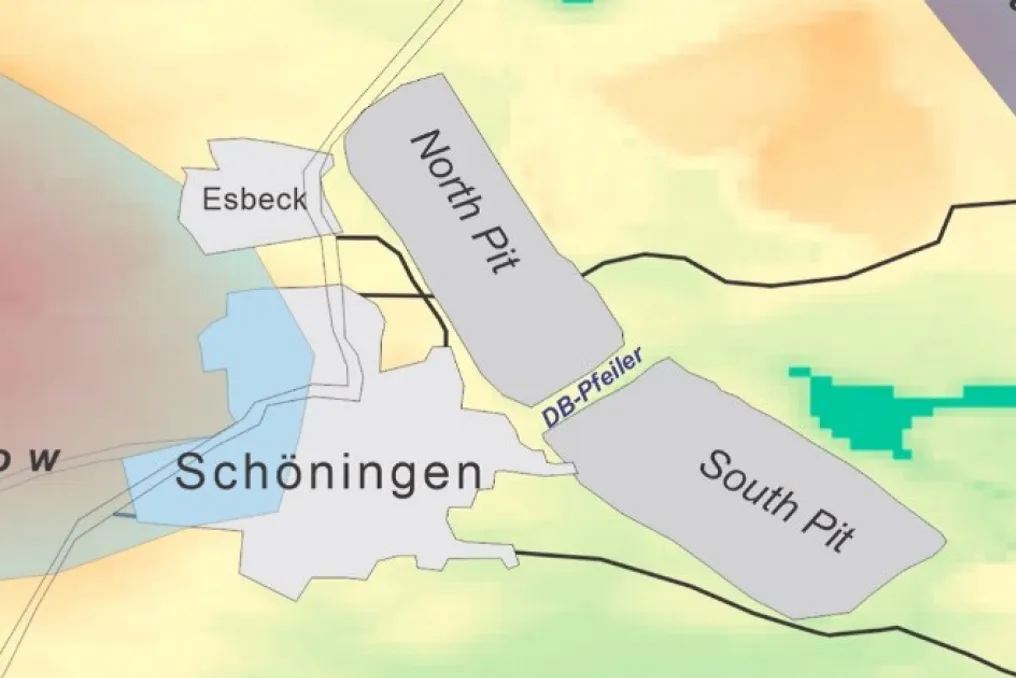
Researchers, including Charles Turner from Cambridge University and his colleagues working in China and the Netherlands, conducted a reanalysis of the stratigraphy of the well-known Schöningen site. This site dates back to the Middle Pleistocene period, and the scientists studied data obtained from pollen and fauna.
The team disagreed with recent assumptions that the archaic human settlements and the wooden objects found there are about 200 thousand years old. According to these researchers, the most likely scenario is the formation of cultural layers during an interglacial period corresponding to the ninth marine isotopic stage. Consequently, the age of the finds, which include wooden spears and throwing sticks, is estimated to be approximately 300 thousand years. These findings are presented in an article published in Quaternary International.
The Schöningen settlement site, associated with Homo heidelbergensis or early Neanderthals (H. neanderthalensis), is located on the periphery of a small German town in Lower Saxony. In the late 1970s, work began in the area to develop a brown coal deposit. As a result, stone artifacts dating to the Paleolithic era were first discovered in a cross-section in 1992. The area gained widespread fame two years after the start of the work when the first wooden throwing stick was found. This was followed by the discovery of other wooden artifacts, including one piercing spear and nine throwing spears, as well as another throwing stick and many other items made of this material.
In another region, Turkish scientists described a monkey skull found in 2010 in the city of Antalya during excavations of a Roman tomb. The researchers concluded that the inhabitant of ancient Attalia was buried along with a macaque in the late 2nd to early 3rd century AD. It is presumed that this was a young Magot who arrived in Asia Minor from North Africa. This information was published in the International Journal of Osteoarchaeology.
The Minister of Digital Technologies of Uzbekistan, Sherzod Shermatov, participated in the opening ceremony of the World Artificial Intelligence Conference (WAIC) taking place in Shanghai.
The President of the People's Republic of China, Xi Jinping, attended the opening ceremony. In his speech, he emphasized the development of artificial intelligence, the necessity of its safe and responsible application, as well as the expansion of international cooperation in this field.
The WAIC 2026 program covers over 140 thematic discussions, panel sessions, and forums dedicated to artificial intelligence, the digital economy, innovations, and global AI governance. The conference gathers more than 1400 experts and industry representatives from various countries, along with over 1100 companies.
More than 300 new technological products and solutions are being demonstrated for the first time at the forum. WAIC participants are discussing the development of international interaction in the field of artificial intelligence, the exchange of best practices, the implementation of AI technologies across various economic sectors, and the improvement of global regulatory and governance mechanisms in this area.