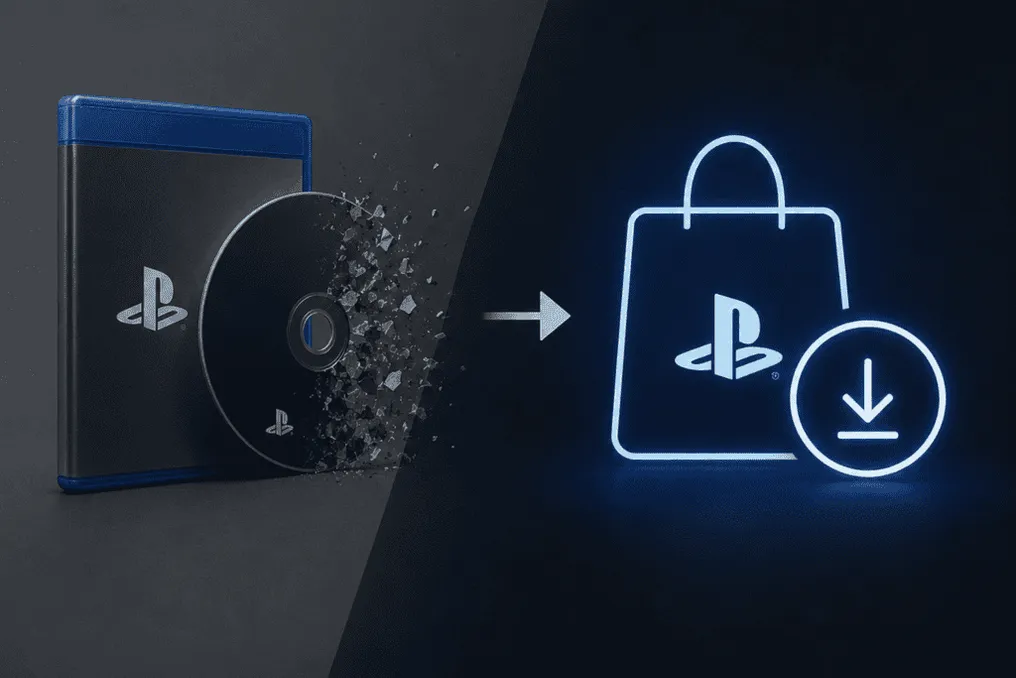
The video game industry appears to be entering a new phase of development, characterized by decreasing demand for physical media and an increase in downloads. According to The Verge, decisions regarding Grand Theft Auto VI and PlayStation confirm the growing trend toward a digital transition.
Growth of Digital Content in Gaming
For many decades, purchasing a game meant visiting a store, selecting a physical box, and returning home with a product that could be stored, lent, or resold. This model has begun to give way due to the development of digital storefronts.
Currently, consoles such as PlayStation 5 and Xbox Series offer disc-less versions, while digital platforms like Steam dominate the PC market after many years. This shift is reflected in industry statistics: Capcom reported that 93% of its game sales were digital last fiscal year and expects this figure to reach 95.4%.
Consumers see clear advantages in digital purchases: space saving, instant access, and simplified installation. However, some players warn about issues related to dependence on accounts, servers, and virtual stores.
GTA VI and the Discussion on the Future of Discs
The discussion gained significant intensity after Rockstar Games unveiled details for Grand Theft Auto VI. The game, scheduled for release on PlayStation 5 and Xbox Series X/S, will cost $79.99 USD (about 440 Brazilian Reais) for the base version and $99.99 USD (approximately 550 Brazilian Reais) for the Ultimate Edition.
Attention was drawn to the absence of a disc in the physical edition; instead, a download code will be provided. This decision is considered a major milestone, as GTA VI is set to be one of the biggest releases in the industry. For some players, this format restricts familiar practices of the physical media market, such as lending the game to a friend or reselling it after completion.
A few days later, Sony announced the discontinuation of physical disc production for new PlayStation games starting in 2028. The company explained that this decision aligns with growing consumer preferences for the digital format. Sony's own data confirms this strategy: in the fourth quarter of fiscal year 2025, 85% of full game sales for PS4 and PS5 were made through downloads.
Game Preservation Issues
This transition also raises concerns among groups dedicated to preserving video game history. Without physical copies, maintaining access to games in the future may become even more challenging.
Key problems include difficulties in preserving server-dependent games; the risk of losing access due to changes in digital stores; reduced opportunities for resale and exchange; and challenges for museums and archives in preserving modern titles.
For those who prefer buying games on physical media, this is unwelcome news and represents a serious blow to consumer rights, the resale market, and creators dependent on the physical market. Frank Sifaldi, Executive Director of the Video Game History Foundation, told The Verge that keeping discs on shelves will no longer be the definitive solution for preserving new games.
Industry Development Prospects
The future of discs is not yet fully determined. Microsoft is evaluating further steps for Xbox, while Nintendo maintains closer ties to physical media despite the rise in digital sales.
Nevertheless, the overall direction of the industry appears clear: downloads are expected to take up more space in the coming years. The current debate centers on how to balance the convenience of the digital format with the need to ensure the long-term availability of games purchased today. For many gamers, the end of the disc era signifies not just a change in format, but a transformation in the very way games are consumed and preserved.