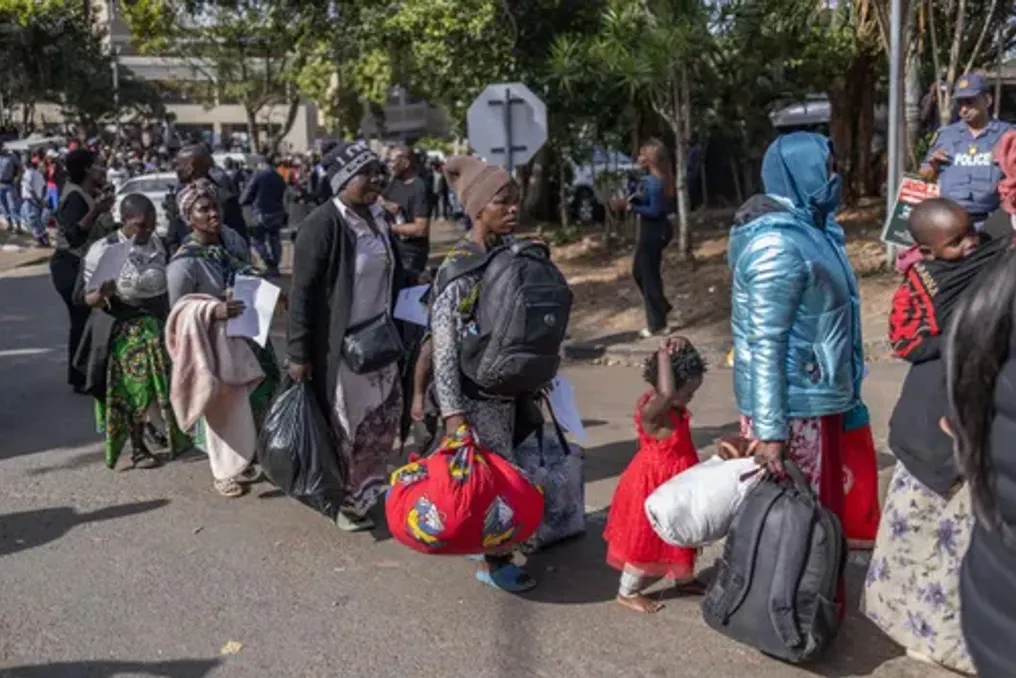
The story of one woman attempting to reunite with her partner across borders highlights the complex picture of migration processes in South Africa. This region stands at a crossroads, raising the question of the necessity to join forces to create conditions that allow people to remain in their home countries.
Attempted Reunion and Immigration Challenges
Amidst the flows of migrants between South Africa and its neighboring countries, a story linked to love unfolded. A woman from KwaZulu-Natal, wishing to stay with her partner from Malawi, attempted to cross the border under a false identity, but her plan failed.
When she arrived at the temporary repatriation point in Musina, she presented herself as Malawian. However, after questioning by Malawian officials, her story began to unravel. As a result, authorities returned her to South Africa, where her true identity was discovered, and hopes of reuniting with her partner through voluntary repatriation were dashed.
Pressure on Governments and Economic Realities
Governments are facing increasing pressure regarding the resolution of complex immigration issues. The South African government has already repatriated 53,449 foreign nationals, the majority of whom are Malawians.
As protests related to repatriation subside, more measured voices are being heard across the continent. It is encouraging to see the discussion moving beyond strong emotions and focusing on the economic aspects at stake. One woman from Zimbabwe recently stated in a podcast that millions of Africans migrate in search of work, security, education, or better economic prospects.
Call for Regional Cooperation
She supported the view that if more countries offer stronger economies, better governance, reliable public services, and opportunities for youth, many would prefer to build their future at home. It was noted that South Africa should not bear this burden alone. The entire continent must participate in solving the problem: African governments, regional bodies like the African Union, businesses, and communities all play a role in building a future where migration is a choice, not a last resort.
African leaders are called upon to take decisive steps to open doors of opportunity across the continent. The continent cannot continue to boast of its rich mineral wealth while so many people suffer from poverty and seek hope elsewhere. The time has come to address these issues.
By investing in agriculture and manufacturing, and prioritizing skills development for youth, African governments can lay the foundation for sustainable employment and a prosperous future. Policymakers must strive for improved governance and greater transparency in resource management so that the continent's mineral wealth truly contributes to the upliftment of its population. By supporting regional economic integration, investing in infrastructure, and expanding access to quality education and healthcare, Africa can become a place where people thrive without needing to leave.