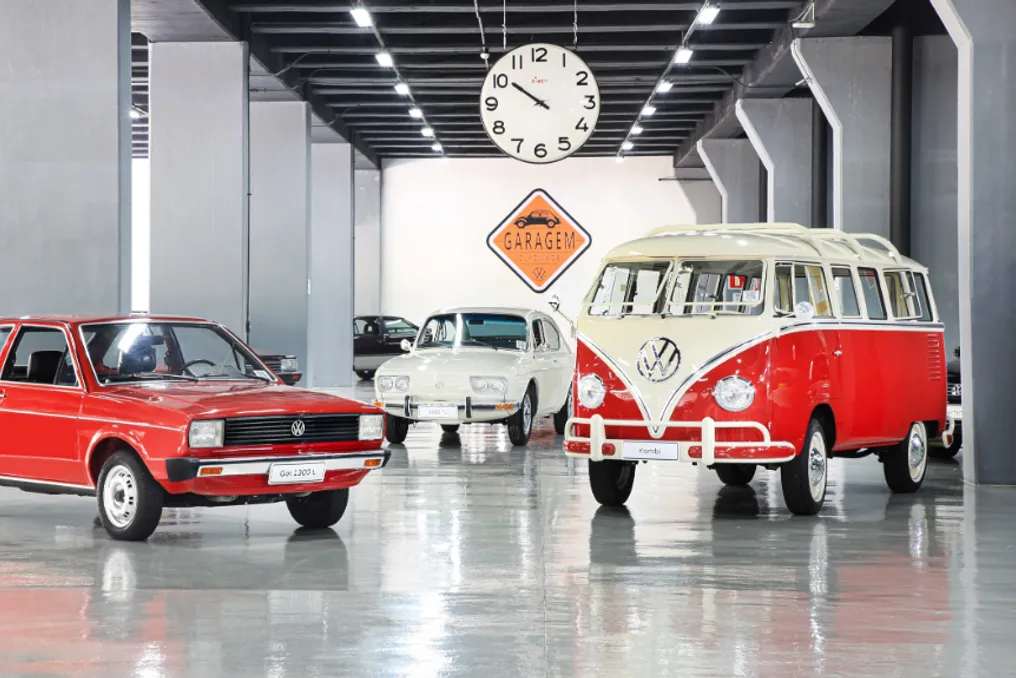
The growing appreciation of classic models is seen as evidence that modern cars are losing their identity due to safety and emission regulations. Previously, this appreciation began around age 25, but with the transition to electrification in the last ten years, vehicles only 15 or 20 years old are already considered potential classics, which is confirmed by auctions in Brazil and abroad.
Manufacturers' Investment in Classics
During this same period, the manufacturers themselves began investing in departments dedicated to classics. Initially, it was the brands known for their track and road cars, such as Ferrari, Porsche, and Mercedes, driven by the high appreciation of their vehicles. Subsequently, high-volume manufacturers, including Volkswagen, Nissan, and Toyota, also created their own classic programs. In Brazil, two automakers have distinct initiatives for vintage car enthusiasts.
The Value of Official Certification
Almost all manufacturer classic departments maintain vast archives of documents from all eras, such as manuals, catalogs, and technical notebooks produced by the company itself, in addition to providing specialized labor and parts identical to the originals. Although these items can be obtained through other means, the manufacturers offer something exclusive: the vehicle's authenticity certification.
This certification is crucial because when an old car becomes a financial asset, fictitious narratives about its provenance often arise. Certificates issued by clubs may not be reliable, as exemplified by originality certificates made only for commercial purposes in Brazil, highlighting the importance of official factory validation.
Examples of Restoration Centers
One of the most notable official restoration centers is Ferrari Classiche. Opened by Luca di Montezemolo in July 2006 in the former Ferrari foundry, this 950 m² space houses offices, archives, documentation, and workshops. Due to the high value of classic Ferraris, dating back to the late 1970s and still used in historic races, the main services of Ferrari Classiche include maintenance and authenticity certification, in addition to restoration, especially for damaged cars.
It is rare for a special Ferrari to suffer a total loss, which usually occurs in cases of severe fires. Older models, such as the F40 and F50, that appear damaged in videos, are sent to Ferrari Classiche to be restored to their original condition. Both damaged cars and those requiring only restoration use parts manufactured according to the technical specifications of the time, often employing industrial or manufacturing processes used during the vehicle's construction. The process begins with an evaluation by the Ferrari Classiche team to distinguish original from non-original parts, allowing the owner to decide whether to return to the original standard.
Ferrari Certification and Criteria
The Certificate of Authenticity is issued for street cars over 20 years old or race cars of any period. An official Ferrari certificate can increase the car's value by millions of dollars and qualifies it for official Ferrari events globally. The process involves a meticulous inspection carried out by a committee of experts called COCER, chaired by Piero Ferrari, which evaluates the chassis, engine, gearbox, transmission, suspension, brakes, wheels, bodywork, and interior.
To receive certification, the vehicle must meet one of the basic criteria: having participated in national or international competitions in the evaluated configuration, or possessing a configuration resulting from modifications made by renowned design studios or coachbuilders up to ten years after manufacture, in addition to having participated in some Concours d’Elegance or Auto Show. Recent certification examples include the 1952 Ferrari 225S Vignale Spyder, chassis 0180ET, in Brazil, and the Ferrari F50 from the Carde Museum.
Mercedes-Benz and Porsche
The oldest classic division is Mercedes-Benz Classic Service and Parts, an evolution of a historical division created by Daimler-Benz AG in 1936. The initial goal was to preserve at least one example of each model, many of which are historical landmarks, such as the Patent Motorwagen or the Blitzen Benz. Over time, Mercedes transformed this division into the Mercedes-Benz Museum and Classic Service and Parts.
Classic Service and Parts performs repairs on classics and supplies parts for historical models, allowing the purchase of original parts from any era. Decades of care for the historical collection have generated an extensive technical archive used today for restorations and repairs. Mercedes' Classic Service also offers