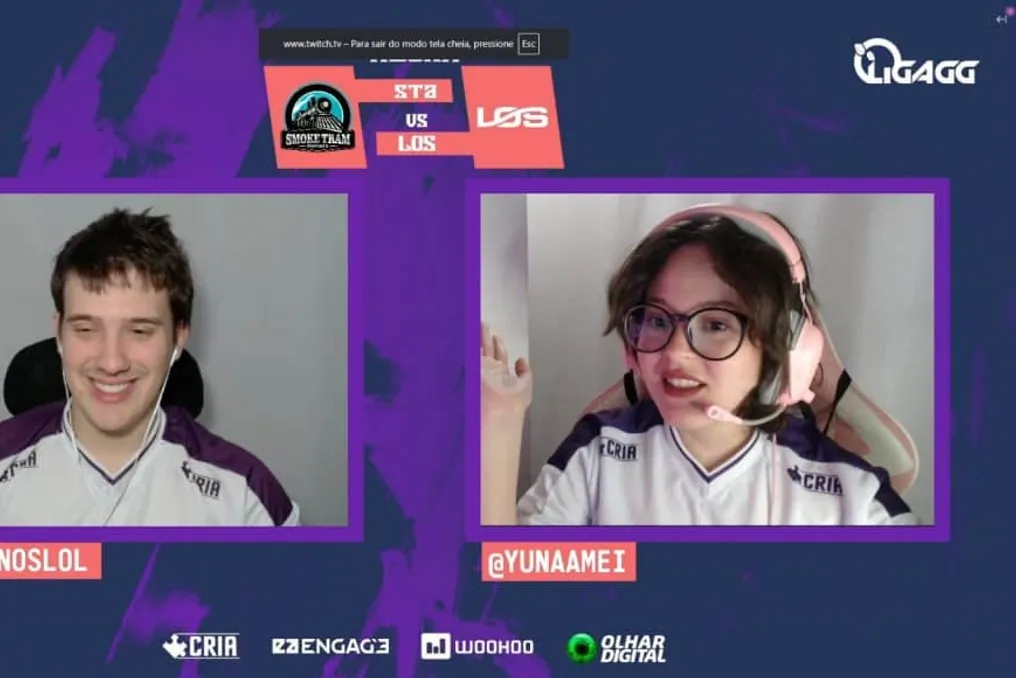
E-sports attract millions of viewers globally in tournaments across various titles, including VALORANT, League of Legends, Counter-Strike, and Street Fighter. Similar to conventional sports, hosting each championship requires a large team of professionals.
Roles of Broadcast Professionals
One of the crucial roles in this process is the caster. The term derives from 'broadcast caster' in English and designates the specialist who conducts the e-sports broadcast. This work ranges from narration and commentary to detailed analysis and contextualization of events occurring inside and outside the game.
Although the term caster encompasses multiple tasks, each professional has a specific responsibility. The narrator, known as play-by-play, focuses on describing in real-time everything that happens during the match. The commentator, or color caster, enriches the broadcast with analyses, providing context about the teams, strategies, and interesting facts, helping the audience better understand every move.
Preparation Before Broadcasting
In practice, the caster's work begins well before the official start of the broadcast. The professional dedicates time to researching the teams, studying the players, monitoring the latest game updates, and organizing their notes. They often use a personal notebook to record statistics, trivia, and relevant information that may arise during the competition.
Part of the routine is preparing one's voice and aligning details with the team to ensure the best possible execution. During the week, it is common to follow players' broadcasts to observe training, identify the most used agents, and fundamentally, know the 'comfort picks'—those choices in which each player demonstrates greater confidence and better performance.
The Complete Broadcast Team
Besides casters, an e-sports broadcast features several other specialists working in collaboration. The broadcaster is the technical person responsible for going live with the broadcast, managing scene changes, displaying graphics, statistics, and replays so that the audience has a complete view.
The League Operations professional, or League Ops, manages the operational side of the event. Their duties include organizing match lobbies, confirming the readiness of all teams, solving any technical problems, and ensuring that the championship strictly follows the established schedule and regulations.
Observers have the function of controlling the camera within the game environment. They decide which players should be followed, anticipate the most important movements, and capture decisive moments so that no crucial play is missed by the viewer.
Conclusion and Invitation to Viewers
By understanding what happens behind the live signal, an invitation is extended: anyone who has never watched an e-sports competition in real-time should choose a game they prefer, such as League of Legends, VALORANT, Fortnite, or another competitive title, and watch a broadcast. It is likely that the viewer will discover that, besides the matches themselves, there is a vast team dedicated to turning every championship into a complete spectacle.