Leading private lenders expect lending growth rates to be maintained following a strong increase in the first quarter of the fiscal year, as companies increasingly prefer bank loans over the bond market, which has become more expensive.
Leading private lenders expect lending growth rates to be maintained following a strong increase in the first quarter of the fiscal year, as companies increasingly prefer bank loans over the bond market, which has become more expensive.
According to six private banks that reported strong lending growth over the three months ending in June, this growth was driven by corporate lending. High bond yields have reduced the attractiveness of raising funds through the market.
HDFC Bank Ltd., India's largest private lender by assets, reported an almost 19% increase in corporate loans in the quarter compared to a 1.7% growth the previous year. ICICI Bank Ltd. increased internal corporate loans by 18.5% compared to last year, and Kotak Mahindra Bank Ltd. recorded a 15% growth.
According to ICICI's CEO, Sandeep Batra, the demand for corporate loans was driven by working capital needs, and the slowdown in borrowing in the bond and equity markets created new opportunities for banks.
Yes Bank Ltd.'s CEO, Vinay Tonsen, forecasts 'secular growth in lending across all sectors over the next two quarters.' This bank, which primarily focuses on the retail segment, has expanded its portfolio of corporate and institutional loans by more than 41%.
Overall bank lending growth accelerated to a two-year high of 18.6% year-on-year two weeks before June 30, according to Reserve Bank of India data, highlighting the resilience of loan demand despite lags in deposit mobilization.
A surge in foreign currency deposits, which some analysts believe could exceed $50 billion by the end of September, is expected to improve the liquidity of the banking system, giving lenders access to a larger pool of relatively inexpensive foreign currency financing. As part of efforts to build reserves, the central bank of India offered banks full support for hedging costs when attracting foreign currency deposits for terms of three to five years and permitted borrowings against such funds.
The yield on 10-year government bonds rose above 7% following the conflict between the US and Iran, destabilizing Indian markets. Although yields have fallen from these high levels, rising oil prices due to new Middle East tensions are causing investor concern about further monetary policy tightening. Higher benchmark rates have increased the cost of borrowing for corporations, reducing their interest in debt.
HDFC Bank's VP of Management, Kaizad Barchuha, noted that corporate demand in the quarter was evenly distributed between term loans and working capital financing, with the electronics, automotive, renewable energy, and commodity sectors showing the highest demand. Yes Bank, in turn, saw healthy borrowing from oil and metal companies.
Axis Bank Ltd.'s CFO, Punit Sharma, expects the bank's lending growth to outpace the industry average by approximately 300 basis points in the medium term.
Banks are also supported by strong balance sheets. After several years of cleaning up non-performing loans, strengthening underwriting standards, and building capital buffers, lenders are more willing to finance corporate borrowers who meet stricter risk criteria. The ratio of non-performing assets in the banking sector is at a multi-year low, giving lenders confidence in growing corporate portfolios without repeating the excesses that led to the bad loan cycle in the past decade.
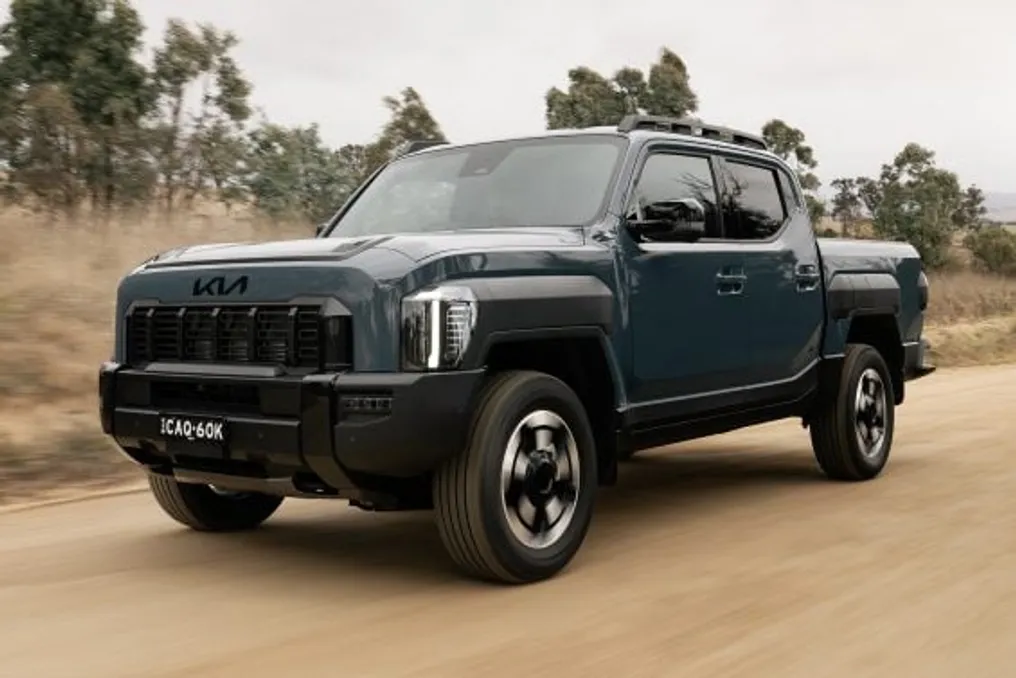
Kia confirmed the introduction of the Tasman to the Brazilian market during the second half of 2026, amidst the company's plans to establish a manufacturing unit in the country. This mid-size pickup truck, being the first from the South Korean manufacturer in this segment, is currently undergoing homologation and adaptation for local use, aiming to compete with established models such as the Toyota Hilux, Ford Ranger, Chevrolet S10, and Volkswagen Amarok.
Upon entering the mid-size pickup category in Brazil, where diesel models predominate, Kia will offer the turbodiesel configuration, which is the preference of the Brazilian consumer and corresponds to the same mechanical family used in the Sorento SUV, recently relaunched in the national territory.
Originally presented in October 2024, the Tasman received its name in reference to Tasmania, located between Australia and New Zealand. Manufactured in South Korea, it debuted in the Korean market in the first half of 2025 and arrived in Australia in July of the same year.
With a design characterized by straight lines and vertical headlights, the pickup adopts a robust silhouette that generates different opinions, seeking to stand out against more traditional competitors. Internally, the Tasman features a three-screen system—two 12.3-inch monitors and a 5-inch panel dedicated to climate control—in addition to an adjustable rear seat between 22° and 30°, a 33-liter compartment under the rear seat, two wireless chargers, and a retractable table in the center console.
The version designed for Brazil will be equipped with a 2.2-liter four-cylinder turbodiesel engine, which uses common-rail direct injection. This mechanical unit generates approximately 210 hp and 45.0 kgfm, coupled with an eight-speed automatic transmission and a 4x4 traction system with lockable differentials and a reducer. The acceleration from 0 to 100 km/h is estimated at about 10.4 seconds, and the wading depth reaches 80 cm.
In terms of dimensions, the Tasman has a length of 5.41 meters, a width of 1.93 meters, and a height ranging between 1.87 m and 1.92 m, with a wheelbase of 3.27 m. Its bed capacity is 1,173 liters, making it one of the largest in the segment, and the towing capacity reaches 3,500 kg. Externally, the pickup will be available in S, SX, SX+, X-Line, and X-Pro versions, with the latter being specifically aimed at off-road use, featuring a ground clearance of 25.2 cm and 17-inch wheels.
Although official values for the Brazilian market have not yet been disclosed, a projection can be made based on proportions. Depending on the versions selected by Kia for Brazil, the Tasman is estimated to launch with a price ranging between R$ 240,000 and R$ 360,000.
The arrival of the Tasman occurs at a crucial time for Kia's operations in the country. José Luiz Gandini, the brand's exclusive representative and importer, informed AutoPapo that negotiations are underway for Kia's control to be transferred to the South Korean headquarters. The businessman mentioned that the headquarters is negotiating with the federal government for the forgiveness of a billion-dollar debt stemming from the Asia Motors case, a liability that, according to the Superior Court of Justice, reached about R$ 6 billion in 2023.
If this forgiveness is effective, Gandini declared that he will hand over the importation function to the Korean representatives, operating only as a dealer. Furthermore, AutoPapo discovered the possibility of Kia building a factory in Brazil, near the Hyundai plant located in Piracicaba, São Paulo.
The Motorola Edge 60 Neo smartphone, 512 GB version, was launched in a historic offer on Mercado Livre, reaching its lowest recorded price. The device, originally valued at R$ 3,499, can be purchased for R$ 1,893 by applying the R$ 100 OFF coupon, with the option to pay in up to 10 interest-free installments.
This promotion allows for a 46% saving on a device with notable features, suggested as an ideal alternative for Father's Day gifts. The Moto Edge 60 Neo is equipped with a 6.36-inch POLED display that supports HDR10+ and is capable of displaying up to one billion colors, according to Motorola. The 120 Hz refresh rate ensures extremely fluid viewing, benefiting use in games, videos, and movies.
The phone's performance is driven by the MediaTek Dimensity 7400 processor, complemented by 12 GB of physical RAM. To further optimize performance, the RAM Boost feature can be used, increasing the total memory to up to 24 GB. In terms of photography, it features a three-camera rear system: a 50 MP main sensor with optical image stabilization, a 13 MP ultrawide camera, and a telephoto lens offering 3x optical zoom, providing greater sharpness to photos. Additionally, the camera setup records videos in 4K resolution.
The device has a 5,000 mAh battery, designed to offer autonomy of up to 44 hours. It supports 68W fast charging and 15W wireless charging, positioning it as one of the best cell phone options available below R$ 2,000. Furthermore, the Edge 60 Neo has IP68 certifications against dust and water, as well as the MIL-STD-810H military certification, which provides greater durability against impacts and daily accidents.
Natural has successfully raised $30 million in a Series A funding round. These funds are earmarked to accelerate the development of specialized payment infrastructure designed specifically for the needs of AI agents. The round was led by Forerunner, with existing investors continuing to provide support, bringing the company's total funding to over $40 million.
The investment came less than a year after the company's launch and reflects growing confidence that AI agents will increasingly participate in financial transactions. The new round attracted the attention of founders and executives from leading technology and fintech companies, underscoring significant industry interest in the emerging agent payments sector.
Natural was founded by individuals such as Kahlil Lalji, Eric Wang, and Walt Leung. The company is developing a specialized payment platform that enables AI agents to manage funds, move money, make purchases, collect payments, and conduct transactions across various banking networks and payment channels. The company believes that autonomous AI systems will become significant financial participants as businesses increasingly adopt agents for self-performing work tasks. Instead of using infrastructure designed for humans, Natural is creating a dedicated financial stack tailored to the operational requirements of AI-based software.
Natural has already released six products to the public, including Wallets, Vaults, Pay, Request, Transfer, and Connect. These services allow businesses to create financial accounts for AI agents, execute fund transfers, process payments, and integrate payment capabilities into marketplaces and platforms. In the coming months, the company plans to expand its platform with new products such as Voice, Accept, and Cards. These new features will enable AI agents to securely accept payment data, process payments from vendors, and use specialized payment cards.
Later this year, Natural intends to introduce the Charge, Credit, Direct, and Billing products. These additions will provide support for API-based billing, credit facilities for AI agents, direct access to payment channels, and usage-based payment models for autonomous software.
The secured funds will help Natural continue building its proprietary banking and payment infrastructure, as well as expanding its engineering and commercial teams. Despite being young, the company claims to have developed most of its core technology internally and is actively hiring staff across all departments. Investors believe that AI agents are transforming from simple productivity tools into autonomous economic participants capable of managing financial operations on behalf of businesses. As adoption grows, demand is expected to increase for specialized infrastructure that manages identity, compliance, reconciliation, fraud prevention, and payment orchestration for these digital workers.
The Series A was led by Forerunner with participation from existing investors. Additional sponsors include founders and executives from Human Capital, Abstract, Increase, HappyRobot, Browserbase, Notion, Privy, Brex, Y Combinator, Antifund, and several other technology firms. Natural stated that the new capital will be directed toward further product development, as the company is building what it calls the foundational payment infrastructure for AI agents. The company predicts that autonomous software will become an increasingly vital part of global commerce, requiring financial systems designed specifically for machine transactions rather than traditional human workflows. Thus, Natural aims to become the financial backbone powering the next generation of autonomous digital economies.