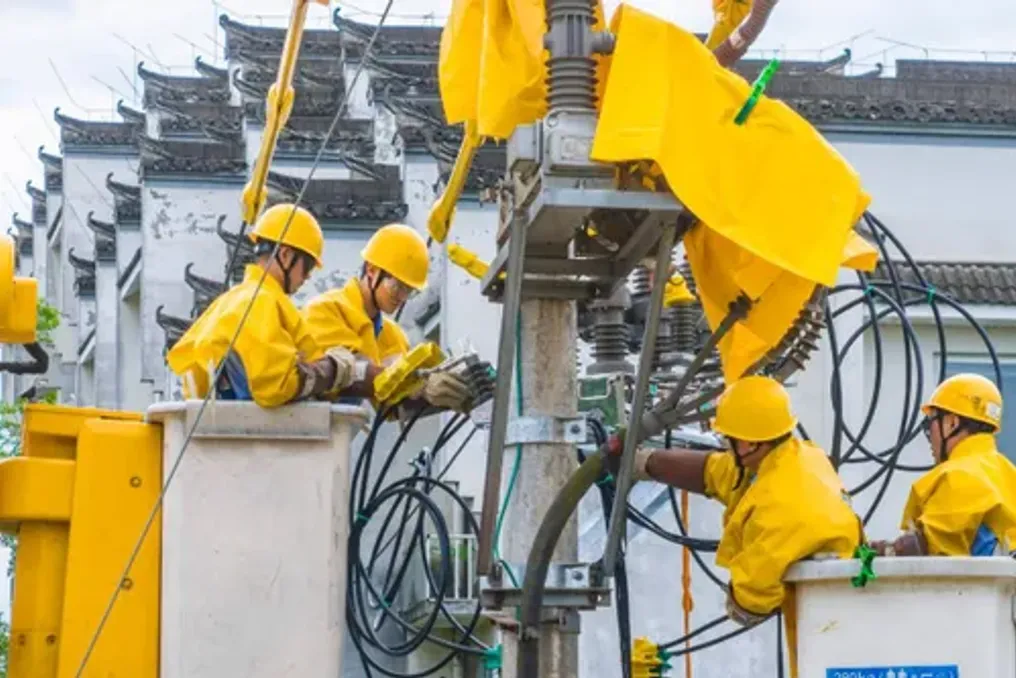
The renewal of the urban environment plays a key role in optimizing city structures, stimulating new growth, improving the quality of life, promoting green transformation, preserving cultural heritage, and perfecting governance across China.
Examples of residential area improvements
In Nanjing, Jiangsu Province, residents of Beiyuanercun village in Xuanwu District faced problems during the rainy season: walls were covered in mold, homes suffered from dampness due to leaks, and public spaces were scarce. However, in July 2025, local authorities launched a reconstruction project for the old community. After conducting surveys and meetings with residents, they implemented targeted improvements.
External walls were waterproofed to prevent leaks and dampness. Unused areas were converted into 20 parking spaces and two bicycle charging stations. Additionally, a community service center was built, providing services such as smart payments, home repair, cleaning, and a public canteen.
Preservation of historical appearance
In Jing'an District, Shanghai, in the Hudiwang public area, three historical buildings along the Suzhou River resemble butterflies. A cafeteria offering affordable dishes, a rest area for couriers, and a support station providing hygiene supplies for female couriers operate here. After renovation, these brick buildings retained their original appearance while gaining new amenities and services, making this area a popular spot for both residents and young people.
Development of cultural heritage
In Wenzhen District, Chengdu, Sichuan Province, a street of intangible cultural heritage recently opened to the public. Visitors can enjoy traditional tea ceremonies and Sichuan opera performances, immersing themselves in an atmosphere where historical charm meets daily hustle. Previously, many old buildings in this area were vacant and poorly maintained, and illegal constructions were common.
Zhang Nana, director of the organic urban renewal center in Wenzhen District, noted: 'Instead of resorting to large-scale demolition and reconstruction, we optimized the site layout, diversified the commercial offerings, and created a new experience for visitors while preserving its historical heritage.'
Plans for the Five-Year Plan period
Under the fifteenth five-year plan, China intends to renovate 115,000 old urban residential communities, implement comprehensive projects in 5,000 communities, and repair and modernize 300 historical and cultural districts to create higher quality living spaces.
Green and low-carbon transformation
In Baiyun District, Guangzhou, Guangdong Province, a 40-kilometer forest route has been opened. This area, which was previously an overgrown suburban woodland with barely discernible paths and outdated facilities, has been transformed into a safe, well-connected, and vibrant green corridor. A 65-year-old retired teacher, Li Zheng, noted that thanks to this green corridor, they now have a 'bar of natural oxygen right at their doorstep.'
During the fifteenth five-year period, China plans to upgrade 20,000 hectares of urban parks and green spaces, add 15,000 pocket parks, and build or renovate 20,000 kilometers of urban green corridors to restore ecosystems and promote green, low-carbon transformation.
Enhancing safety and resilience
In Jiulongpo District of Chongqing Municipality, on Hukai Street, underground 'minimally invasive surgery' is being conducted on urban utilities. Workers install a flexible casing coated with a special resin material inside the old pipe through a manhole. High-temperature steam is then injected into the casing, causing it to expand, tightly adhere to the inner wall of the old pipe, and rapidly harden. This creates a high-strength pipe lining without the need for large-scale excavation.
Some sewage pipelines in the city center, operating for decades, have begun showing corrosion, leaks, and improper connections. This underground renewal project aims to address the problems at the root, reducing the risk of urban flooding and sewage overflow.
As part of the fifteenth five-year period, China plans to modernize 770,000 kilometers of urban underground pipelines, including about 200,000 kilometers of gas pipelines, 175,000 kilometers of drainage pipes, 175,000 kilometers of water supply pipes, 100,000 kilometers of sewage pipes, and 120,000 kilometers of heating pipes, as part of efforts to create safer, more reliable, and resilient cities.