The current geopolitical crisis is exacerbating South Africa's existing economic difficulties, which stem from the country's dependence on an energy system vulnerable to global shocks and supply chain disruptions triggered by conflicts such as the war between the US, Israel, and Iran.
Climate Crisis and Financial Challenges
Against the backdrop of this conflict stands an existential and escalating climate crisis that demands not only technological innovation but also a fundamental overhaul of governance and financial architectures to advance development and growth. According to the 'Climate Finance Landscape Report, 2025' by the Presidential Climate Commission, South Africa, as the continent's most industrialized economy, attracts about 60% of its climate finance domestically, indicating a strong financial sector.
Nevertheless, the annual investment gap required to meet Nationally Determined Contributions (NDCs) and net-zero targets amounts to a substantial 203–404 billion South African Rand. Existing funding streams are heavily skewed towards energy, particularly renewable electricity, which accounts for 74.1% of tracked financing, while adaptation remains at only 11.3%. More tellingly, 78.2% of financial instruments consist of market-rate debt financing (45%) and equity capital (33.2%).
Shortcomings of the Market Approach
This reliance on commercial debt places the burden of transition onto balance sheets, a model ill-suited for community-level initiatives that lack collateral, credit history, or stable income sources in their early stages. Funding explicitly labeled as 'just transition' remains modest—averaging only 16.8 billion Rand annually—and primarily comes from governments and Development Finance Institutions (DFIs). The market itself does not ensure fairness.
Just transition is viewed not as a secondary issue, but as a normative foundation focusing on decent work, social inclusion, poverty eradication, and participation in decision-making. It envisions decentralized, diversely owned renewable energy systems and equitable access to resources. However, when climate finance is dominated by commercial players seeking risk-adjusted returns, the most affected communities, such as in coal regions like Mpumalanga, end up being either observers or, at best, recipients of symbolic programs.
A Call for Community Agency
Since the real impact of climate—rising temperatures, intensified storms, floods, and water scarcity—is ignored by aggregated financial flows, a targeted financing ecosystem that prioritizes community agency is necessary. A presentation on financing green initiatives at the community level in Africa, based on the South African experience, reveals a critical paradox: despite the growth in climate finance, it deeply diverges from the principles of just transition.
If the goal is to empower vulnerable groups—the poor, women, and youth—then the prevailing market-driven mechanisms are not merely insufficient, but structurally exclusionary. Data from South Africa demand a decisive shift in course: from debt-based, top-down investments to community-based, bottom-up resilience. The case of Mpumalanga serves as an example: as a province facing severe climate disruptions and the gradual phase-out of coal, its economic diversification should not depend on abstract market forces.
The true potential lies in creating region-specific value chains: critical mineral processing, green manufacturing, electric vehicle supply chains, green hydrogen, low-carbon fertilizers, and others. These sectors promise millions of new jobs, protection of existing ones, poverty reduction, and the prevention of thousands of premature deaths. Nevertheless, this potential will remain unrealized without a well-designed financing system that prioritizes community agency.
Redefining Risk and Bankability
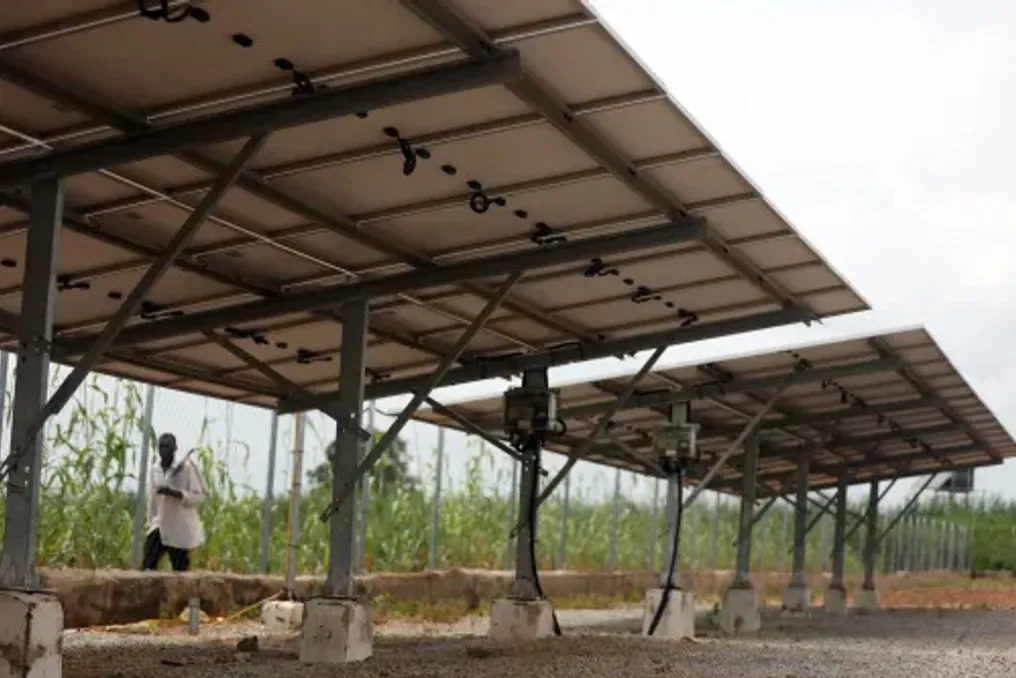
Socially owned renewable energy offers a compelling alternative to the current ownership structure in the energy generation sector. This requires appropriate governance structures, involvement in site selection, and crucially, a financial nexus that extends beyond traditional bankability, actively involving communities or workers in the local economy, thereby deepening economic democracy.
The central thesis of this article is that 'bankability must be redefined.' For community-led green initiatives, the project financing mechanism should not begin with commercial loans. It should start with grant funding for developing business cases, preliminary feasibility studies, comprehensive viability analysis, and preparation for bankability. Only then should concessional loans, blended finance, and finally, commercial debt be introduced.
This sequential approach to risk mitigation recognizes that community initiatives are not failed commercial ventures, but public goods with long-term social, economic, and environmental returns. Existing climate finance, obsessed with immediate risk-adjusted returns, systematically undervalues these co-benefits. Furthermore, adaptation finance—the forgotten child of climate flows—must be radically increased and redirected toward community-level actions. Adaptation is inherently local: early warning systems, drought-resistant agriculture, flood-resilient infrastructure, and water conservation cannot be designed remotely. Yet, at only 11.3% of tracked finance, adaptation remains a secondary concern, forcing communities to absorb shocks that strategic investment could mitigate.
Conclusion: A Paradigm Shift
Achieving a just transition in Africa requires more than just increasing the volume of climate finance; it demands a paradigm shift regarding who makes decisions, who benefits, and who bears the risks. The data from South Africa serve as a stark warning: commercial logic alone entrenches inequality. Policymakers, development institutions, and philanthropists must prioritize grant-based technical assistance, establish just transition conditions, and create dedicated funds for community-owned renewable energy and adaptation. Without such measures, the transition will be neither just nor sustainable. As the final slide of the presentation reminds us, community agency is not a charitable add-on, but the missing engine of transformative change. The question is no longer whether to finance green initiatives, but how to finance them justly.