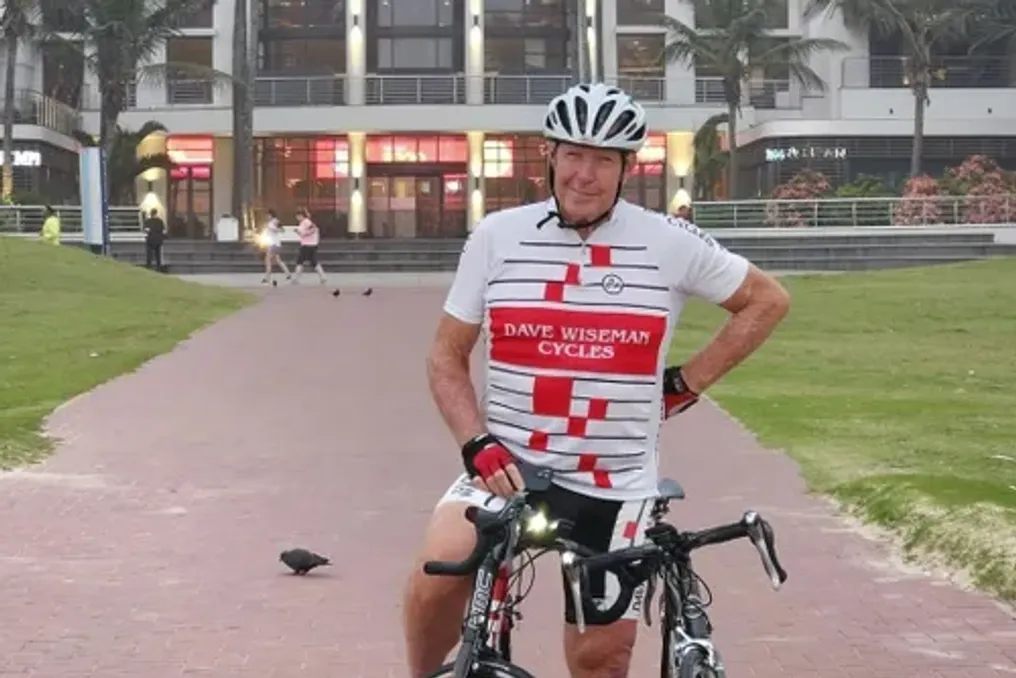
Dave Wiseman, founder of the renowned Amashova National Classic race, will participate in its fortieth anniversary, which is taking place today. Thousands of cyclists have started their journey from Pietermaritzburg as part of this event.
Dave Wiseman, founder of the renowned Amashova National Classic race, will participate in its fortieth anniversary, which is taking place today. Thousands of cyclists have started their journey from Pietermaritzburg as part of this event.
Despite continuing treatment for malignant melanoma, Wiseman decided to take part in this significant date. He noted that he did not intend to miss the anniversary of the event he founded in 1986. Wiseman, who is now 72 years old, stated that he plans to enjoy the 106-kilometer ride to Durban.
Wiseman's passion for cycling arose in 1970 after watching the South African Track Cycling Championships. He was inspired by the success and significance of the Komrad Marathon and the Dusi Canoe Marathon, which prompted him to consider a race along the well-known Komrad route, leading to the creation of the Amashova National Classic.
He recounted that in the early years of the race, there were only 115 participants, but now it has established itself well. Wiseman emphasized that the route is accessible even for an average cyclist, and the race tactics are determined by the terrain.
Wiseman has experience in both road and track races, specializing primarily in track, where he won numerous South African Track Cycling Championships titles and Grand Prix victories. Later, he managed South African teams, led the national team at the Barcelona Olympics, and contributed to the development of BMX and early triathlons in South Africa.
The fortieth edition of Amashova celebrates the rich history of the race by inviting back legends and former champions. Over the years, thousands of participants—from elite professionals and Olympians to amateurs and charity race participants—have covered the course from Pietermaritzburg to Durban. This route remains one of South Africa's most recognizable cycling challenges, including climbs such as Fox Hill, hilly roads through the Drakensberg, the Valley of a Thousand Hills, and the fast descent into Durban.
Amashova Race Director, Annie Batchelder, noted that Wiseman's contribution to cycling goes far beyond founding the event. She stated that Dave's vision created part of South Africa's sporting heritage, and over four decades, Amashova has inspired generations of cyclists thanks to his initial passion and dedication.
Batchelder added that reaching the 40th anniversary is an incredibly proud moment for everyone connected with Amashova. She stressed that the anniversary is dedicated to the people, stories, champions, and communities that have shaped the race. She also expressed joy about the return of many legends and familiar faces, as well as gratitude for the support from cyclists across South Africa, especially from Gauteng.
Today, approximately 5000 people will participate in three distances: 106 km, 70 km, and 40 km. The legendary 106-kilometer Classic starts at the Pietermaritzburg City Hall, while the 40-kilometer route begins at Weston Square in Shongweni, and the new start for the 70-kilometer race is at Camperdown SuperSpar. All routes finish at the Masabalala Yengva pedestrian bridge in Durban.
As part of the anniversary celebration, new entertainment will be presented for athletes and spectators, including the debut of the Amashova Critémium, known as 'Dash for Cash'. This will be a Formula 1 style sprint race where the fastest finishers of Amashova will compete on a spectator-friendly track at the Suncoast parking lot. The first 20 men and 20 women to cross the Amashova finish line will be eligible for a share of the R50,000 prize fund for the Dash for Cash Critémium.
The International Federation of Association Football (FIFA) has expressed dissatisfaction with the results of the analysis on the impact of hydration breaks on the flow of the game, suggesting that this practice may be discontinued after the World Cup concludes.
These conclusions were voiced by Arsène Wenger, head of FIFA's football development department. He acknowledged the dissatisfaction of some fans who believe that hydration breaks unnecessarily interrupt the game. When asked whether there was data confirming that such breaks improve player abilities or match dynamics, Wenger gave an unequivocal negative answer.
The former Arsenal coach told reporters: 'Sometimes people didn't like it, and we must analyze the impact of this after the World Cup.' He added that, in his opinion, it did not affect the competition results, but stressed that the goal is to serve football spectators, and conclusions will be drawn after the tournament ends.
Previously, the decision to hold a hydration break rested with the referees if they deemed the weather too hot. Now, it has become a mandatory rule for all matches, even those played in moderate conditions. For example, in the Egypt versus Iran match, players took a hydration break when the temperature on the field was only 16 degrees Celsius. Previously, one fan commented, stating: 'If they take a hydration break tonight, it will be very funny because it is actually very cold.'
Thus, the question remains open: whether FIFA will decide to keep hydration breaks as a mandatory rule or return control over them to the refereeing corps.
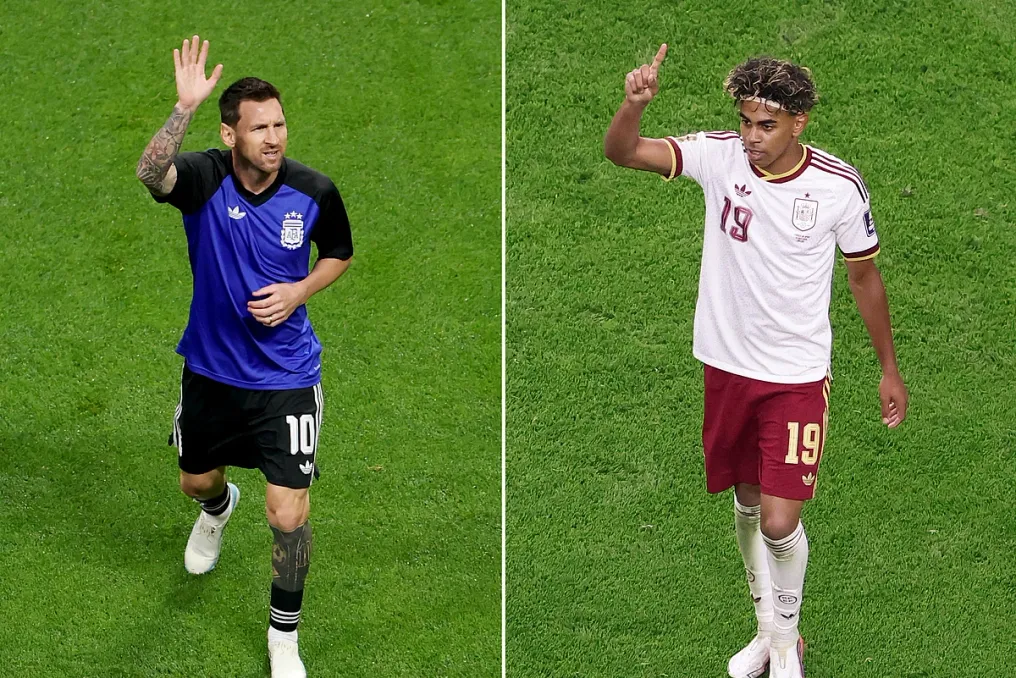
There is much discussion surrounding the upcoming Sunday World Cup final match between Argentina and Spain related to the number 19. Internet users are putting forward theories that this number might foreshadow the victory of one of the leading players from both teams—Lionel Messi or Lamine Yamal.
The connection between these two stars began 19 years ago. In 2007, when the then 20-year-old Argentine superstar was photographed with six-month-old Lamine Yamal during a charity event.
It turned out that the future Barcelona youth star ended up next to the man who would later win the Ballon d'Or eight times. Today, they will meet for the first time in the 2026 World Cup final.
In the year of this significant photoshoot, Lionel Messi wore a jersey with the number 19 at Barcelona. In December 2007, Messi had already won two La Liga titles and one Champions League title, but was still considered an emerging star in a team that included famous players such as Ronaldinho, Samuel Eto'o, Xavi, Andrés Iniesta, Carles Puyol, and Thierry Henry.
The photograph was published in 2008. It was taken as part of a fundraiser for charities, including UNICEF and various NGOs in Catalonia, where Barcelona players participated with children.
Both Messi and Yamal debuted in the World Cup wearing the number 19 jersey. Messi's debut took place in the group stage against Serbia and Montenegro in Gelsenkirchen, Germany, in 2006. He provided an assist to Hernán Crespo in the 88th minute and then scored his first World Cup goal just two minutes later. This outstanding performance helped Argentina secure a convincing 6-0 victory.
Fast forward to 2026: young Yamal debuted for Spain in June of this year during a friendly match against Cabo Verde after recovering from a hamstring injury, continuing to wear number 19. On June 21, he made his full debut and scored his first tournament goal just ten minutes into the match against Saudi Arabia.
Both footballers celebrated their 19th birthday during the World Cups. The young Spanish player marked his last teenage day on July 13, shortly before his country's semi-final against France. On that day, Lamine attracted reporters' attention at a press conference, displaying a thick gold chain he gave himself, while maintaining a relaxed demeanor.
Messi also celebrated his 19th birthday during the World Cup, marking his last year as a teenager during his debut in 2006.
In addition to all these coincidences, both footballers, who are called prodigies, were born exactly 19 days apart from each other, although in different years. Lionel Messi was born on June 24, 1987, and Yamal on July 13, 2007, which represents a 20-year age gap between the rivals.
The culmination is the 2026 World Cup final match, which will take place on Sunday, July 19. This will be the first meeting of these two athletes, and it will be for the golden trophy that all fans are aiming for. Whether this number can symbolize the completion of a life cycle will only be known after today's match.
As Spain and Argentina prepare for the battle for the main football trophy, thousands of workers across the United Arab Emirates are developing their own plans to watch the final that are not tied to stadiums or official fan zones, but rather depend on the availability of a screen.
Some workers follow the game while taking taxis, and couriers may watch the match while waiting for orders. Others only manage to see small segments during their shifts. In Jebel Ali, workers living in worker accommodations are turning this event into a community gathering by organizing a screening on a projector so residents can watch the final together.
In various parts of Dubai—in residential blocks, restaurants, common areas, and on work sites—alternative measures are being taken to ensure that workers do not miss this historic football event.
At Cafe Taxi in Garhoud, manager Nawaz Ahmad organized a viewing after numerous requests from regular customers, who are predominantly taxi drivers, couriers, and logistics staff. These individuals usually visit the cafe in the evening or late at night after finishing their shift.
Ahmad noted that customers previously watched football on their mobile phones. He decided that watching together would allow them to enjoy it more. According to him, the idea came directly from customers who were looking for a place to watch the game without having to go to an expensive fan zone or sports bar.
For Aderemi, a Nigerian taxi driver working the night shift, watching the football match rarely means sitting in one place for 90 minutes. Living near Al Quoz, he often watches games in short bursts while moving around Dubai. He might watch a match for 20 minutes in a cafe, then drive off to pick up a passenger or drop them off, and afterward stop at another restaurant to see the next part of the game.
During previous matches, he stopped at restaurants and cafes in Al Quoz, Garhoud, and Murrakabat. He also watched in shisha cafes when allowed to stay for a few minutes. He emphasized that many establishments throughout Dubai allow taxi drivers and other night-shift workers to watch major football matches. He expects the same pattern to be followed for the final—watching whenever his schedule allows a short break.
Couriers face a similar problem. Shahid Khan, a courier from Pakistan, reported that major football matches often increase the number of food orders, making them busier than usual. Instead of watching the entire match, they watch it wherever they stop. When picking up an order at a restaurant, couriers may wait 10–15 minutes, often standing near a television to watch the game.
Khan said that during matches, they usually have many deliveries, so they are constantly on the move. While waiting for food, they watch whatever part of the match they can. Some couriers mentioned that customers invite them to watch the game for a few minutes after delivery. The courier added that sometimes people allow them to watch the game at their homes, and they can stay for about 10 minutes before proceeding with the next delivery. When things slow down, couriers often stop at the nearest cafe where other drivers and workers gather. They sit together, order a cup of Karak, and watch until the next order comes in.
In Jebel Ali, workers from one worker accommodation complex are preparing for a larger community viewing. Sahel, who helps manage the camp, reported that they are organizing a screening of the final on a projector. Many workers are expected to gather after their shift. Unlike taxi drivers and couriers, who might only see parts of the match, those in the residential complex will be able to watch the final in its entirety together. This viewing is expected to attract fans of both teams: some will support the defending champions Argentina, and others will support Spain. Similar viewings are being organized in other worker accommodation complexes, where football matches provide an opportunity for workers from different countries to spend time together after work.