China has released a new edition of its annual collection of case studies on international cooperation in the field of artificial intelligence. This publication features ten examples of China's interaction with partners around the world.
China has released a new edition of its annual collection of case studies on international cooperation in the field of artificial intelligence. This publication features ten examples of China's interaction with partners around the world.
This collection, published by the National Development and Reform Commission jointly with relevant government agencies for the third consecutive year, covers a broader range of countries and regions. It demonstrates diverse scenarios for applying the 'AI Plus' concept and places greater emphasis on human-centric and socially beneficial cooperation, presenting China's experience and solutions for global AI development.
One of the featured cases concerns the Milan-Cortina 2026 Winter Olympic and Paralympic Games, where Alibaba Cloud provided services based on AI. The International Olympic Committee launched its first official Olympic AI assistant, based on the large language model Qwen. This assistant supported the Games operations in 119 languages, providing up-to-date information for delegations, officials, and spectators. Furthermore, AI technologies transformed sports broadcasting through intelligent replay systems and immersive visual effects, enhancing the accessibility and appeal of the Winter Olympics for a global audience.
Another example showcases the MAZU system—an AI-based early weather warning solution developed by the China Meteorological Administration. This system was implemented in Djibouti in 2025. It integrates AI forecasting models, observation data from China's Fengyun satellites, and local meteorological data to provide timely alerts about strong winds, heatwaves, and heavy rainfall. This technology has strengthened the meteorological services of ports and cities, contributing to improved disaster preparedness in the Horn of Africa. Following its deployment, the system has been introduced in countries such as Pakistan, Ethiopia, and the Solomon Islands.
The collection also includes an AI-powered cervical cancer screening system created by Wuhan Landing Intelligence Medical Co., Ltd. This technology combines portable scanners, cloud computing, and AI analysis, enabling rapid pathological diagnosis even in regions lacking specialized personnel. The system is already operational in twelve countries, including Brazil, Pakistan, Ghana, Vietnam, and Cambodia, having provided screening services to over 13 million women, thereby improving access to early diagnosis and helping to reduce public healthcare costs.
The remaining seven cases illustrate the growing role of Chinese AI across various sectors. These include Earth science research using AI, smart farming for family farms in Brazil, autonomous driving in the United Arab Emirates, low-carbon telecommunications in Indonesia, AI application in the Malaysian pulp and paper industry, intelligent energy grid management in Chile, and marine biopharmaceutical research conducted jointly by China and Egypt. All these projects clearly demonstrate how international AI cooperation supports scientific innovation, industrial development, and public well-being in different parts of the world.
Twenty-nine nations signed a pact on Thursday, the 16th, aimed at creating the World Organization for Cooperation in Artificial Intelligence. This intergovernmental entity aims to foster international collaboration and define global standards for the artificial intelligence sector.
The agreement was signed in Shanghai, China, moments before the World Artificial Intelligence Conference. At this event, Beijing plans to present its perspective on the country's role in determining technological governance guidelines.
Among the countries that adhered to the agreement are Russia, Belarus, Serbia, Cuba, Brazil, and Venezuela, along with ten African nations and twelve Asian nations. The headquarters of this new organization will be located in Shanghai, as reported by the Chinese state agency Xinhua.
The idea of creating this entity was originally presented by China during the previous edition of the World Artificial Intelligence Conference, but only now have official announcements of adherence been made by the founding members. This agreement unites governments willing to integrate a multilateral structure focused on international debate on AI, emerging at a time of rapid technological advancement and the need for mechanisms of cooperation between nations.
The formalization of the agreement took place the day before the expected participation of Chinese President Xi Jinping in the annual conference in Shanghai. According to the disclosed agenda, the Chinese leader is expected to present a more comprehensive proposal on Beijing's contribution to drafting international guidelines for artificial intelligence. With this document formalized, the World Organization for Cooperation in Artificial Intelligence has its first formal members, bringing together representatives from various regions, such as Europe, Asia, Africa, and Latin America.
Artificial intelligence (AI) is ushering in a new era in human development, expanding the capabilities to understand and transform the world, which is a key driver of scientific and technological revolution, as well as significant industrial transformation.
However, alongside unprecedented opportunities, AI also carries risks, such as security issues, ethical dilemmas, and technological inequality. Therefore, the international community faces a serious task in defining methods to promote innovative development, effectively prevent threats, and ensure the fair distribution of benefits for all countries.
China consistently advocates for a human-centric approach to global AI governance and international cooperation, guided by the principle of 'AI for good'. Striving for equality, mutual benefit, and inclusive growth, China is developing new concepts and taking concrete steps to create a more open, inclusive, effective, and equitable system of global AI governance.
China emphasizes the importance of AI development and regulation, outlining its vision for addressing common challenges as the technology advances. The country is committed to the principles of multilateralism and encourages coordinated global governance. However, the international community has not yet reached a consensus on several key issues concerning global AI governance, as countries hold differing views on AI safety, ethics, and limits of responsibility, and have not yet agreed on governance rules and technical standards.
In 2023, China put forward the Initiative for Global AI Governance, which defines the principles of developing AI for good, ensuring its safety and controllability, and promoting inclusivity and fairness. This initiative offers a systematic, practical, and workable guide for global AI governance, calling for the creation of open, honest, and effective governance mechanisms.
As a major AI-developing country, China places capacity building and technological inclusivity at the center of its efforts to advance global AI governance. The country has proposed programs such as the AI Capacity Building Action Plan for Good and for All, as well as the AI+ International Cooperation Initiative. Furthermore, China has promoted the adoption of the first United Nations General Assembly resolution on AI capacity building and has played an active role in establishing the UN-supported Global AI Capacity Building Network.
Through regular international exchanges and training programs, China helps developing countries strengthen their capabilities and reduce the digital divide. China also promotes practical cooperation to improve the international governance and interaction system in the field of AI. Although many principles and initiatives in AI governance have been achieved in the global community, additional efforts are needed to translate these common visions into tangible actions.
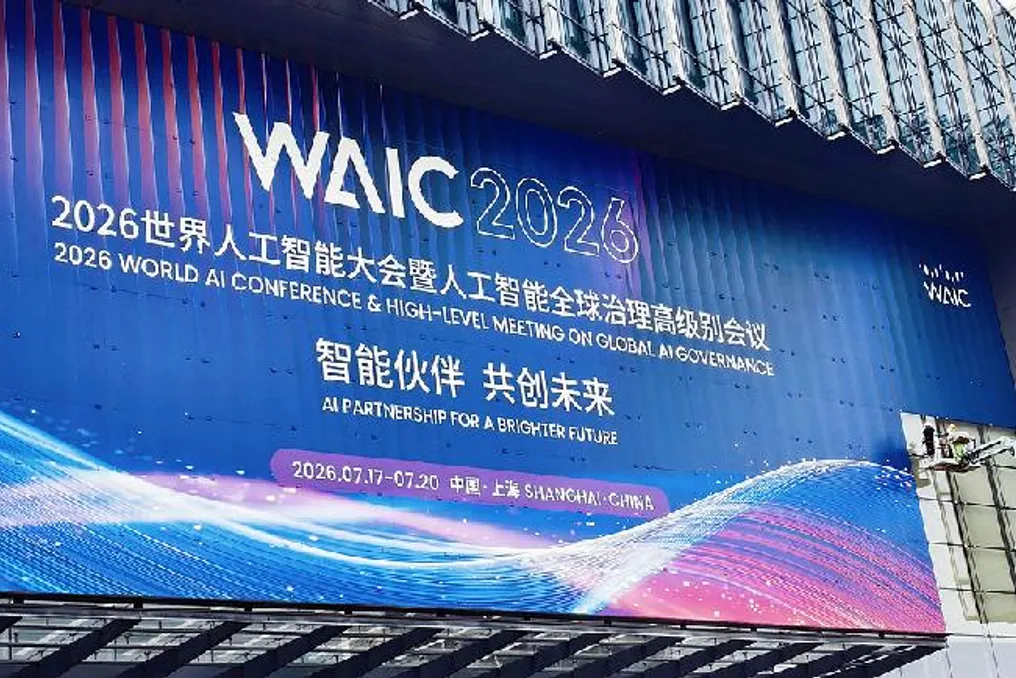
China has always followed an open and cooperative global vision for AI development. The World AI Conference 2026 (WAIC) and the High-Level Meeting on Global AI Governance, themed 'Intelligent Partners, Co-creating the Future', are scheduled to take place in Shanghai. The event will bring together participants from around the world to showcase the latest achievements in AI innovation, industrial applications, and governance practices, and will serve as an important platform for exchanging ideas and experiences in governance.
The conference is particularly significant as it takes place at the beginning of China's fifteenth five-year plan (2026–2030). China intends to further promote the integration of technological and industrial innovations, advance and expand the AI+ Initiative, and cultivate and strengthen the intellectual industry to support high-quality economic and social development. These efforts will contribute to broader technological opportunities, industrial prospects, and real-world applications in global AI innovation and cooperation.
The Global Network of AI Capacity Building Exchange and Cooperation Centers was officially opened at the headquarters of the World Trade Organization. The Center for Global AI Governance Innovation (CGAIG) was present at the ceremony as a representative institution of China and one of the founders of this network. In Shanghai, a leading hub for AI development, a comprehensive AI industrial ecosystem has been formed, supported by extensive research resources and broad international networks, positioning the city as a key platform for promoting global AI cooperation.
Since its launch at the WAIC 2025 opening ceremony, the Center for Global AI Governance Innovation (CGAIG) has been working to promote China's proposals for global AI governance and facilitate practical cooperation in this area. Recently, the UN-promoted Global Network of AI Capacity Building Exchange and Cooperation Centers was established at the World Trade Organization headquarters in Geneva, Switzerland. CGAIG, as a representative institution of China and one of its founders, is working to integrate AI capacity building expertise and international public goods into the institutional design of the network, promoting an inclusive and mutually beneficial vision of global AI cooperation.
Ahead of WAIC 2026, China is leveraging its innovative resources to promote inclusive and collaborative global AI development and unlock the great potential of intelligent technologies. Given the uncertainty and complexity of AI, it is crucial that all parties enhance mutual trust, reach consensus, and promote safe and reliable development. China is ready to work with the international community to address common challenges through cooperation, enhancing overall well-being through innovation, and building a globally recognized AI governance structure. Together, it is possible to ensure that AI becomes a global public good that truly benefits humanity, allowing people around the world to participate in the immense opportunities this transformative technology brings.