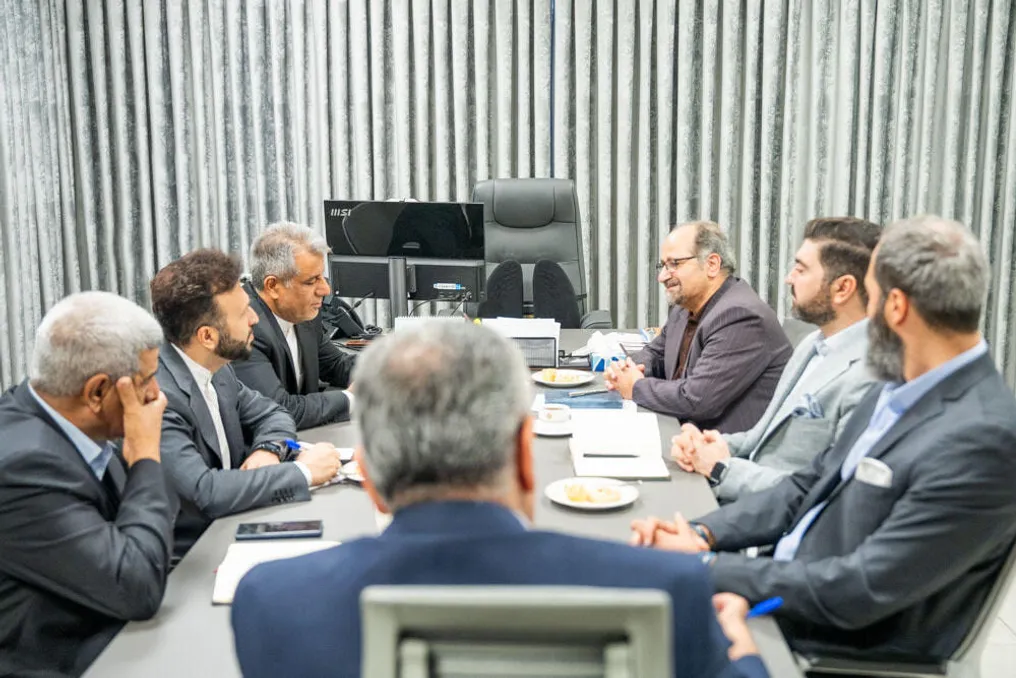
The new Iranian ambassador to South Korea visited the Tehran Chamber of Commerce before his departure and held talks with the Secretary General of the Chamber. The goal of the meeting was to discuss opportunities for cooperation with this East Asian country and to develop commercial, technological, and cultural exchanges between the two states.
Strengthening Trade Relations
During the meeting, the importance of mutual recognition of potential and increasing awareness of both countries' opportunities was emphasized to strengthen trade ties. The meeting took place between Ahmad Erfaniaan, the new Iranian ambassador to South Korea, and Fereydoun Vardinajad, the Secretary General of the Tehran Chamber. The Deputy of the Chamber for International Affairs and Trade Development, as well as representatives of the Iran-South Korea Joint Chamber of Commerce, were present.
As solutions to enhance economic and trade interaction between Iran and Korea, regular B2B meetings and specialized webinars, exchange of economic and technological information, organization of trade delegations, and establishing contacts with South Korean chambers of commerce were proposed.
Prospects for Cooperation
At the beginning of the meeting, Fereydoun Vardinajad, Secretary General of the Tehran Chamber, noted South Korea's growth experience over the past decades, highlighting its influence in cultural, industrial, and political spheres. He noted that preserving cultural identity and developing a brand are priorities for policymakers in the country, and significant success has been achieved in this area.
The Secretary General also stated the readiness of Iran's private sector to cooperate with Korean companies. He added that traders and businessmen from both countries can learn about each other's economic opportunities and potential through data exchange and establish long-term commercial ties. Thus, the development of exchanges depends on recognizing potentials and increasing awareness of opportunities in the economic sectors of the two countries.
Areas of Interaction
According to the Tehran Chamber's Public Relations Department, Vardinajad described the areas of cooperation with Korean traders as diverse. He indicated that synergy and long-term planning involving the embassy's economic department, along with a targeted approach to developing trade between Iran and South Korea, can strengthen interaction with the country's economic enterprises in fields such as automotive industry, home appliances, information technology, digital economy, medicine and medical equipment, pharmaceuticals, and others.
He also presented proposals aimed at facilitating trade relations, including increasing direct communication between the Tehran Chamber and the Iranian embassy in South Korea, regularly holding B2B meetings and webinars, exchanging economic and technological information, interacting with trade delegations, and communicating with South Korean chambers of commerce, which will help raise awareness of the country's opportunities.
Significance of Chambers of Commerce
Furthermore, Ahmad Erfaniaan, the new Iranian ambassador to South Korea, referencing his experience in other countries, emphasized the importance of utilizing the potential of chambers of commerce to improve trade relations. He stated that chambers of commerce, acting as a parliament of the private sector, can contribute to raising the level of trade ties and improving economic interaction in various fields.
Erfaniaan continued the discussion by mentioning the history of economic relations between the two countries. He reported that studies show that trade volume between Iran and South Korea exceeded $17 billion in 2011, and this country was Iran's fourth trading partner; however, this figure has decreased in recent years.
The Iranian ambassador to South Korea stressed the need to maintain communication between Iranian and Korean traders and businessmen despite political restrictions. He noted that scenarios for developing trade relations with South Korea have been developed under various conditions, and it is expected that bilateral trade relations will improve through online meetings, including South Korea in trade delegation programs, interaction with economic think tanks, and utilizing the potential of chambers of commerce. He also suggested considering the use of Korean companies' potential to repair war damage.
Developing the Legal Framework
In another part of the meeting, Hesamaddin Hallaj, Deputy of the Tehran Chamber for International Affairs and Trade Development, pointed to the necessity of cooperation with academic centers, knowledge transfer, and interaction between domestic small and medium-sized enterprises and South Korean economic enterprises.
Pua Firuzi, Vice President of the Iran-Korea Joint Chamber of Commerce, also emphasized the importance of traders having access to up-to-date information. He deemed it necessary to create databases focused on laws, regulations, and investment opportunities in South Korea, as well as identifying authoritative legal institutions in South Korea to advise Iranian traders. Furthermore, he announced the development of an Iran-South Korea cooperation development plan focused on economic sustainability.