The thymus, an essential gland of the immune system, undergoes a process of atrophy throughout life, and scientists believe that the ability to regenerate it may offer significant benefits for human health.
Function and Decline of the Thymus
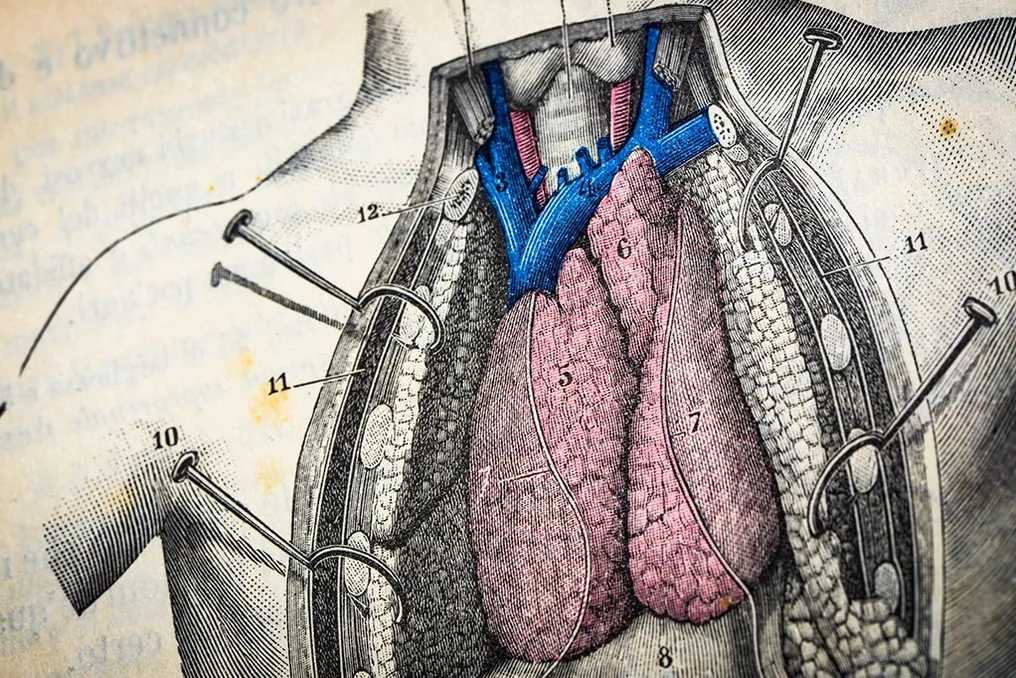
Located in the chest, behind the sternum and in front of the heart, the thymus was considered by the ancient Greeks to be the seat of the soul. Although modern science took centuries to understand its utility, its role is being reevaluated. Currently, it is known that it is a vital gland for immunity, but it has the characteristic of shrinking and, after a certain age, practically disappearing.
Recent studies indicate that the condition of this organ can serve as an indicator of a person's general state of health. For this reason, the thymus has become the focus of new investigations and pharmaceutical projects that seek, through the restoration of this transient structure, the key to a longer and healthier life.
Scientific Evolution of Understanding
There were two major conceptual shifts before the thymus received scientific attention. Before the 1960s, the belief prevailed that the organ was merely vestigial and without function. This view was supported by the fact that, in adult animals with surgical removal of the thymus, the immune response seemed to remain satisfactory, without major complications.
This perspective changed in the early 1960s when the Franco-Australian immunologist Jacques Miller analyzed the impact of thymectomy not only in adults but also in newborn mice. Initially healthy, these pups began to lose weight and die a few weeks after weaning. Miller discovered that the surgically treated animals became extremely vulnerable to infections and had few lymphocytes, cells crucial for bodily defense.
With this, he concluded that the thymus was involved in the development of immune system cells during childhood. Later, at the end of the same decade, Miller proved that the thymus was responsible for producing T cells (from thymus), vital components both for fighting infections and for attacking cancerous cells.
Atrophy and New Discoveries
It was logical to assume that the body would stop producing new T cells in adulthood, given the natural decline of the thymus. However, after human puberty, much of the thymic tissue transforms into inactive fat and fibrous tissue, leading to a drop in T cell production: at age 40, capacity drops to one quarter; at age 65, it produces only 10% of the original level.
A second significant change occurred in 2023 when researchers reported that individuals who had their thymus removed in adulthood showed three times the risk of mortality and double the probability of developing cancer five years after the surgery.
In 2026, two studies published jointly in the journal Nature detailed the damage further. Analyzing over 31,000 people, a team demonstrated that smaller thymuses were correlated with a higher risk of death, lung cancer, and cardiovascular problems. In another study, it was observed that oncology patients with reduced thymuses reacted worse to immunotherapy, resulting in higher post-treatment mortality.
Investments in Regeneration
Although the findings only point to correlations and do not determine whether thymus atrophy is the direct cause of these deteriorations, they have driven the interest of many researchers. The hypothesis that the thymus is a general marker of health suggests that its regeneration would bring vast benefits. Many companies are investing in treatments to rejuvenate the thymus.
In the United States, the biopharmaceutical company Intervene Immune is developing clinical trials under the leadership of cryobiologist Gregory Fahy, who injected growth hormones into himself in 1996 to try to regenerate his own thymus. In these controlled trials, growth hormones and other compounds are administered four times a week while researchers monitor chemical aging markers in chromosomes. These tests showed promising results, with participants reverting, on average, two and a half years in these markers.
According to Nature, investments in this area amount to tens of millions. Last October, the biotechnology company Zag Bio contributed 80 million dollars, and in January, the Swiss company TECregen invested another 12.4 million. Funds and pharmaceutical companies are also showing interest in new treatments.
Current Challenges and Perspectives
Currently, methods for thymus regeneration are limited, expensive, or excessively complex. Androgen deprivation therapy, used in prostate cancer treatment, and caloric restriction are examples of approaches that manage to increase T cell production.
There are other obstacles: growth hormone therapies can carry high risks of cancer and blood sugar spikes. Furthermore, many compounds are injected directly into the vein, which represents an additional inconvenience. It is also difficult to create a treatment that affects only the thymus, given that this organ is not composed of a specific protein.
Even with the possibility of safe regeneration, studies have not yet defined the exact impact of increased T cell production on health. Microbiologist Ann Griffith, from the University of Texas, commented to Nature: 'It is easy to notice that the size has been restored, but it is less evident if all functionality has also been recovered.' She added: 'We still do not fully understand how these interventions actually regenerate the tissue, and we are just beginning to explore this process. We are very much at the beginning of this journey.'