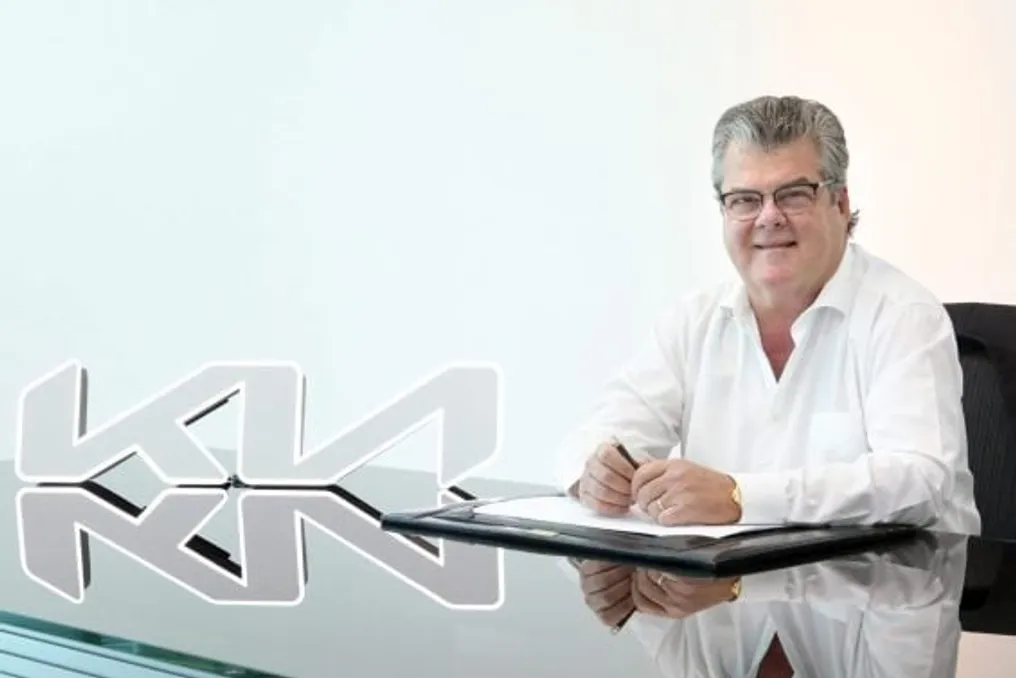
José Luiz Gandini, exclusive importer for Kia, stated that the expansion of Kia's headquarters' investments in Brazil, including the possible construction of a factory, is conditional upon the federal government forgiving a billion-dollar debt.
José Luiz Gandini, exclusive importer for Kia, stated that the expansion of Kia's headquarters' investments in Brazil, including the possible construction of a factory, is conditional upon the federal government forgiving a billion-dollar debt.
Gandini informed AutoPapo that Kia's headquarters, located in South Korea, is negotiating to obtain the cancellation of debts accumulated at the end of the 20th century, related to the incident involving the Asia Motors factory. He emphasized that if this forgiveness occurs, he will transfer control of the operation to the Asian representatives, operating only as a dealer.
The businessman stressed that this negotiation has no defined deadline, and until it is concluded, the current situation remains unchanged, and he will continue managing the brand's importation.
Although Kia and Hyundai belong to the same conglomerate, they operate autonomously in the country due to legal issues. Hyundai, for example, is managed directly by the South Korean headquarters, develops products specific to the national market, and has its own manufacturing unit in Piracicaba, São Paulo.
In contrast, Kia operates exclusively through the importation of models manufactured abroad, usually of higher value. This operation, conducted officially and exclusively by the Gandini Group since 1992, is the largest importer without local production and with continuous activity in Brazil.
Due to its smaller scale of operation and focus on an average ticket price rather than high volume, Kia's strategy restricts its sales. Globally, in 2025, Kia registrations represented about 75% of Hyundai's volume; in Brazil, Kia's share was only 3% compared to its larger sister.
The natural trend in the global automotive sector would be to integrate operations and use Hyundai's infrastructure to boost Kia's presence in the Brazilian market, which would require setting up a factory. Gandini confirmed knowledge of this intention from the South Koreans, mentioning that they heard the new Kia factory would be near the Hyundai unit in Piracicaba.
In the 1990s, Asia Motors Brazil received a reduction of import taxes of about 50%, under the condition of building a factory in Bahia. Although the automaker imported models such as Towner and Topic, the industrial unit was never completed.
Since the exemption was granted without fulfilling the counterpart, the government began demanding the saved taxes, in addition to applying penalties to Asia. When the debt was registered in active debt in 2003, the principal amount was approximately 217 million US dollars. With additions of interest and fines, the amount reached about 1.6 billion reais, then 2 billion reais, and reached approximately 6 billion reais, as determined by the STJ in 2023.
Asia Motors belonged to the Kia group and was later absorbed by Kia in Korea. The National Treasury alleges that Kia is the successor and attempted to direct the tax enforcement against it. However, in 2023, the STJ did not close the collection, returning the case to the first instance so that Kia's responsibility could be evaluated by the appropriate legal procedure.
Thus, despite the debt originating from Asia Motors Brazil, there is a risk of collection against the Korean headquarters. This risk discourages Kia from establishing a subsidiary, investing directly, or putting industrial capital in Brazil, as its assets could be subject to tax enforcement. For this reason, the operation remains under the management of the Gandini Group, and resolving this liability is seen as an essential preliminary condition for the headquarters to take over the business and build the factory.
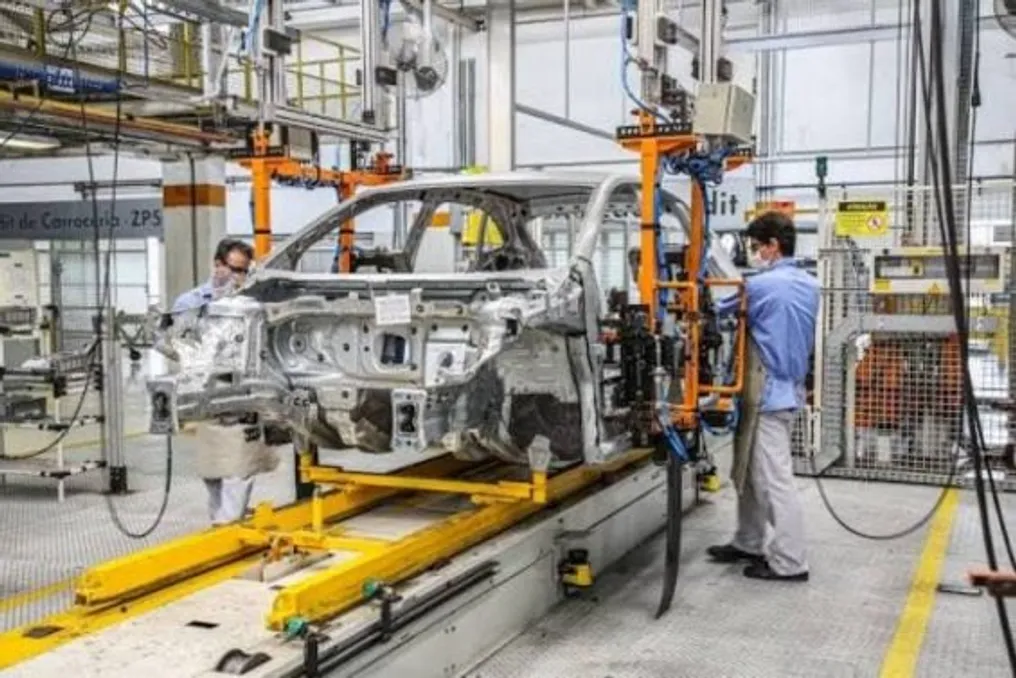
Volkswagen is implementing a new industrial restructuring in Brazil aimed at creating production capacity for the Tukan, which will be its next mid-size pickup truck. It is expected that between late 2026 and early 2027, the Virtus model will leave the factory located in São José dos Pinhais, Paraná (PR), and its focus will be transferred to the Anchieta unit in São Bernardo do Campo, São Paulo (SP).
This logistical change will allow the Paraná plant to be entirely dedicated to the production of the T-Cross and the newly arrived Tukan pickup. In return, the ABC Paulista factory will remain responsible for manufacturing the Virtus, as well as other vehicles such as the Polo Track and the Nivus. Essentially, Volkswagen is promoting a reallocation of functions within its national manufacturing network.
This move occurs just over a year after the brand began assembling the Virtus in Paraná. At that time, part of the sedan's production was moved to São José dos Pinhais to balance factory utilization and support other company launches. Now, the situation is reversing because the introduction of the Tukan requires production space at the Paraná unit, which already handles the T-Cross.
The Tukan represents a crucial project for Volkswagen in Brazil in the coming years, aiming to position the brand in a segment where Fiat Strada has a strong market presence. The viability of this reorganization is facilitated by the fact that current Volkswagen models use the MQB A0 platform, which provides great industrial adaptability, allowing production to be relocated according to demand, the arrival of new cars, or the need to reduce downtime on assembly lines.
This strategic approach is already in effect in other company products. For example, the Polo Track is produced in São Bernardo do Campo, while other versions of the hatchback are manufactured in Taubaté, São Paulo. This division of labor helped free up space in the inland São Paulo unit for the production of the Tera, Volkswagen's new entry-level SUV.
Regarding the Virtus, production in Paraná started in a shared manner with the Anchieta unit. This process involved transporting already welded bodies from São Bernardo do Campo to São José dos Pinhais, where the sedan went through painting, final assembly, and inspection phases.
The new change coincides with the final production phase of the Saveiro. The compact pickup, one of the oldest models still in line at Volkswagen, is set to be discontinued in the last quarter of this year. To ensure stock before production ends, the brand intensified the pace at Anchieta, implementing two shifts, overtime, and bi-weekly schedules on Saturdays.
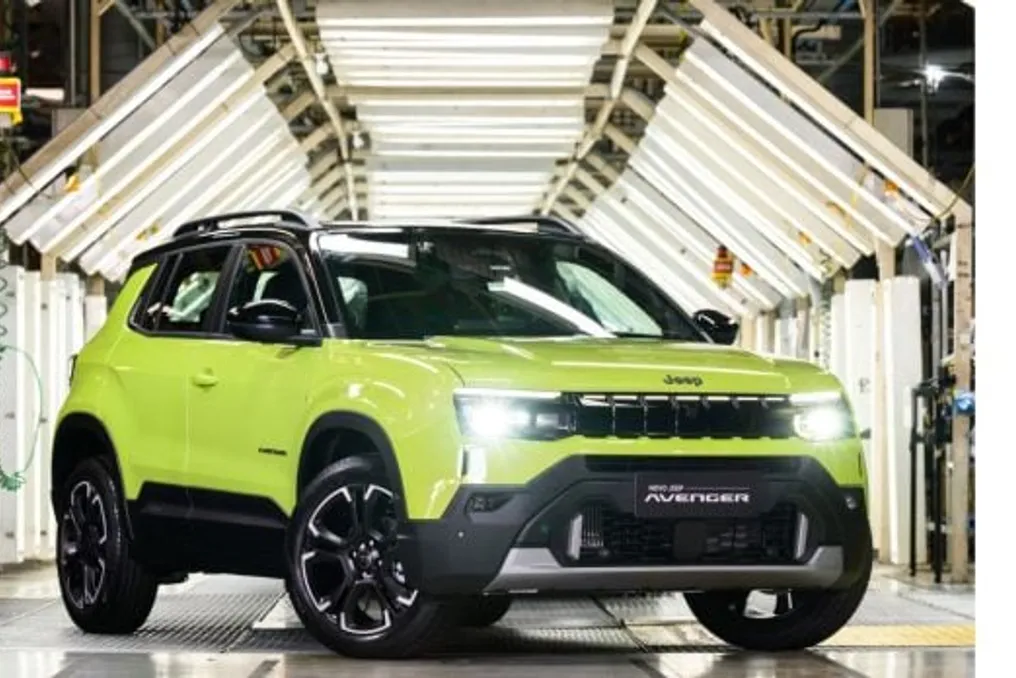
Stellantis has begun serial production of the new Jeep Avenger at the Porto Real Automotive Plant in Rio de Janeiro, during an event celebrating the unit's 25th anniversary. This compact SUV represents the first electrified vehicle to be produced at the Fluminense factory and is the centerpiece of a R$ 3 billion investment plan that the automaker will allocate to the plant until 2030.
The Avenger will be launched in the country using Bio-Hybrid technology on the CMP vehicle platform. This mild-hybrid system combines a 1.0 turbo flex engine with a 12-volt electric unit, aiming to optimize acceleration and reduce fuel consumption. With this national operation, Brazil establishes itself as the second country to produce the Avenger, which was previously manufactured only in Tychy, Poland.
This compact model, being the smallest Jeep model at 4.08 meters long, will compete in the heated entry-level SUV market against models such as Volkswagen Tera, Fiat Pulse, and Renault Kardian. To meet growing demand, Stellantis confirmed the implementation of a second production shift in Porto Real. This expansion will lead to the hiring of 800 new direct employees, in addition to generating approximately 450 positions in the supplier sector.
The initiative also aims to strengthen local industry, with the arrival of eight new suppliers to the industrial complex, raising the total number of partners in the region to 13. According to the automaker, this increase in network density will help reduce logistical costs, increase component nationalization, and stimulate the development of the automotive industry in the state of Rio de Janeiro. This move is part of a historic R$ 32 billion investment made by the company in the area.