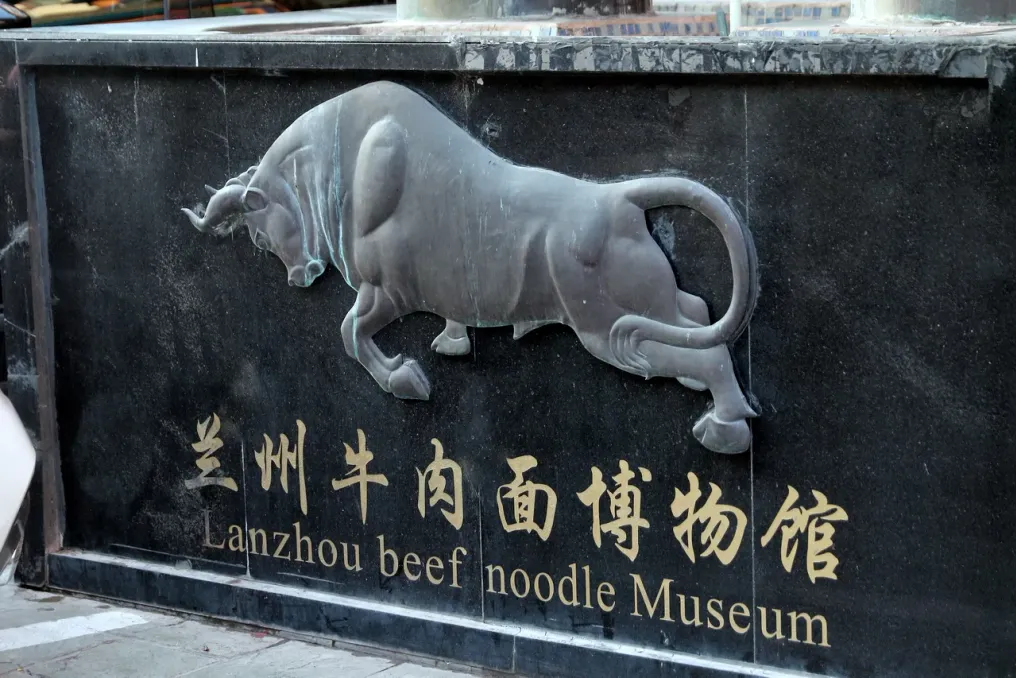
In Lanzhou, even a simple breakfast reflects the city's history, the ancient Silk Road, and centuries of Chinese culinary traditions. For the residents of Lanzhou, a bowl of beef noodles is not just food, but an integral part of daily life, the rhythm of the city, and its cultural identity. This is why there is a museum in Lanzhou dedicated to one of China's most famous culinary symbols—Lanzhou beef noodles.
International Interest in the Dish
During the 'Second International Week of Communication of Lanzhou – Lanzhou Global Media Tour,' journalists, bloggers, and photographers from 23 countries across six continents visited the museum. For many participants, getting to know Lanzhou began not only with natural attractions and the history of the Silk Road, but also with the dish that local residents eat almost every day.
Cultural Heritage of the Dish
At first glance, beef noodles might seem like a simple dish made of flour, water, meat, broth, and spices. However, in Lanzhou, this dish embodies an entire cultural tradition. The traditional preparation of Lanzhou beef noodles was included in China's national intangible cultural heritage list in 2021. Its significance stems not only from the recipe but also from the preparation methods, the skill of noodle masters, and long-standing serving traditions.
The museum traces the history of this dish by displaying traditional tools, kitchenware, and other items related to noodle making. Through this exhibition, visitors can see how a culinary tradition has gradually become an integral part of the city's cultural identity. One of the central exhibits in the museum is a large sculpture celebrating the iconic bowl of Lanzhou beef noodles, illustrating how the history of an entire city can be reflected in one dish.
Visual Aspect of the Tradition
Lanzhou beef noodles are valued not only for their taste but also for their unique presentation. The traditional serving includes five visual elements: clear broth, white radish, red chili oil, green herbs, and yellow wheat noodles. This composition follows a traditional principle known as 'one clear, two whites, three reds, four greens, and five aromas,' reflecting an emphasis on visual balance and attention to detail characteristic of Chinese culinary culture.
Noodle Making Mastery
The act of making the noodles itself is considered a skilled craft. First, the dough is kneaded and then allowed to mature, after which the noodle maker begins to stretch it by hand, transforming one piece of dough into numerous long, thin strands. Although the process seems simple, achieving noodles of consistent thickness, elasticity, and texture requires many years of practice. Visitors can also choose the thickness and shape of their noodles, opting between wider or thinner, round or flat varieties. Thus, the ordering process becomes a dialogue between the customer and the noodle maker. For many international guests, the preparation process itself is one of the most memorable experiences, as several hand movements transform a small piece of dough into long strands ready to be dipped into boiling broth.
Influence of the Silk Road
The history of Lanzhou is closely linked to the Silk Road. For centuries, the city served as a crossroads for trade, culture, and peoples. These exchanges also influenced the local cuisine. Lanzhou beef noodles developed in an environment where various culinary traditions, cooking methods, and ingredients from Northwest China mingled. Therefore, the museum tells not only the story of a popular dish but also provides insight into the development of Lanzhou as a city situated at the intersection of civilizations for centuries. In this sense, a bowl of noodles serves as a culinary archive of the region.
Part of Daily Life
For many residents of Lanzhou, the day begins with a bowl of hot beef noodles. It is not a festive dish nor a rare delicacy. Residents eat it before work, during meetings with friends, and as part of their daily routine. This close connection to daily life makes Lanzhou beef noodles particularly appealing to visitors. Unlike many traditional dishes found mainly in restaurants, this culinary tradition is visible on the streets of the entire city.
Platform for Cultural Exchange
The museum provided the international media delegation with an opportunity to learn about China through its cuisine. Food often serves as one of the most accessible forms of cultural exchange. Understanding the tradition does not always require lengthy explanations. Observing the master stretching the dough, the sound of boiling broth, and tasting a dish prepared by generations of local residents can be equally significant. For the media tour participants, the museum complemented other Lanzhou attractions. While the Ink Danshui Landscape Park demonstrates the geological history of the region, and the 'Danshui Dancing Horses' performance recreates the Silk Road era, the noodle museum focuses on the daily life of local residents. Together, nature, history, and gastronomy form a unified experience for visitors.
From Local Specialty to Global Brand
Today, Lanzhou beef noodles are known far beyond Gansu province and China, having become one of the country's most recognizable culinary traditions. Nevertheless, the museum reminds visitors that the international fame of the dish began as a simple local breakfast. According to the museum's concept, this reflects the distinctive character of Lanzhou, where cultural heritage remains closely tied to daily life, continues to evolve, and is passed down to new generations, fostering international cultural exchange. The museum presents gastronomy as a tool for cultural diplomacy and tourism promotion. It suggests that a journey through Lanzhou can begin on the ancient Silk Road, continue among the colorful Danshui mountains, and conclude with a bowl of hot beef noodles. Thus, visitors may discover that understanding the character of the city sometimes begins with tasting what its residents eat every day. Lanzhou beef noodles represent a dish, a craft, a history, and a cultural brand. The museum dedicated to them transforms this culinary tradition into a narrative about the city, its people, and centuries of cultural exchange.