On the occasion of National Savings Month in South Africa in July, it becomes evident that financial inclusion must evolve beyond simply opening bank accounts. According to Yinki Yomi-Tokosi, Executive Director of Strategy and Investments at Access Bank South Africa, true financial security requires viewing financial literacy as essential national infrastructure.
Similar stories
Popular
Insufficient System Access
Yomi-Tokosi argues that access to financial systems only makes sense when consumers know how to use them safely, confidently, and in their own best interests. He notes that a client may have a bank account but still feel excluded from the financial system if they do not understand why fees were charged, how interest is calculated, what a debit order means, why a credit score is important, or how to recognize fraud.
Alarming Trends in South Africa
The call to raise the level of financial education comes at a critical juncture of regulatory and market changes in South Africa, highlighted by three alarming trends. Firstly, there is significant debt pressure: according to FinMark Trust FinScope data from last year, 75% of South African adults who took out loans used them to cover daily needs such as food, with about 12 million adults classified as over-indebted.
Secondly, there is a rise in digital fraud: SABRIC statistics show that cases of digital banking fraud sharply increased from 31,612 in 2023 to 64,000 in 2024, with losses exceeding 1.4 billion rand. SABRIC specifically noted that these crimes are driven by social engineering—manipulating human behavior—rather than technical security breaches by the bank.
Thirdly, new policy directions are emerging: the National Treasury's draft on a National Consumer Financial Education Policy, submitted for consultation in 2026, explicitly recognizes financial education as a key pillar for improving financial well-being and building digital trust.
Infrastructure Proposals
Yomi-Tokosi insists that banks must abandon the approach where financial literacy is treated as 'an annual campaign or a brochure issued at a branch.' When asked about specific government actions, funding models, and accountability mechanisms that would allow financial literacy to function as national infrastructure rather than a one-off event, he was unequivocal.
He explained that transforming financial literacy into infrastructure requires a national delivery system with constant coordination, funding, and measurement. Yomi-Tokosi proposed a clear roadmap: the National Treasury must finalize an implementation plan specifying responsible parties, timelines, priority audiences, and a public annual evaluation system. Funding, he suggested, could combine the existing Financial Sector Conduct Code requirement for financial institutions to allocate 0.4% of net profit after tax with government investments in schools, public programs, and independent assessment.
Oversight Mechanisms and Standards
The Consumer Financial Education Committee should coordinate standards and reduce duplication. Accountability should measure whether people understand costs and risks, seek help promptly when facing increased debt pressure, use appeal channels, and conduct safer transactions. It is crucial that results are published broken down by audience, language, income level, and delivery channel so that weak performance can be identified and corrected.
Regarding the National Treasury's policy draft, Yomi-Tokosi supports the emphasis on financially underserved households, SMEs, digital literacy, stakeholder coordination, and enhanced monitoring and evaluation. However, he believes the level of implementation needs strengthening, proposing three practical changes: a funded plan with assigned delivery responsibilities and timelines; minimum national standards for simple-language content, multilingual content, accessibility for people with disabilities, and low-data or offline delivery; and an overall results framework allowing programs to be compared using understanding and behavior metrics alongside reach.
Complaints, fraud, defaults, and ombudsman data should drive priorities, showing where consumers face difficulties in the real customer journey. To implement this, Yomi-Tokosi believes regulators should impose minimum measurable obligations on banks to integrate financial education into the everyday customer journey. This includes the registration process, loan applications, high-risk transactions, defaults, and complaints. Information must be simple, timely, multilingual, and relevant to the decision being made.
Reporting and Fraud Prevention Tools
Banks should report on reach alongside outcomes such as customer understanding, utilization of support or appeal mechanisms, repeat fraud, preventable payment disputes, earlier engagement after missed payments, and harmful lending patterns. These outcomes must be segmented by income, age, location, disability, and digital access, shifting the focus to stable results for customers across all channels, rather than counting brochures, messages, or training sessions as proof of impact.
When asked about actual educational alerts or transaction-level interventions implemented by Access Bank to reduce fraud and predatory lending, Yomi-Tokosi pointed to specific existing tools. DebiCheck requires electronic authentication of new debit order mandates from clients, helping prevent unauthorized withdrawals. Access Bank More uses biometric authentication for in-app authorizations and allows clients to directly block lost or stolen cards. Regarding lending, the Access Bank process includes affordability assessments and prescribed disclosures before loan issuance.
He candidly stated: 'We do not have verified early results that we could share publicly, and I would avoid attaching unverified claims of success to these interventions.' He added that the next opportunity lies in stronger contextual prompts before customers agree to a loan or complete unusually risky transactions.
Balancing Warnings and Responsibility
Developing warnings that reduce social engineering fraud without causing alert fatigue is a delicate balance. Yomi-Tokosi argues that warnings work best when they reflect the specific risk the customer is currently facing. A generic message shown repeatedly becomes background noise. Banks should reserve stronger interruptions for unusual recipients, rapid changes in transaction behavior, new devices, large payments, or fraud-related patterns. The warning must explain the specific risk, give the customer a clear action to take, and provide an immediate way to verify or report.
On the contentious issue of responsibility, when targeted manipulation succeeds, Yomi-Tokosi believes it must follow the facts and the available controls of each party. Banks remain responsible for secure systems, proportional detection, and clear communication. Telecommunication companies and digital platforms also bear responsibility. While customers must protect their credentials, targeted manipulation should never automatically imply that the customer alone is at fault.
Yomi-Tokosi cautiously notes the limits of financial literacy: it improves judgment in consumer decisions but does not solve problems caused by unaffordable products, weak credit scoring, aggressive sales tactics, and inadequate enforcement, which require stronger market intervention. Responsible credit assessment, product management, limitations where harm is foreseeable, accessible debt support, and effective supervision must operate in parallel with education.
Achieving Universal Coverage
To avoid exacerbating inequality, interventions must reach people through branches, community organizations, radio, USSD, WhatsApp, and zero-rated digital services. Content must be multilingual and designed for different levels of literacy, digital confidence, and the needs of people with disabilities. Success must be measured separately for vulnerable groups. He warns: 'An intervention that primarily improves outcomes for digitally affluent clients has not solved the national problem.'
Future Steps and Calls
Looking ahead, Yomi-Tokosi puts forward three urgent demands. Within 12 months, the National Treasury must publish a funded implementation plan with national targets and a public results dashboard. The Prudential Authority, in conjunction with the FSCA, must require bank boards of directors to consider social engineering vulnerability, fraud response, and digital trust as governance and operational risks. Within six months, the banking sector must adopt common standards for risk-based alerts, rapid account protection, and fraud reporting.
If he could prioritize one funded initiative, it would be a national, free 'Pause, Check, Report' service. Operating through apps, USSD, WhatsApp, call centers, and community channels, it would provide consumers with a reliable way to verify a message or payment request and quickly report suspected fraud. Ultimately, the vision is clear: 'Digital trust is built not only by technology,' concludes Yomi-Tokosi. 'It also depends on whether people understand the risks surrounding that technology. Financial literacy is not a soft add-on to inclusion. It is what helps people turn access into control.'
The Central Board of Secondary Education (CBSE) in New Delhi released the results of the second round of 10th-grade board examinations on Saturday.
Second Stage Exam Results
According to CBSE data, 663,777 students registered for the second board exam, of whom 513,955 took the test to improve their scores after the main examination. As a result, 308,095 students, which accounts for 59.95%, were able to improve their results compared to the main exam results.
Overall Academic Performance
The Board reported that the overall pass percentage, combining the results of the main and second board exams, reached 96.78 percent. Among students who took the exam in the 'compartment' category, 149,822 participated, of whom 78,503 successfully completed the task, raising the pass rate in this category to 52.40 percent from 48.68% in 2025.
Policy and Access to Results
The introduction of the second board exam aligns with the National Education Policy (NEP) 2020 and provides 10th-grade students with an additional opportunity to improve their grades. For regular students, the best of the two scores will be taken for the final result. Students can view their results through the DigiLocker Results Portal, and schools will receive digital academic documents via the CBSE repository. Printed mark sheets and certificates of completion for regular students will be delivered through the respective educational institutions.
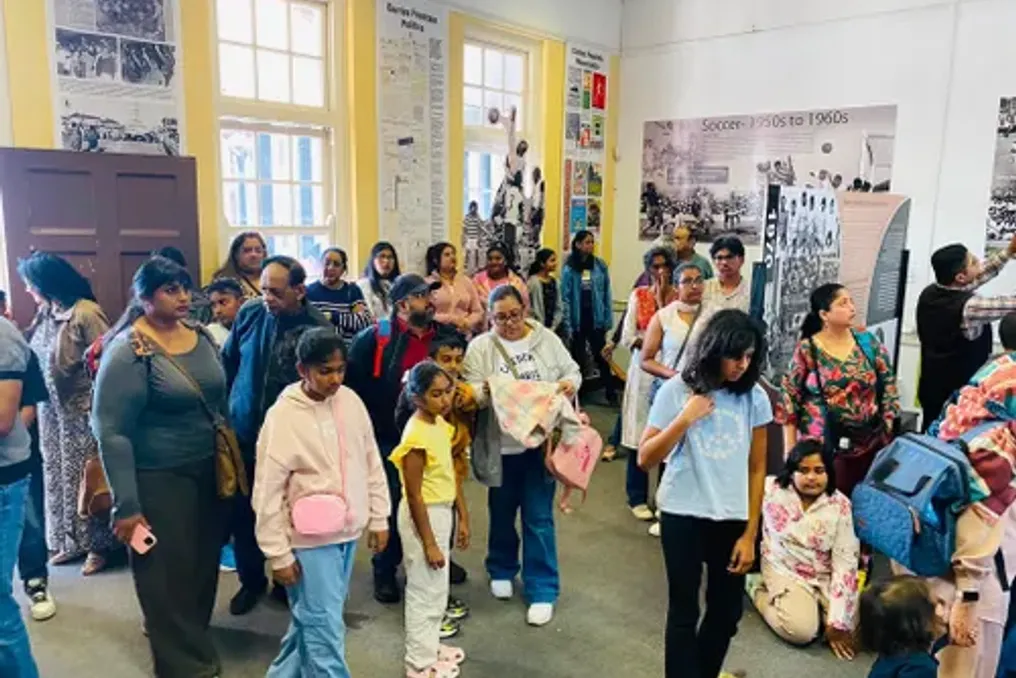
As part of the 'Day in the Museum' program, the 1860 Heritage Centre in Durban organized an enriching educational experience for participants aged eight to sixteen, introducing young visitors to the general history of South Africa.
Program and Exhibits
Visitors, including accompanying adults, explored the exhibits at the 1860 Heritage Centre, which is a museum agency of the KwaZulu-Natal Department of Sport, Arts and Culture. The program combined learning, culture, and practical experience, taking history beyond textbooks.
During the tour, students studied exhibits dedicated to the Indian contract, the historical role of the Curry Fountain, and the significant contribution of women to the struggle for liberation. Special galleries commemorating Nelson Mandela, Mahatma Gandhi, and Chief Albert Luthuli were also visited. Through original artifacts, photographs, and historical displays, the youth deepened their understanding of figures who influenced modern South Africa.
Cultural and Culinary Events
The cultural aspect of the day was enhanced by a performance by Professor Suri Govender, who demonstrated the Asimbonanga dance. She conducted a workshop based on the expressive movements of this iconic performance, which she previously presented at Nelson Mandela's inauguration ceremony in 1994. This allowed the young guests to see how music and dance can preserve history.
The day concluded with a traditional cooking masterclass, where children learned to prepare roti and bhaji—simple dishes that formed an important part of the diet of indentured Indian workers. Selvan Naidu, Director of the 1860 Heritage Centre, noted that these traditional foods carry deep memories passed down through generations.
Naidu emphasized: 'Bhaji and roti were part of the staple diet of Indian indentured workers, a simple yet nutritious dish that sustained our people for generations.' He added that the goal is for the youth to remember the love with which these traditional dishes were prepared during the hardships of the contract era and to understand why they remain popular today.
Through the combination of historical exhibitions, cultural performances, and traditional cooking, the museum created an engaging educational process that encourages young people to find meaningful connections with their heritage.