A betting expert told AFP that the FIFA World Cup exceeded expectations, showing an 80% increase in betting volume compared to the 2022 tournament, even considering the larger number of matches in the 48-team format.
A betting expert told AFP that the FIFA World Cup exceeded expectations, showing an 80% increase in betting volume compared to the 2022 tournament, even considering the larger number of matches in the 48-team format.
Despite skepticism from many football fans regarding the increase in teams from 32 to 48, it appears that bettors have embraced this change positively. Darren Small, Senior Vice President of Managed Trading Services at Sportradar, told AFP: 'We saw an 80% increase in ticket volume. So, we are seeing more bets and more active customers. We reached record figures and exceeded our expectations when comparing it to 2022, which was slightly different because it took place in winter.'
Ahead of Sunday's final between Spain and reigning champion Argentina, Small predicts that the company will process about 8.5 million bets for its 250 bookmaker clients worldwide. Although the figures surprised the company, they expected growth due to the tournament expanding to 104 games, as well as general industry growth.
England ranked first in the betting rating, although it may have to wait another four years to add a second champion to its 1966 triumph. The four semi-finalists, who were also in the top four of the FIFA rankings, generated the most interest. England attracted approximately 16.3 million bets, surpassing France (15.5 million), Argentina (15 million), and Spain (14.5 million).
Matches with the highest betting volumes included the semi-final between England and Argentina, which ended with Argentina winning 2-1 and brought in about 5.8 million bets; the quarter-final between England and Norway (2-1) – 5.7 million; and the semi-final between Spain and France (2-0) – 5.3 million.
David Stevens, Head of Public Relations at the historic English bookmaker Coral, noted that concerns about the expanded format dissipated during the group stage, which brought many surprises. He told AFP: 'Our fear was that there would be a high proportion of predictable results, with so-called smaller nations offering little or no resistance to their established rivals.' However, this did not happen; throughout the group stage, there were many matches whose results did not match betting predictions.
Cape Verde deserves special attention for confidently facing Argentina in the last 32, exiting the tournament in a tense 3-2 match after extra time. Stevens emphasized: 'Special thanks to Cape Verde. These islanders have become a new favorite for all bookmakers, managing to draw with Argentina and Spain, so I believe... much of the fear we had at the beginning did not come true.'
The rise in betting interest is also driven by offerings that cover not only the team winner but also individual players and a range of other possible outcomes. Small gave an example: 'You can bet on Messi to score with his left foot in the first 25 minutes, on Spain winning 3-1 with 15 corners and 2 assists.'
Influential FIFA President Gianni Infantino hinted at the possibility of further expansion to 64 teams, possibly influenced by the success of the 48-team format. Stevens answered the question about wanting to host an even larger World Cup in four years: 'The simple answer is no. There must be a point where fans and bettors stop being interested due to too many games, and 64 teams seems to be such a point. Nevertheless, Mr. Infantino wants it to happen, and therefore, it is probably a safe bet that it will happen, given his current power over FIFA.'
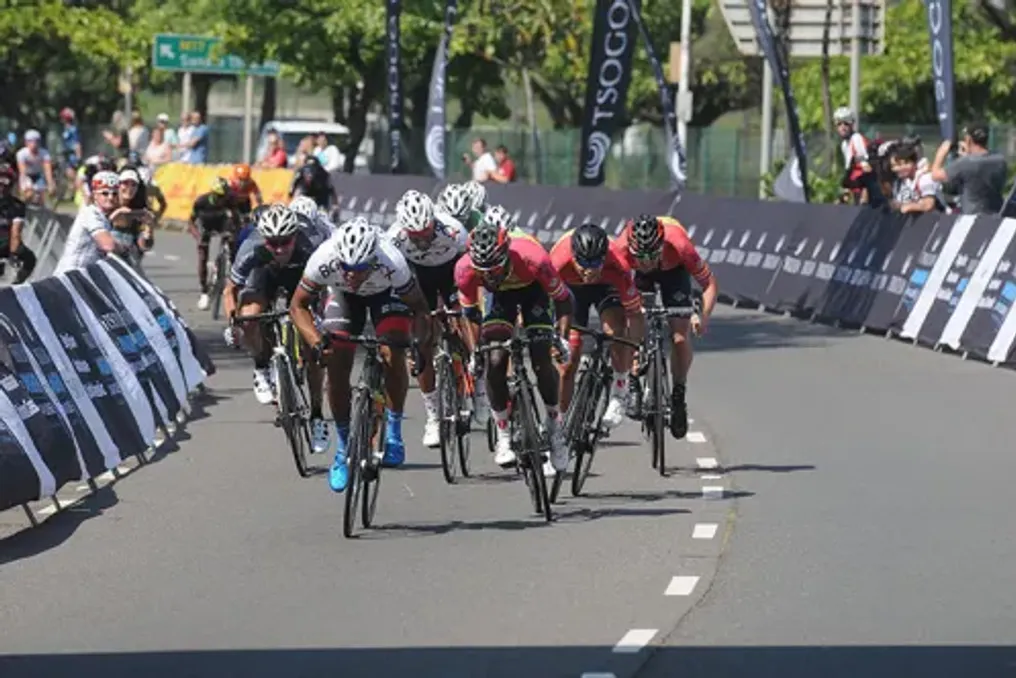
Ryan Gibbons and S'Anara Grove triumphed at the anniversary 40th aQuellé Amashova Durban Classic race on Sunday. They secured the titles of winners in the elite men's and women's races, respectively.
The main race, covering a distance of 106 km, ran from the Pietermaritzburg town hall to the Masabalala Yengva pedestrian bridge in Durban. The event attracted thousands of cyclists, as recent editions were marred by bad weather, but this time the conditions were almost ideal for winter.
For former professional racer Gibbons, the victory was particularly significant as he was able to participate in one of South Africa's largest races after returning from Europe. He finished first with a time of 2:12:11, ahead of Gustav Basson, who took second place with a time of 2:13:24, and Casper Kruger, who secured third place with a time of 2:13:46.
Gibbons, a cyclist from Johannesburg, was part of a four-man breakaway that provided a decisive advantage early in the race, before making his winning move after Inchanghi. He commented: 'This is a very special event. Amashova is one of the biggest events of the year, and standing on the podium for the 40th anniversary was a huge goal.'
In the women's race, Grove demonstrated her superiority, winning the Amashova title for the third consecutive time with a time of 2:30:29. However, she admitted that this year's victory might have been the most enjoyable. Lucy Young took second place with a time of 2:33:49, and Liesel Jordaan received bronze with a time of 2:35:17.
The Durban rider started cautiously in the early stages before making a decisive maneuver on the M13 track after a series of attacks. Grove shared her thoughts: 'I wasn't 100% sure I would win because I wasn't completely confident in my endurance, but I was surprised that I managed to ride solo.'
The founder of the iconic Amashova National Classic, Dave Wiseman, completed the race despite battling various forms of cancer over the past year. Grove, who also won the debut Amashova criterium, emphasized that adaptability was key to her three-year winning streak. She stated: 'Every time requires something different. Things don't always go according to plan, but you have to work with what you have.'
The anniversary edition held special significance for founder Dave Wiseman, who reflected on the growth of the event: it has transformed from a race with just over 100 participants in the early 1980s into one of South Africa's leading cycling events. Wiseman noted: 'We wanted to create an iconic cycling event for KwaZulu-Natal, and it's incredible to see where it has come.'
Wiseman also shared that he completed the race while fighting cancer, calling the start itself one of his proudest achievements. Despite ongoing treatment, he finished in 3:41:00, only a few minutes behind his personal best time. He concluded: 'It was a good day. I feel much better than I did a couple of months ago, and being here for the 40th anniversary means a lot.'
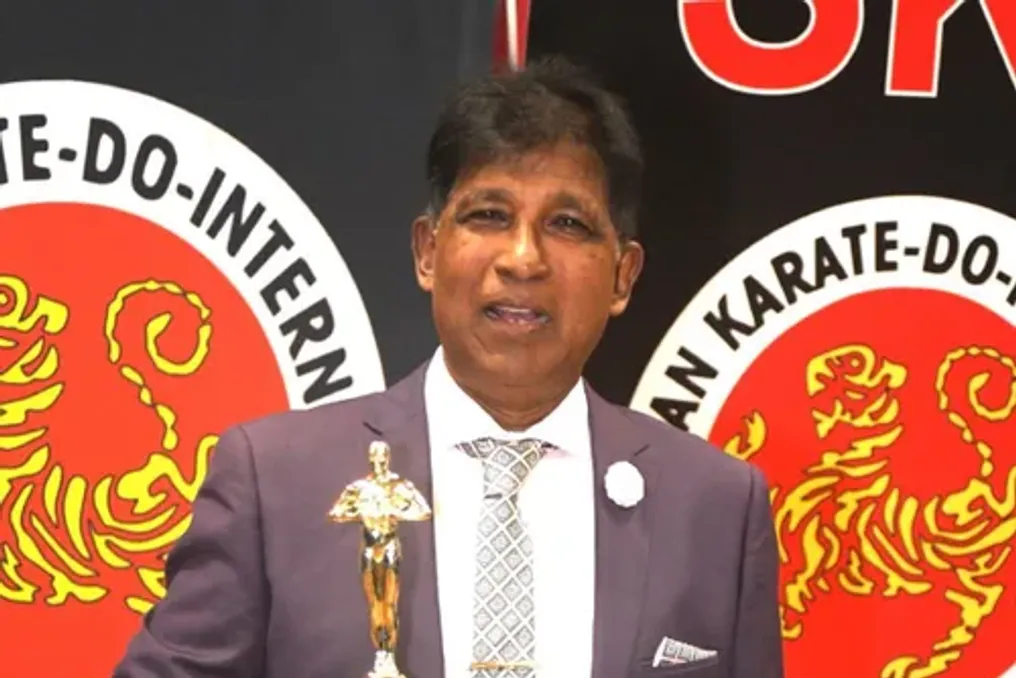
The World Karate Federation (WKF) confirmed that Karate SA (KSA) retains its status as a full member of the global sports organization, despite the temporary suspension of the entire national executive committee's activities. Currently, KSA is managed by interim president Sean Ahmed.
Previously, IOL reported that the WKF had preliminarily suspended the activities of the KSA national executive committee, led by long-term president Sunny Pillay, and appointed an interim council until disciplinary proceedings are concluded. This suspension remains in effect.
However, in a letter addressed to the President of SA Sports Confederation and Olympic Committee (Sascoc), Barry Hendrix, WKF President Antonio Espinosa clarified that this decision is directed against individuals, not against the federation itself. He emphasized that KSA's membership in the global organization has not been affected.
Espinosa wrote that the current procedures within the WKF Disciplinary and Legal Commission concern individual members of the National Executive Committee who have been temporarily removed from their managerial functions in KSA. He added that no sanctions have been imposed on KSA itself, and its status as a member of the affiliated National Federation remains unchanged.
This means that the federation as a structure maintains its place in the WKF, and its athletes retain the right to participate in international competitions; however, the suspended executive body does not have the authority to manage it. This letter followed a meeting between the WKF and Sascoc held on Tuesday.
Espinosa stated that KSA continues to be a legitimate member of the WKF and the Union of African Karate Federations (Ufak), and this position also applies at the Sascoc level. He referred to recent correspondence from Sascoc confirming that KSA is a 'recognized National Federation in good standing,' noting that this was reconfirmed by Sascoc at the Tuesday meeting. This step effectively precludes interpreting Sascoc's letters as support for the suspended leadership.
Espinosa specified that Ahmed, acting within his mandate and established deadlines, is responsible for managing KSA. The letter also paved the way for holding national championships this week, which the WKF considers crucial for maintaining the participation of South African athletes on the international stage. Espinosa stressed that the WKF's priority is ensuring the protection of karate athletes from South Africa through KSA and its interim president Sean Ahmed.
He reported that the interim committee possesses 'all necessary powers' to organize championships and register athletes entitled to wear national colors internationally according to Sascoc confirmation. The WKF Executive Committee decided on the temporary suspension of the KSA executive body on June 24, and the suspension letter was signed by Espinosa at the end of June.
The interim council is headed by Ahmed, and its members include François Bornmann, Themba Ndlovu, and Belinda Driscoll, with Morgan Moss appointed as technical coordinator, while an Sascoc representative has yet to be appointed. His 12-month mandate includes reviewing KSA rules and safety practices, as well as conducting new elections.
The suspended executive body of Pillay contests this decision. The law firm Deneys, representing KSA's interests, stated that the suspension letter 'does not disclose the grounds' for this decision and that no factual basis for any alleged violation was presented. The firm demanded the documents underlying the decision and stated that KSA reserves the right to appeal it and submit the matter to the Court of Arbitration for Sport.
Espinosa assured that the WKF remains committed to working with Sascoc and the Ministry of Sport 'for the ultimate benefit of South African karate athletes.' A copy of the letter was sent to Ufak President Suleiman Gaye, the KSA interim council, and the Ministry of Sport, Arts and Culture.
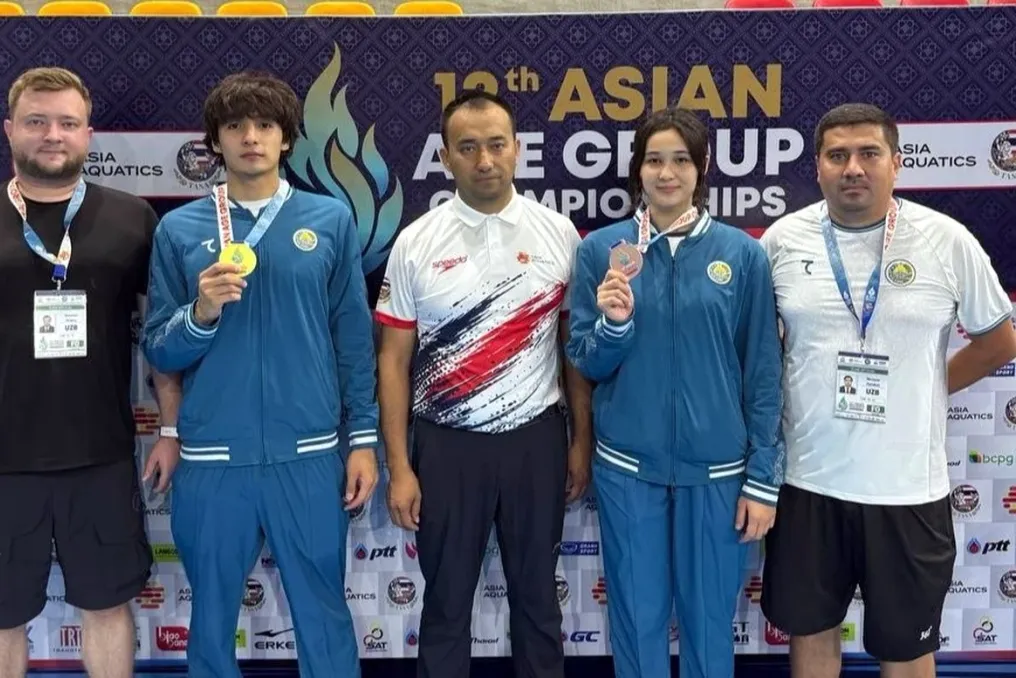
In the final stage of the Asian Aquatics Championships in Thailand, Uzbekistan won one gold and one bronze medal across various age categories.
Mukhammadismoil Rakhmonov won the gold medal in the men's 200-meter breaststroke for juniors under 18 years old. Additionally, Parizod Abdukarimova received a bronze medal in the women's 100-meter backstroke for girls under 18 years old.
Thanks to these achievements, Uzbekistan increased its medal count at the continental championships by two more awards.