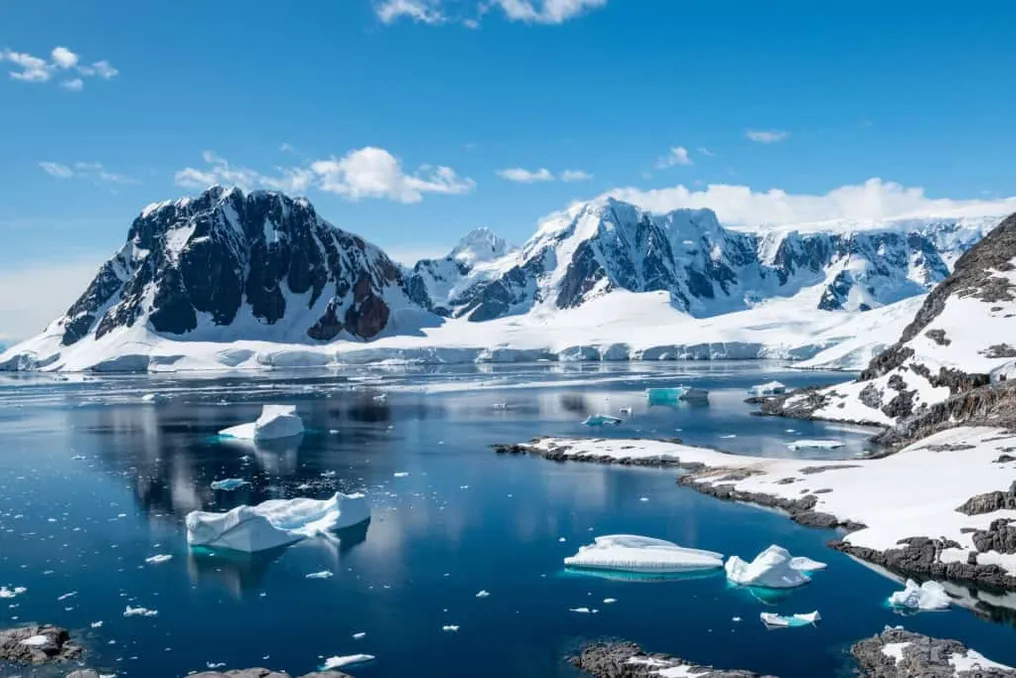
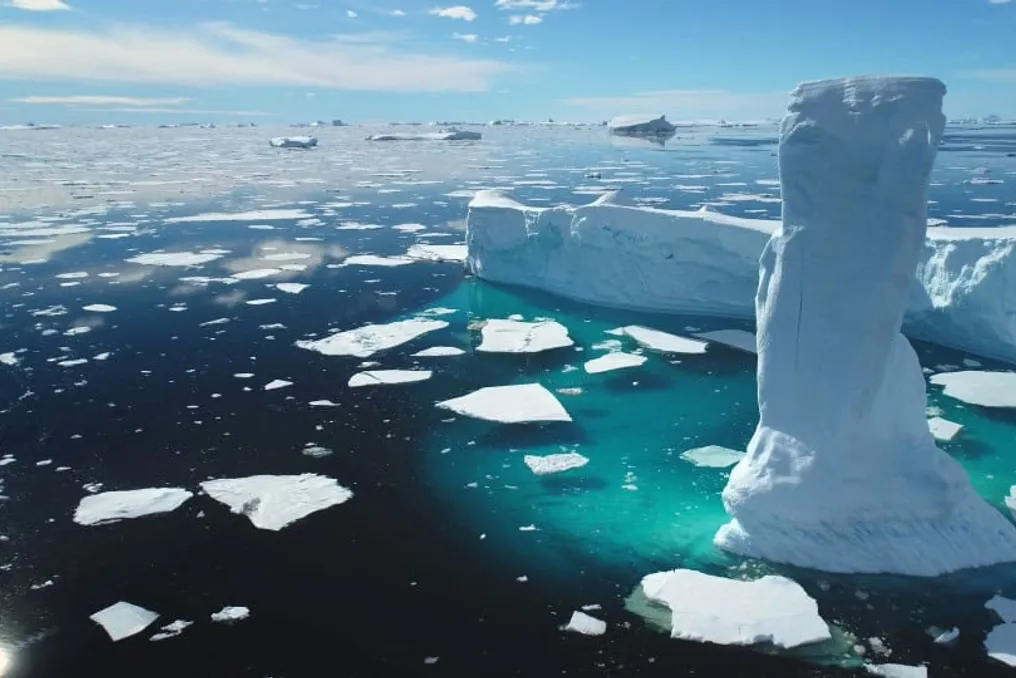
Research conducted by the University of California, Davis, has shown that iceberg melt in the northeastern part of the Pacific Ocean may be a contributing factor to the weakening of the AMOC, one of the planet's largest ocean currents.
How the Ocean Current Works
This finding changes how scientists interpret past climate phenomena, demonstrating that modifications in a distant area can impact the balance of the oceans. The research, published in the journal Nature Communications, focused on the Atlantic Meridional Overturning Circulation (AMOC), a mechanism that acts as a vast heat conveyor belt.
This current is responsible for transporting warm, salty water from the tropics to the North Atlantic, accounting for approximately 70% of oceanic heat transport across the Equator. Consequently, any alteration in its functioning can generate global climate consequences.
Review of Ancient Climate Events
Historically, scientists believed that large releases of ice in the North Atlantic were the main cause of AMOC weakening during events known as Heinrich events, which are periods of severe climatic variations recorded in the last glacial era. However, the analysis of the sequence of occurrences suggested a different scenario.
According to Chijun Sun, an assistant professor in the Department of Earth and Planetary Sciences at the University of California, Davis, these events in the Atlantic occurred after the current's strength decreased. He clarified that more recently, it was discovered that such episodes of iceberg melt in the North Atlantic followed the weakening of the AMOC and the cooling of Greenland.
Ancient Climate Simulations
To understand the origin of these transformations, researchers integrated paleoclimate data with models created on supercomputers. The model managed to replicate Heinrich Stadial 1, which occurred about 19 thousand years ago. During this period, sea level was approximately 119 meters below the current level, a massive layer of ice covered North America, and the carbon dioxide concentration was around 180 parts per million.
The simulations showed that the fresh water released by Pacific icebergs reached the North Atlantic, modifying the essential conditions for the AMOC to function. The results indicated that Pacific icebergs could have influenced changes in the AMOC, the freshwater altered the characteristics of the North Atlantic waters, and the entire process was linked to phases of global climate change, revealing connections between distinct oceanic regions.
Implications for Future Climate
In addition to elucidating past events, the study offers indications about the future climate. Chijun Sun mentioned that there is a scientific consensus that the AMOC is expected to weaken by the end of the 21st century, with some experts considering the possibility of a system collapse.
The researcher emphasized that the current is not only sensitive to events in the North Atlantic but can react to any discharge of freshwater. Previous research by the same team had already associated the weakening of the AMOC with a significant reduction in rainfall in areas such as Central America, the Amazon, and West Africa. This new work reinforces the idea that the behavior of the oceans depends on an intricate network of global connections, and that changes in ice can cause effects far beyond where they occur.