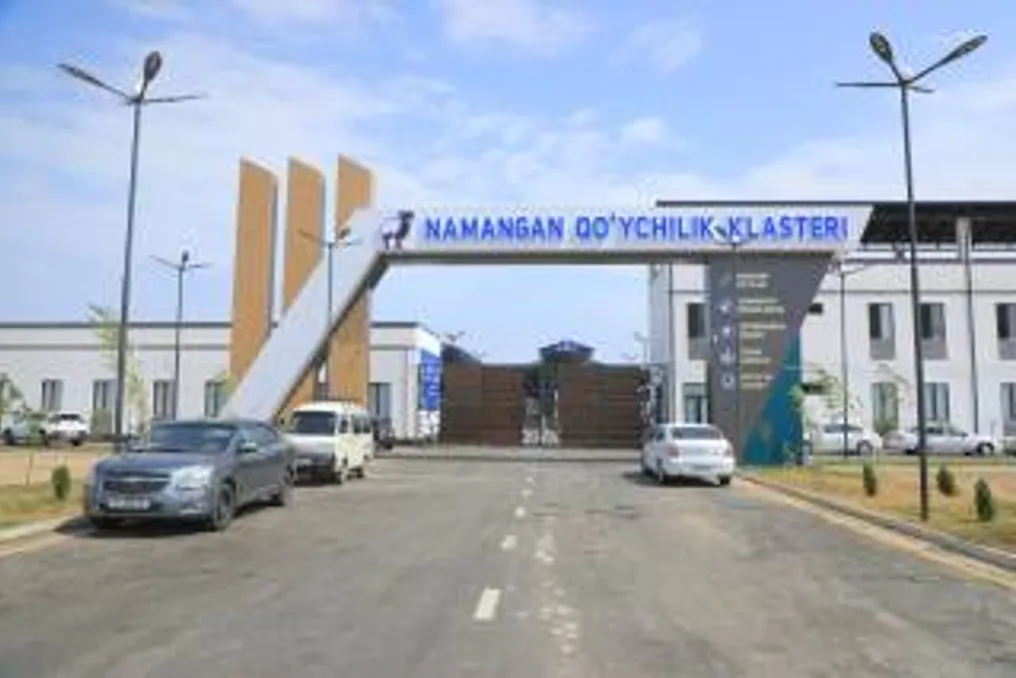
State policy in the field of food security pays special attention to ensuring the population with food products. In this regard, the active development of the livestock industry, the introduction of modern and innovative methods, and the stimulation of enterprises specializing in this area are extremely relevant tasks.
President's Visit and Instruction
During his visit to Namangan region on June 23, the President familiarized himself with the activities of the 'Namangan Sheep Farming Cluster' in Turakurgan district. The President emphasized the significance of this enterprise for the development of animal husbandry, ensuring the domestic market with quality meat, and increasing employment, and gave an instruction for its popularization.
Project Implementation Mechanisms
This project became possible due to the broad opportunities established in the President's decree of January 29, 2020, 'On additional measures to support the livestock industry.' Within the cluster, modern logistics services, veterinary and service branches, as well as retail points for direct product sales will be created, which will ensure the formation of a complete and continuous cluster chain.
Cluster Creation and Goals
Utilizing the extensive opportunities and benefits provided for livestock farming in the country, LLC 'Namangan Sheep Farming Cluster' was founded in 2026 in the village of Kumidon, Turakurgan district, under the leadership of livestock breeder Ayzamjon Usmonov on a 10-hectare plot. The cluster, with a total value of 35 million dollars, began stable operation with the goal of realizing a noble intention—supplying people's tables with affordable and high-quality meat.
Development and Plans for Increasing Livestock Numbers
This large three-stage project initially included work on building and equipping five hectares of land, and plans for the same area are planned in the near future. Currently, more than one hundred employees in the cluster take care of over 1500 animals according to modern requirements. It is planned to acclimatize the 'Arashan', 'Hisor', and 'Adelbay' breeds, imported from Kazakhstan, Tajikistan, and the Kyrgyz Republic, which have high productivity, to the local climate. By the end of the year, the number of jobs should reach 280, and the livestock population should reach 50 thousand heads.
Growth Strategy and Quality Improvement
According to the entrepreneur, during the meeting with the President, it was instructed to transform the cluster into a holding company. Thus, the task has been set to increase the livestock population to 300 thousand heads by the end of 2027. Thanks to the introduction of modern breeding technologies and a scientific approach in the cluster, there is an opportunity to significantly increase both the volume and quality of meat production.
Technological Advantages and Economic Effect
According to the project's technological indicators, by intensive rearing of sheep weighing 40-50 kilograms, imported from abroad, over three months, their weight can be increased to 100 kilograms, which will allow for up to 60-70 kilograms of pure meat from each sheep. As a result, productivity will exceed traditional livestock farming by 45-50 percent, and after the full launch of the project, the production of 35-40 thousand tons of high-quality meat will be ensured annually in the Namangan region.
Pricing Policy and Production Expansion
The head of the 'Namangan Sheep Farming Cluster', MChZh Ayzamjon Usmonov, noted that the current price of beef is 130 thousand sums per kilogram, and mutton is 160 thousand sums. The goal is to reduce these prices by 20 percent. For this, 40 meat stores are open in the region, and in the future, meat will be supplied to markets across the country. Additionally, starting next year, the production of 50 thousand tons of organic fertilizers is planned with the involvement of advanced industries, and 200 thousand tons of feed.
In conclusion, within the cluster structure, modern logistics services, veterinary and service units, as well as retail points for direct product sales will be created, which will lead to the formation of a complete and uninterrupted cluster chain.