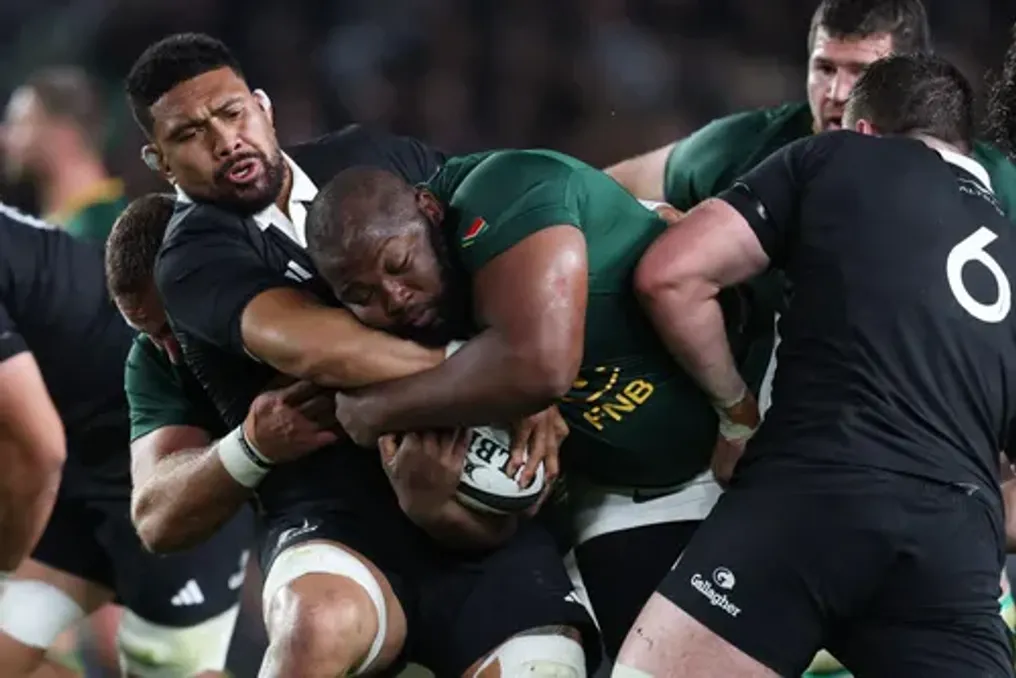
The resumption of traditional, multi-week tours by the All Blacks team to South Africa is seen as a factor capable of revitalizing Springbok rugby and pushing the depth of the squad assembled under Russell Erasmus to its limits.
The resumption of traditional, multi-week tours by the All Blacks team to South Africa is seen as a factor capable of revitalizing Springbok rugby and pushing the depth of the squad assembled under Russell Erasmus to its limits.
For decades, the essence of international rugby has been shaped during long tours. These trips were not merely high-intensity individual matches or brief weekend visits, but an entire event that stopped the whole country.
The announcement of the revival of the old format of multi-week tours between New Zealand and South Africa is more than a nostalgic gesture. For South African rugby, which faces changing team dynamics, immense squad depth, and constant pressure to maintain leadership, the return of the main rivalry in its true format is precisely the breath of fresh air the local game needs.
To understand the importance of this format, one must consider the historical weight carried by these two nations. Their rivalry is built on respect, folklore, and moments that define athletes' careers.
Former All Blacks captain Sean Fitzpatrick notes that the peak of his career was linked to South Africa. Recalling the 1995 Rugby World Cup final in Johannesburg, Fitzpatrick called it 'the greatest test match I ever played.' This tournament changed the face of the nation, but it was built on the foundation of epic, grueling historical tours that preceded it.
Long tours fostered a rivalry based on respect, folklore, and career-defining competitions. Furthermore, this format differs from modern tours:
The unique, almost mythical aura that South African players carry from childhood holds immense significance. Former Springbok hooker Bismark du Plessis openly spoke about his journey from a 'small town dream' in Bethlehem until he could stand face-to-face with the Haka. For a young man from a farming family, facing New Zealand is not just another fixture on the calendar, but a spiritual rite of passage.
By bringing back long tours, modern South African rugby is not just scheduling games; it is reviving the romanticism, national excitement, and deep inspiration that breeds the next generation of players like Bismark and Fitzpatrick.
A long tour leaves no room to hide. In short formats or mid-year single matches, teams can mask structural weaknesses with raw emotion or a brilliant tactical plan. A multi-week tour in South Africa eliminates this safety net.
Figures like Bakkies Boeta understand this perfectly. Boeta shared an observation from a conversation with legendary All Blacks captain Richie McCaw. McCaw mentioned that New Zealand never expected to physically dominate the Bokke for a full 80 minutes. Instead, the entire psychological strategy of the All Blacks was focused on finding 'weak moments'—those brief, split-second lapses in concentration—and ruthlessly exploiting them.
When the All Blacks are in a country for weeks, playing mid-week against local franchises and consecutive, intense test matches, the margin for error shrinks to zero. Such a format will demand one hundred percent mental endurance from the South African elite, forcing them to eradicate weak points and elevate their game to a completely new level of clinical precision.
This continuous pressure comes at an interesting time for the modern Springboks. Under Russell Erasmus, South Africa has created incredible squad depth, but maintaining sharpness across everyone requires grand, highly competitive events. Centre Lukhanyo Am recently spoke about his own fight to regain form to secure a spot in a midfield packed with world-class talent, emphasizing how Erasmus's rotation creates a healthy and extremely competitive environment where no player can afford complacency.
The old tour, including non-test matches against local provincial teams alongside the main international fixtures, provides the perfect stage to showcase this depth. It allows reserves and returning stars to test themselves against the next generation of New Zealand, keeping the entire South African ecosystem in a state of hyper-competition.
The long All Blacks tour serves as a powerful stimulus for the entire squad. Take Kgagu Smith, who is currently 'on crutches but focused on the road to recovery.' Knowing that a historic multi-week battle with New Zealand looms on the horizon gives injured veterans and rising stars a monumental goal to strive for. This raises the stakes for rehabilitation, training, and internal form.
South African rugby is experiencing a golden age, but maintaining the fire requires a special kind of drive. Standard championship windows and rushed schedules sometimes feel strained. The return of mid-week games, community involvement, and a series of test matches against the greatest opponents allow South African rugby to restore its pulse. It challenges squad depth, sharpens concentration, honors history, and gives fans the spectacle that has been missing in modern rugby. It is time to welcome the old school again.
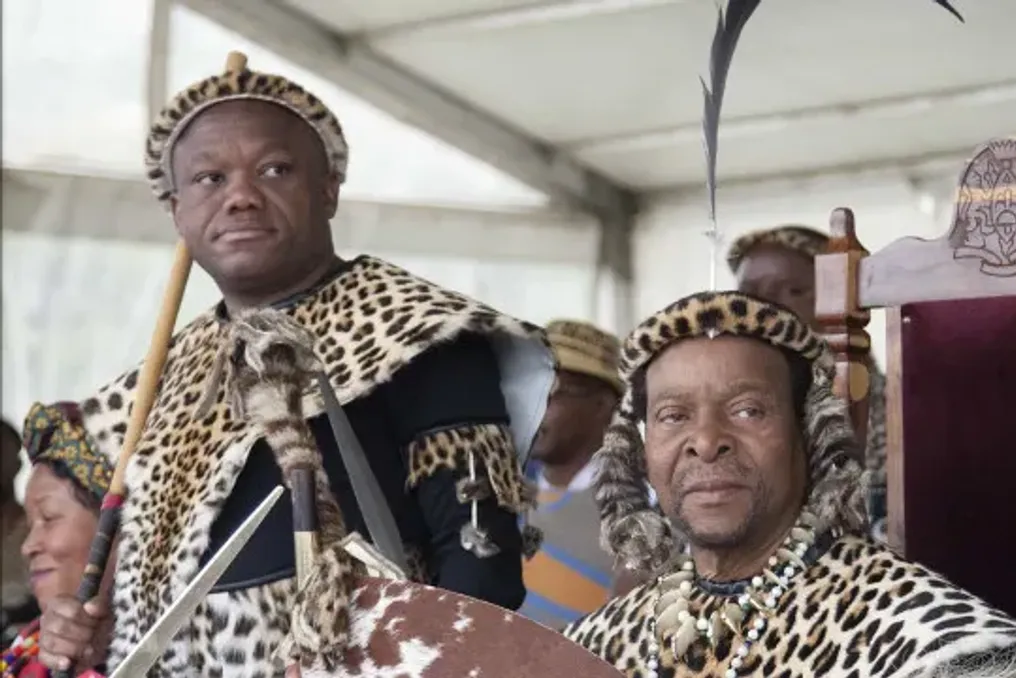
Monarch King Zulu appealed for the need for organized immigration and refuted the claim that South Africa is xenophobic. These statements were made after a meeting held on Monday in Harare with Zimbabwean President Emmerson Mnangagwa.
The meeting took place at a time when Zimbabwe was being impacted by the return of thousands of its citizens fleeing xenophobic attacks that occurred in South Africa. The monarch emphasized that any individual who enters another country legally, complies with its laws, contributes positively to society, and respects national institutions, must be treated with dignity.
When discussing the crisis of recent anti-immigration protests in the country, King Zulu clarified that issues such as illegal entry, document forgery, organized human trafficking, and intentional violations of migration legislation are matters of criminal justice and public administration, not matters of race or nationality.
King Misuzulu highlighted the historical ties between the nations of Southern Africa, arguing that African identity transcends colonial borders. He maintained that common ancestry should foster mutual respect, without this serving as justification for non-compliance with the immigration laws of sovereign nations.
Additionally, the king considered it incorrect to characterize South Africans as a people that hates Africans. In his view, South Africans have received, over generations, students, entrepreneurs, professionals, investors, refugees, and visitors from across the continent with openness.
King Zulu was accompanied by the traditional South African monarch Ndamase Ndamase, leader of the kingdom of Amampondo, located in the Eastern Cape province. King Ndamase added that while they do not support illegal entry, xenophobia and violence are not desired by the royal leaders of South Africa.
The South African government announced that more than 53,000 foreigners—mostly Malawians, Zimbabweans, and Mozambicans—have been subject to deportation and repatriation processes, in an attempt to curb irregular migration amid growing tension caused by the recent wave of xenophobic attacks.
In Mozambique, xenophobic violence resulted in the death of 11 Mozambicans, according to government data. Furthermore, two Mozambican citizens were seriously injured in an attack that occurred on the 7th in the Gauteng province, South Africa, linked to violence against immigrants, according to the Mozambique Information Office (Gabinfo).
Mozambique, which hosts about 300,000 South African citizens, received 1,363 repatriated victims of this violence, joining 6,156 Malawians who entered the country in transit due to the same situation.
Tension in South Africa has increased in recent months due to anti-immigration protests and the wave of xenophobic attacks. This situation peaked on June 30, when thousands of people demonstrated demanding that undocumented immigrants leave the country.
Anti-immigration groups attribute the country's economic problems, poor public service delivery, and high crime rates to African migrants, going so far as to prevent their access to healthcare and education in public facilities. Although the South African government has condemned such attacks, it reaffirmed its right to control irregular immigration.
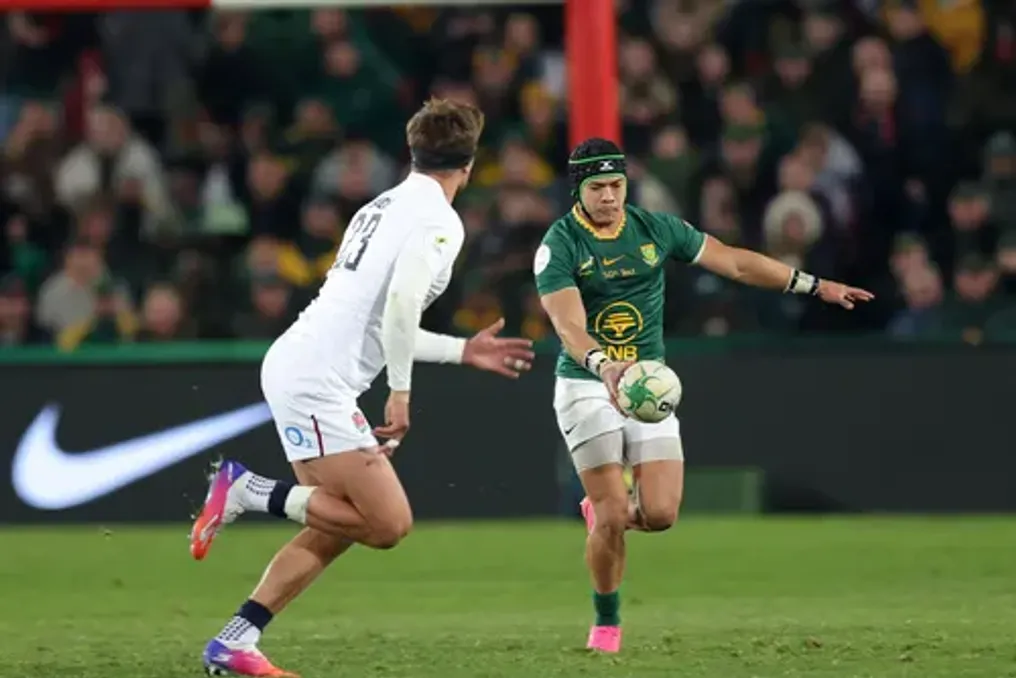
Following a convincing victory over England at Ellis Park, which dispelled any doubts about the Springboks being the best team in the world, coach Rassie Erasmus can freely conduct experiments with his squad in the next two Nations Cup matches.
The Boks secured a confident win with a score of 45-21, demonstrating that they remain the benchmark of world rugby. The team started the campaign strongly, scoring seven touchdowns and showing excellent interaction between the forwards and the backline.
Despite signs of similarity to last year's match against Australia early in the game at Ellis Park, when England managed to come back just before halftime, a change in attitude after the break allowed the South Africans to regain the advantage. They did not allow their intensity to drop, defending accurately and attacking confidently and purposefully.
Even with injuries to key players such as captain Siya Kolisi and Eben Etzebeth, who were forced off the field, the team demonstrated a high level. Cameron Hanekom, who played one game, and debutant Paul de Villiers stepped in for them. Erasmus and his assistants had to reorganize the line, but even these late substitutions could not destabilize the team.
This testifies to the exceptional nature of the squad, where players can easily integrate into the game without appearing uncertain in their roles. De Villiers performed excellently in the ball contest, while Hanekom, despite playing out of his primary number 8 position, made several powerful runs and important tackles.
Since there are upcoming matches against Scotland and Wales, as well as another meeting with Argentina, the Springboks no longer have to prove their superiority to the world. They have already beaten England and previously overcome all these opponents.
This makes the upcoming test matches an ideal opportunity for the Boks' coaches to continue investing in young athletes, including midfielder Wusi Moyo and winger Jaco Williams, giving them valuable experience at the Test level before the Rugby Championship against the All Blacks. By the time this series arrives, these players will have gained additional experience and, if needed against the Boks' oldest rivals, will be ready to replace veterans.
Unfortunately, the injury to Riley Norton was a missed opportunity, as he could have been another suitable candidate to gain experience in the upcoming matches. The world champions once again showed why they are at the top of the game, and why the depth of their squad inspires envy in world rugby. Despite the absence of several front-row players, they still had too much strength for England.