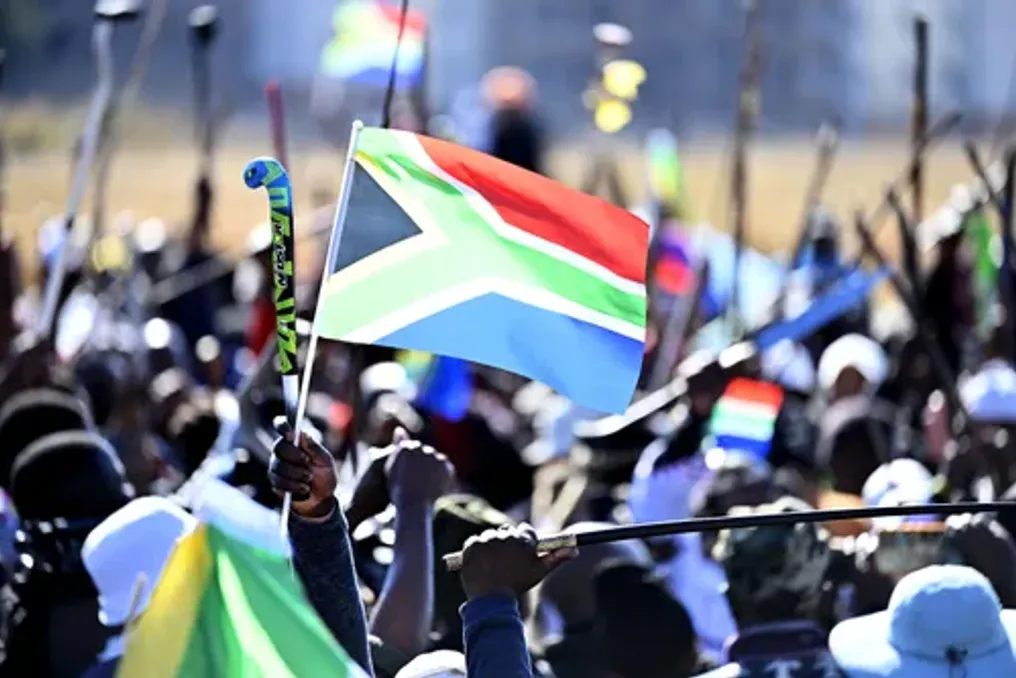
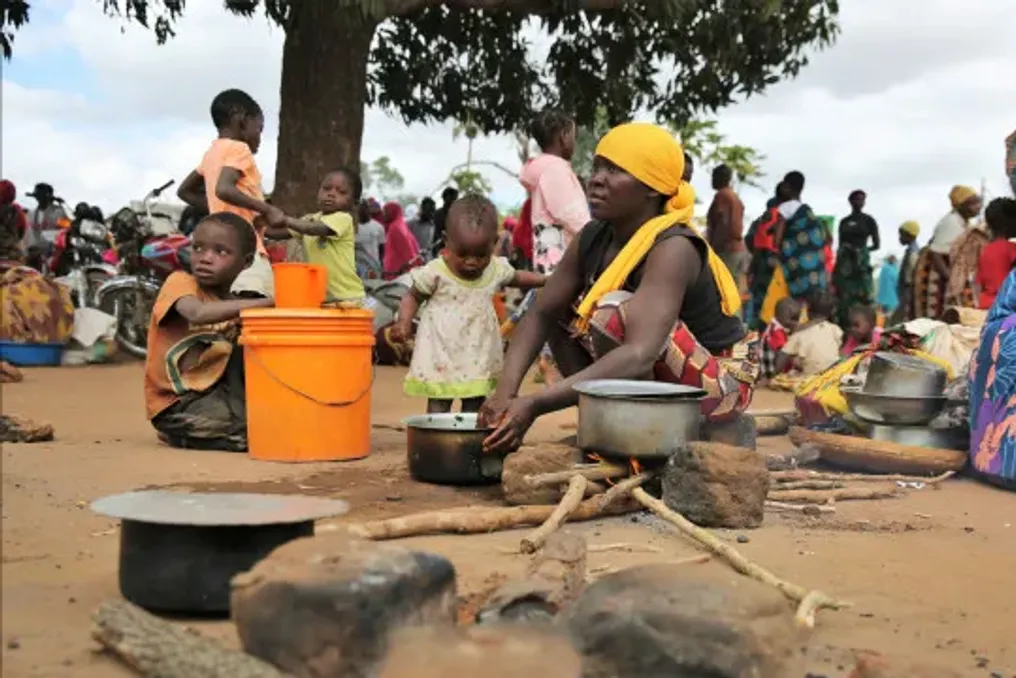
During the pursuit of democracy, millions of people have faced a new nightmare consisting of hunger, despair, and unemployment. This paradox, as Zwelinisima Vavi notes, requires close attention.
Workers' Warnings Against Neoliberalism
Workers warned about the risks associated with neoliberalism, the GEAR program, privatization, employment agencies, premature trade liberalization, austerity policies, and the commodification of public goods. They insisted that a democracy that does not change the material conditions of the majority will eventually face a crisis of legitimacy. These warnings, initially ignored as slogans, have now been confirmed by mass unemployment, hunger, and despair.
Goals of the National Democratic Revolution
The National Democratic Revolution should never have been reduced merely to changing faces in the Union building. Workers fought not just for a change in the color of the rulers, but for a transformation of the conditions in which they live. The Freedom Charter represented a contract with the oppressed, promising popular sovereignty, people's participation in the country's wealth, land distribution among workers, guaranteed work and security, and equality before the law.
The ANC's strategy and tactics adopted in Morogoro developed this idea, warning that liberation would be meaningless if the wealth of the land did not return to the entire people, and that preserving the power of existing economic interests would not even be a shadow of liberation. The liberation movement understood that political power without economic transformation would betray the true meaning of freedom.
Shift from Reconstruction to Fiscal Consolidation
The RDP program became a bridge between dream and government, embodying the Freedom Charter in programs for housing development, water supply, electricity, jobs, land, industrial development, education, healthcare, and public transport. However, the tragedy is that the RDP has disappeared from the political lexicon. Instead of reconstruction, there is talk of fiscal consolidation; instead of redistribution, there is talk of investor confidence; instead of public goods, there is talk of cost recovery. This ideological shift is at the heart of the current crisis.
Achievements and Failures of Democracy
It must be acknowledged that democracy has indeed changed South Africa: the apartheid system was defeated, universal suffrage was won, a progressive Constitution was adopted, and workers' rights are enshrined in law. Millions gained access to housing, electricity, water, and social grants. These achievements are real and were won through struggle, not gifted.
Nevertheless, the truth cannot be hidden: access to water and electricity without the ability to pay does not mean the end of liberation. A constitution that guarantees rights but cannot feed a hungry child does not free that child.
Scale of Unemployment and Hunger
More than thirteen million South Africans are unemployed by an expanded definition, which is a national catastrophe. This is a situation where youth do not know where to go in the morning, parents cannot feed their children, pensioners support entire families, and workers accept any wage because unemployment has become a tool of pressure.
The greatest betrayal of democratic South Africa has been the normalization of mass unemployment. It is spoken of as if it were a weather phenomenon that simply happened. In reality, it is the result of a conscious choice: the rejection of a decisive industrial strategy, premature liberalization, allowing deindustrialization, tolerance of mediation in labor relations and temporary employment, and disciplining public spending instead of mobilizing the state to create jobs.
Perhaps nothing exposes failure more painfully than hunger. South Africa is capable of feeding its population, yet millions suffer from food shortages, children experience malnutrition and stunted growth, and workers, even those who have jobs, increasingly cannot afford nutritious food. Workers fought for political freedom not to stand in queues for food parcels. Hunger is not charity; it is political economy related to wages, work, land, food prices, transport costs, concentration of corporations in the food system, and the inability of the democratic state to act decisively so that no child goes to bed hungry.
Land Question and Urban Life
The land question remains open, but it cannot be reduced solely to commercial agriculture. Land is also an urban issue. Millions of people migrated from former Bantustans and apartheid reserves to cities created to exclude them. They settle in slums because land and housing are either inaccessible or too expensive, living far from jobs and spending hours and a significant portion of their income on transport. When the Freedom Charter states that land should be distributed among those who work it, this requirement is both rural and urban. It is not just about farms, but about housing, transport, and the ability of workers to live near opportunities. This is why the trade union movement has always insisted that public transport is a class issue.
The collapse of suburban rail transport has been one of the most serious attacks on the standard of living of workers in the democratic era, forcing millions to spend more on transport. Every extra rand spent on travel is a rand taken away from food, and every extra hour commuting is an hour stolen from family life. The restoration of the railway system is welcomed, but public transport must not be subject to the logic of profit.
Class Inequality in Justice
The working class also interacts with the state through the police, courts, Department of Interior, municipalities, clinics, and schools, and a weak state primarily harms the poor. The rich can afford private security, private healthcare, private education, and senior advisors; the poor cannot. And when detection, investigation, and prosecution fail, it is the poor who suffer.
Justice is becoming increasingly stratified by class. The Freedom Charter promised equal justice, and equal justice requires more than beautiful constitutional formulations. It requires a functioning criminal justice system that protects women, children, and workers in townships and informal settlements. Crime is not just a security issue; it is a class issue.
Choice Under Neoliberalism
It is historically honest to look at the situation: by 1994, the Soviet bloc had collapsed, capital had become mobile, trade unions were weakening worldwide, and privatization, deregulation, and austerity had become the language of the era. South Africa entered democracy at the peak of neoliberalism. This is an objective fact.
However, objective conditions do not negate political choice, and liberation movements are judged by the choices they make within these constraints. The GEAR program marked a decisive break from the RDP, shifting the focus from reconstruction and redistribution to fiscal discipline and market confidence. The trade union movement warned that this would not deliver the promised jobs, would weaken industrialization, and deepen inequality.
The 2008 crisis offered a choice. The US rejected the dogma of the free market to save its system with state power, while South Africa pursued austerity, and raising VAT to 15% became a symbol of the burden placed on workers and the poor. Proponents advocated for state-led development, industrial policy, infrastructure and job creation, but they were not heard. The proof of this is now written in the lives of workers.
New Face of the Working Class
The contemporary working class differs from that which overthrew apartheid. Factories have closed, permanent employment has shrunk, and mediation in labor relations, outsourcing, temporary employment, and platform work have grown. This class now includes workers in precarious conditions, informal workers, domestic workers, farmers, public health workers, unemployed graduates, and pensioners supporting households. If trade unions only organize those with permanent jobs, they will represent a shrinking minority. The future of the trade union movement depends on organizing the entire working class.
Political Consequences of Material Crisis
The material crisis generates political consequences. When people lose hope and progressive organizations weaken, reactionaries offer answers, leading to xenophobia, Afrophobia, ethnic chauvinism, and cult of personality. The liberation movement once united people regardless of ethnicity, language, and race; workers came to factories as Zulu, Xhosa, Sotho, Venda, Coloured, Indian, and white workers, and became comrades. This unity did not arise spontaneously; it was built through organization and political education, and as these institutions weakened, old archaic identities returned. We see migrants blamed for unemployment they did not create. Our fallen heroes should turn in their graves. They did not die so that the poor attack the poor while capital remains untouchable. Fanon and Biko are indispensable here. Colonialism occupies not only land; it occupies the mind, and when Africans fight other Africans, the revolution remains incomplete.
The movement that once celebrated sacrifice, modesty, and service now too often displays crude materialism and abuse of power. Many leaders no longer live where the workers live, and social status shapes consciousness. Leadership living far from the workers can begin to speak of left-wing values while living right.
Need for Renewal of the National Revolution
The National Democratic Revolution must be renewed, otherwise it will become a historical slogan. Renewal does not mean nostalgia. It means returning to the core oath of liberation. The renewed NDR must restore a developmental state, abandon austerity, conduct re-industrialization, tax wealth, stop illicit financial flows, curb capital, and treat water, electricity, healthcare, education, and transport as public goods. It must treat hunger as a national emergency, organize the unemployed and precarious workers, protect migrants by demanding legal and humane migration management, and achieve regional integration, as no wall can defeat poverty.
The Freedom Charter was our dream during the apartheid nightmare. During the dream of democracy, millions experienced a new nightmare of unemployment, hunger, and despair. This contradiction is what we must confront. The generation that defeated apartheid fulfilled its mission. Our task is to complete the unfinished tasks of liberation: to rebuild, organize, educate, unite, and fight until the promise of the Freedom Charter becomes not a memory of a dream, but the real life of everyone who calls South Africa home.