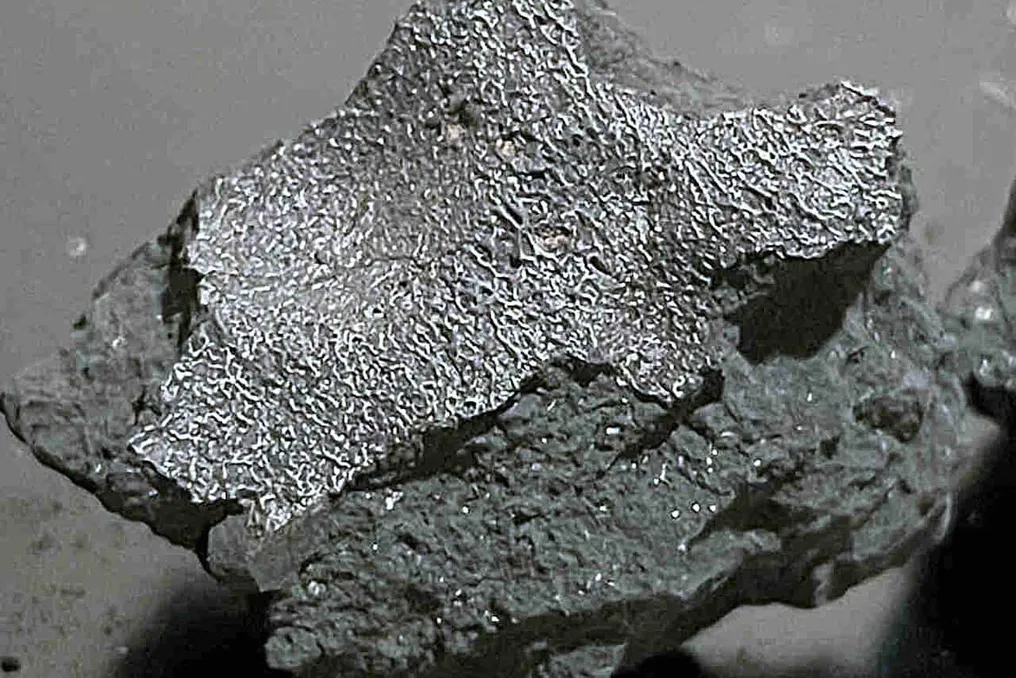
A space object crossed the sky over New York in 2024 and landed inside a house located in New Jersey, providing a unique scientific opportunity. Analysis of the recovered fragments revealed traces of saltwater and organic molecules originating from a primitive asteroid.
Observation and Trajectory of the Object
On July 16, 2024, residents of New York, New Jersey, and other American states spotted a meteor during the day. The passage of the celestial body was marked by a loud noise as it penetrated the atmosphere at approximately 14.4 kilometers per second. Researchers were able to trace its trajectory using cameras from the American Meteor Society, resident reports, and a doorbell camera, indicating that its origin was linked to the asteroid belt.
A forensic examination of the pieces showed that they contained preserved material near the surface of a primary asteroid, where reactions occurred with concentrated saline fluids—a phenomenon unprecedented in this type of protoplanetary world. Due to the rock's fragility, it partially disintegrated during atmospheric entry. After becoming invisible, a local weather radar located a cloud of small debris between Staten Island and New Jersey, with Hillsborough receiving one of the largest recovered portions.
Scientific Analysis of the Fragments
The owner of the hit house noticed a hole in the bedroom ceiling, scattered dark fragments, and a sulfur-like odor. He acted quickly, collecting the material with disposable gloves and aluminum foil, packaging the pieces in glass containers, which kept the sample in exceptional condition for analysis. Scientists classified the material as a carbonaceous chondrite CM1/2, an intermediate category between CM1 and CM2.
The fall in Hillsborough is the second occurrence of this type recorded by science. The findings included small salt-rich fragments, suggesting they came from a surface area of the asteroid where water had evaporated and concentrated minerals. Researchers identified several soluble organic compounds, such as amino acids, along with evidence of water-induced modifications.
Chemical Implications and Future Research
The discoveries include the presence of 1.8% carbon by weight in the meteorite, 0.07% nitrogen, organic compounds similar to those found in other primitive meteorites, and signs of chemical interactions influenced by saline fluids. Phil Schmitt-Kopplin, an expert in organic mass spectrometry from the Technical University of Munich, commented that a high proportion of the compounds resulted from organic chemistry interacting with minerals. According to experts, such processes may have helped conserve molecules crucial to the chemistry preceding the emergence of life.
Part of the fragments will be kept at the American Museum of Natural History in New York. Denton Ebel, curator of the institution, expressed enthusiasm about the arrival of such an asteroid sample. This event demonstrates how an accidental impact on a residence can expose details of a distant past, recorded in materials formed in the early stages of the Solar System.