The question arises as to what the economic policy of a nation should be in the 21st century: whether it should be based on methods of coercion, blackmail, and rent-seeking in a post-imperial style, or whether it should be built on innovation, scientific and technological progress, comprehensive development, and the common good.
Current Economic Model
Although the answer to this question seems obvious, in practice it is not always the most acceptable. The administration of the world's largest economy appears to lean towards a model based on coercion. Since the beginning of 2025, numerous political imperatives have emerged from the White House promoting a model where the government directly participates in revenue generation and GDP stimulation by any means necessary.
Examples of US Policy
During a speech following the announcement of mutual tariffs in April 2025, US President Donald Trump stated that the revenues of major American enterprises were 'negligible.' Instead, he focused on the tariffs supposedly collected by his administration, the flow of which is now observed in reverse after the US Supreme Court declared them invalid. Despite attempts to restore customs collection through alternative legal schemes, many other ideas were proposed and rejected. One of Trump's unsuccessful proposals was the idea of imposing a 20% levy on cargo ships passing through the Strait of Hormuz.
The Path to Progress Through Innovation
Fortunately, not all state policy is reduced to medieval methods. Most countries still believe that true growth is achieved not through quick schemes of enrichment or brute force. The path to development through expanding the boundaries of human ingenuity remains very promising, especially against the backdrop of the convergence of factors such as artificial intelligence and the transition to green energy, which opens up profitable opportunities for advancement.
China's Achievements in Technology
China demonstrates this most vividly, having achieved numerous breakthroughs in futuristic sectors in a short period. One of the most notable events was the impressive successful recovery of the lower stage of the 'Long March-10B' launch vehicle. This was accomplished using a massive fishing mechanism that captured the returning booster with a new system. The reusable rocket industry was known to have been dominated by one American company—SpaceX—for a decade, which recently held the largest IPO in history, demonstrating the market potential of commercial space. New players with reusable rockets will help further reduce costs, especially considering that AI-based data centers will be launched into orbit in the coming years.
Technological Breakthroughs in China
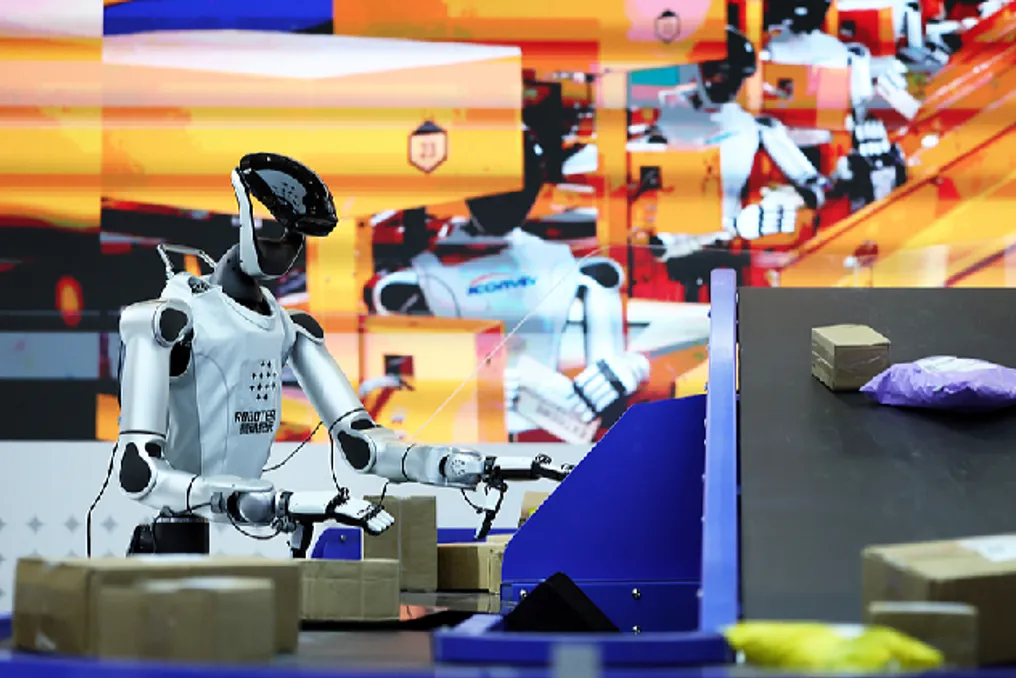
Significant events are also happening on the ground: in addition to the SpaceX IPO, new horizons are being opened by the AI laboratories Anthropic and OpenAI. Three Chinese companies from high-tech industries are preparing for their own listings. Unitree Robotics from Hangzhou, a manufacturer of quadruped and humanoid robots, is preparing an IPO in Shanghai. China's progress in robotics is evident, as demonstrated at the 2026 robot half-marathon, where bipedal robots showed results orders of magnitude better than the previous year and beat the human half-marathon record. Furthermore, the memory chip producer CXMT is preparing to debut on the Shanghai STAR market, which will be the largest IPO in Asia this year amid the global shortage of DRAM chips. Among the AI labs, Moonshot AI is reportedly considering an IPO in Hong Kong. This Chinese AI startup has also attracted attention due to the launch of the largest open-weight model, containing 2.8 trillion parameters. Moonshot's Kimi K3 model is designed to solve complex tasks such as long-context coding, knowledge work, and complex reasoning, and according to some metrics, it surpassed Anthropic's Claude Fable 5 and OpenAI's GPT-5.6 Sol.
Scientific and Engineering Achievements
In the field of supercomputers, China's LineShine became the world's most powerful, achieving a rate of 2.198 Exaflops/second, marking the first time since 2017 that the US has been displaced from this position. A record was also set in solar energy: a new type of Chinese solar cell reached an efficiency of 28% in steady-state operation. Another area—the first commercial operation using an invasive brain-computer interface (BCI) was conducted in China in July on a patient with impaired arm mobility following a spinal cord injury sustained ten years ago in a car accident.
Policies Fostering Development
These achievements suggest that China has entered a period of rapid development; however, in reality, this is becoming the norm thanks to a favorable political environment and the readiness to tackle large-scale challenges with proper energy and spirit. This is evident from the list by the China Association for Science and Technology (CAST) of 30 major scientific and technological tasks for 2026, which includes 10 questions each from advanced science, engineering, and industrial technology, including AI, life sciences, advanced manufacturing, and nuclear fusion. These coordinated efforts aim to achieve results. It is projected that China's AI industries will exceed 10 trillion yuan ($1.47 trillion at the current exchange rate) by the end of the fifteenth five-year plan in 2030, and the country's humanoid robot market will grow to $15 billion by 2030. The National Bureau of Statistics of China highlighted this trend toward innovative and high-quality development when assessing GDP growth rates at 4.7% in the first half of 2026.
Contrast with the US Model
All of this sharply contrasts with the development associated with the US and its current model of geoeconomic influence. According to the latest IMF economic forecast published in July, global growth in 2026 is projected at 3%, which is 0.1% lower than the April forecast. The growth forecast for the Middle East was particularly reduced by 1.4% to 1.7%. In a report titled 'The World Economy in Times of War and Technology,' the slowdown is linked to the consequences of the war in the Middle East, partially offset by the acceleration of the global technological cycle. The report clearly indicates that instability is detrimental economically, while innovation is beneficial.
A New Financial Indicator
Despite this, the US remains an important player on both the axis of instability and the axis of innovation. Prevailing analysis suggests that the US economy would be close to recession if not for multi-trillion investments in AI infrastructure. However, this is merely a coincidence that is little related to current political imperatives, most of which are skewed towards a distorted version of neo-imperialism, while other countries try to stay away.
3. {