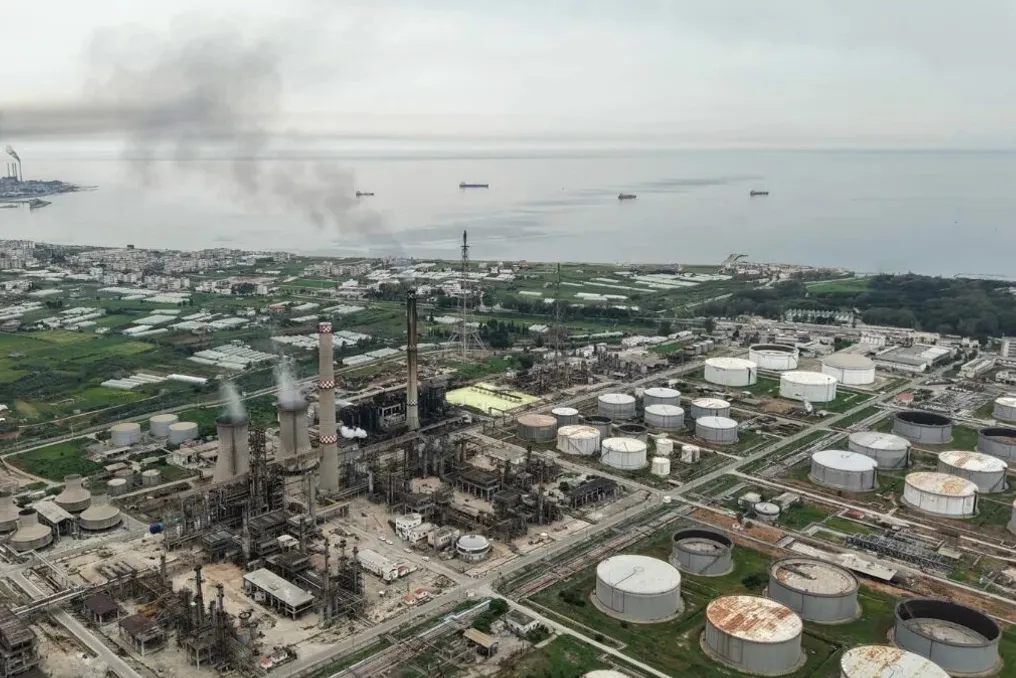
Iraq and Syria have concluded a cooperation agreement aimed at reconstructing a pipeline that will transport oil from Iraqi fields to the Syrian Mediterranean coast. This initiative is part of a US-brokered deal intended to bypass the Strait of Hormuz.
Agreement Details and US Mediation
Middle East Eye first reported that the United States is mediating efforts to restore the Kirkuk-Baniyas oil pipeline. Tom Barrack, the US Ambassador to Turkey and envoy for Syria, led this process. Following exclusive reports from MEE, the news was covered by Bloomberg, Reuters, The Wall Street Journal, and The Financial Times.
The agreement was signed during the US-Iraq Business Council meeting in Washington, D.C. The signatories were Bassem Abdul Karim Nasr, head of the Basra Oil Company from Iraq, and Youssef Kablaoui, CEO of the Syrian Oil Company from Syria. The signing was overseen by US Energy Secretary Chris Wright.
Strategic Importance of the Project
The US Department of State characterized the pipeline upgrade as a 'priority infrastructure project of bilateral and regional strategic importance.' The Department stated in a release: 'The United States welcomes the participation of a US-led international consortium to carry out the technical and financial aspects of this project.' This project is significant because the US seeks to strengthen ties between Baghdad and Damascus to reduce Iranian influence in the region and its control over global energy flows in the Persian Gulf.
Participants and Technical Aspects
The pipeline reconstruction is being carried out by a consortium that includes the American energy company Chevron, based in Los Angeles, TI Capital, and the Al-Hayat brothers, billionaires from Syria and Qatar. These brothers have already concluded multi-billion dollar deals in Syria in finance, infrastructure, real estate, and aviation.
This project became one of several presented during the visit of Iraqi Prime Minister Ali al-Zaydi to the US this week. During his visit, he met with President Donald Trump at the White House. A high-ranking Iraqi official told MEE that Barrack established good working relations with Zaydi and intends to use this pipeline as a model for business projects in the Levant, which he actively promotes as beneficial for the US and local governments.
History and Condition of the Pipeline
The pipeline was launched in 1952 by Iraq's 'Petroleum Company' with a capacity of about 300,000 barrels per day (bpd). However, Baghdad ceased operation of the line in the 1980s after Syria supported Iran during the Iran-Iraq War. After the US invasion of Iraq in 2003, the line sustained serious damage and was effectively rendered inoperable. Its restoration requires large-scale repair work, including the installation of new pumps, storage tanks, and electrical systems.
According to a senior regional official, the pipeline may need to be completely replaced, which would take two to three years. He also noted that a consortium of American firms has already been engaged for the reconstruction, indicating US commitment to the matter.