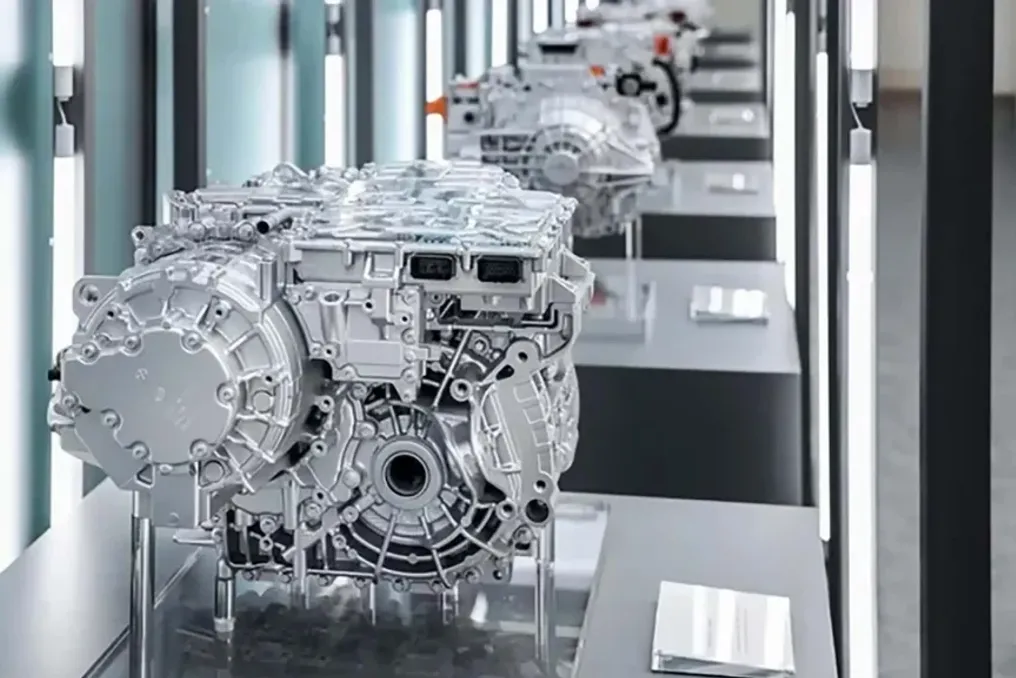
Electric vehicle motors currently depend on magnets made with rare earths, a strategic and invisible component. However, an Indian startup is seeking to change this dynamic through technology that replaces these materials, using electronics and software to generate the necessary magnetic field.
Innovation in motor design
According to the Indian Times, Vimag Labs has obtained its fifth Indian patent for this project. The main objective is to mitigate dependence on Chinese rare earth supply chains, a problem faced by major manufacturers like Tesla and GM.
Most existing electric vehicles use permanent magnet synchronous motors (PMSM), where components containing rare earths are located in the rotor to generate movement. Vimag's approach is different: the Virtual Magnet Synchronous Motor (VMSM) eliminates these magnets, relying on power electronics and control algorithms to create and modulate the magnetic field in real time.
The company's registered patent, titled 'A Robust Synchronous Motor Excited by Rotary Transformer and Its Control,' secures the fundamental architecture of this system. The company claims that its motor can achieve performance equal to or better than conventional permanent magnet models, although this claim still requires independent verification at an industrial scale.
Challenge of resource dependency
The growing interest in this technology is driven by China's dominance over the production chain of these minerals. Sources indicate that in 2024, China was responsible for approximately 91% of global rare earth refining and separation and 94% of sintered permanent magnet manufacturing.
Vimag is not the only one looking for alternatives. Tesla has declared its intention to create next-generation motors without rare earth elements, while GM and Stellantis are investing in Niron Magnetics. Furthermore, Valeo is developing the iBEE motor without magnets, and Honda supports research focused on switched reluctance motors.
In addition to the patent, the startup announced raising $5 million in a Series A round, led by Accel, with participation from Chakra Growth Fund and Thinkuvate.
Next steps and production challenges
The company is conducting pilot projects with motorcycle and automobile manufacturers. A manufacturing agreement has been established with Jendamark, and Vimag aims for industrial applications in the range of 200 kW to 600 kW, covering robotics, defense, and cooling systems.
Despite the technical advances, the biggest obstacle for the technology remains the transition from testing to mass production. Currently, no corporation has managed to launch a completely rare-earth-free propulsion unit on a large scale, and it is in this niche that Vimag seeks to consolidate its position in a dispute with global automotive giants.