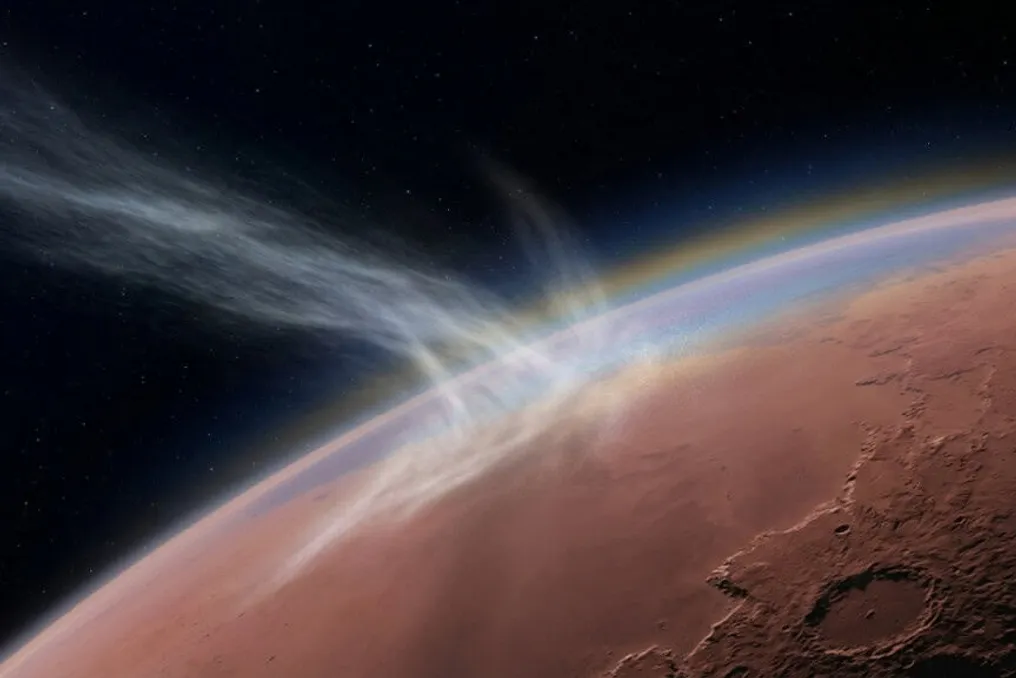
Solar storms, known for their ability to cause the aurora borealis, pose a serious threat to a significant portion of Earth's technological infrastructure. Depending on the intensity of these phenomena, they can affect electrical grids, satellites, radio communications, and international internet connections.
Mechanism of Solar Storms
The risks are related to the interaction between particles and magnetic fields emanating from the Sun and the planet's magnetosphere. Although extreme events occur rarely, historical records show that they have previously caused power outages and failures in various technological systems, prompting experts to discuss the readiness of current infrastructure for large-scale events.
Solar storms are a consequence of a process called magnetic reconnection. During this process, the rotation of the Sun causes its magnetic fields to twist, accumulating enough energy for rupture and reorganization. At this moment, vast amounts of energy and plasma are ejected into space.
Classification and Monitoring of Events
These phenomena are generally divided into three main categories: solar flares, radiation storms, and coronal mass ejections (CMEs). Each interacts differently with the Earth's atmosphere, potentially causing geomagnetic storms, radio communication disruptions, and changes in the planet's magnetic field.
The U.S. National Oceanic and Atmospheric Administration (NOAA) classifies such events on a scale from one to five. Most recorded solar storms fall into low levels, while extreme classifications are extremely rare during the 11-year solar cycle.
Vulnerability of Electrical Grids
One of the most well-known examples was the 1989 event when a geomagnetic storm led to a power outage in the Quebec region of Canada. Approximately six million people were without power for nine hours, an event dubbed 'the day the sun brought darkness.'
Geomagnetically induced currents can cause overheating in transformers, relays, and sensors, as well as overload power lines. Since this equipment is expensive and complex to replace, the sequence of damage can significantly prolong the consequences of a major incident.
The risk is not evenly distributed across the planet; regions closer to the Earth's magnetic poles are prone to more intense disturbances. The vulnerability level of power grids also depends on the specific electrical resistivity of the soil.
Impact on Technology and AI
The rise of artificial intelligence has added new concerns related to solar storms. Because data centers require high power availability, prolonged power outages can negatively affect one of the fastest-growing sectors.
Scott McIntosh, former deputy director of the National Center for Atmospheric Research, stated in an article published in Space News that AI leaders should be most concerned about these risks.
Impact on Satellites
Satellites are also among the most susceptible devices. Although they are designed to withstand certain space conditions, intense solar events can damage electronic components and shorten their lifespan.
Russell DeHart, lead engineer at NASA's Goddard Space Flight Center, explains that high-energy particles can temporarily flip bits in onboard computers, causing glitches known as single event upsets. In such cases, secondary operations may be suspended until the issue is resolved.
Coronal mass ejections also heat and expand the Earth's atmosphere, increasing drag for low-orbit satellites. This change can lead to a decrease in altitude and speed, increasing the risk of collisions with other satellites or space debris, which requires fuel expenditure for maneuvers.
In 2022, a solar storm knocked 38 SpaceX internet satellites out of orbit. In October 2003, a series of solar events affected about half of the world's operational satellites and damaged air travel, radio and television broadcasts, GPS systems, and scientific missions.
Impact on Radio, GPS, and Internet
Changes in the ionosphere caused by solar storms interfere with radio wave propagation. This endangers systems that rely on this medium for long-distance signal transmission, including maritime, aviation, rescue, and military communications.
GPS navigation systems can also suffer because they depend on precise satellite positioning. In 2024, a solar storm affected GPS-equipped tractors, leading to losses estimated at 500 million US dollars.
Traditional mobile phone services generally experience fewer direct interference issues, as they use frequencies least affected by atmospheric ionization. However, an extreme event could cause indirect consequences if the power grids supporting these communications fail.
Threats to Submarine Cables
Global internet infrastructure can also be affected by solar storms. A 2021 study by researcher Sangit Abdu Joti from UC Irvine indicates that a powerful coronal mass ejection is capable of disrupting parts of the submarine cables responsible for international data traffic.
The fiber optic cables themselves are not directly affected by geomagnetic currents. The problem lies with the electronic repeaters installed along the cables to boost the signal, which can be damaged by induced currents during geomagnetic storms.
According to NOAA, over 95% of international data traffic passes through these submarine cables. The study found that the longest connections, especially between the United States and Europe, are the most vulnerable.
Historical Examples and Forecasts
Extreme events are rare but concern scientists. The strongest recorded geomagnetic storm occurred in 1859 and was named the Carrington Event. At that time, telegraph systems failed, and some even caught fire.
More recent research points to evidence of even larger past events, known as Miyake events. One of these, which occurred in 774 AD, could have been approximately 12 times more intense than the Carrington Event.
Although storms of this magnitude are considered very rare, estimates by the National Academy of Sciences suggest that a geomagnetic catastrophe could result in losses exceeding 2 trillion US dollars. A 2025 NOAA report concluded that solar activity forecasting systems still need improvement.