The Central Bank of Uzbekistan has amended the country's currency legislation, simplifying the process that enterprises must undergo when using foreign currency acquired on the local market.
The Central Bank of Uzbekistan has amended the country's currency legislation, simplifying the process that enterprises must undergo when using foreign currency acquired on the local market.
These amendments were officially registered by the Ministry of Justice on July 16 under number 3281-6. They concern point 28 of the Currency Operations Rules, which regulates the use of funds held in special foreign currency accounts.
Previously, funds deposited into such accounts could only be used for the purposes specified in the application submitted when purchasing the currency. If a company needed to use the purchased currency to fulfill obligations under another contract, the existing regulations required first selling this currency to a commercial bank and then repurchasing it for a new purpose.
Under the updated regulations, enterprises now have the right to change the intended use of foreign currency purchased on the domestic currency market. The Ministry of Justice notes that these changes are aimed at increasing convenience for entrepreneurs and improving the flexibility of currency transactions.
Earlier, in June, the Chairman of the Central Bank, Timur Ishmetov, approved separate amendments concerning currency operations related to capital movement. These changes allow individuals to transfer up to $10,000 abroad annually without prior approval to participate in the charter capital of foreign companies or acquire shares in them.
Transfers to foreign brokerage and investment accounts are permitted only through licensed investment intermediaries operating in Uzbekistan. For state enterprises and their subsidiaries, the annual volume of foreign investments is limited to $100,000, including investments in foreign companies, as well as the establishment of branches, representative offices, and trading houses abroad. The corresponding annual limit for private companies is set at $200,000.
The President of Uzbekistan signed a decree aimed at improving public services and increasing convenience for citizens. This document introduces changes to real estate rights registration rules, expands the capabilities of e-government, and strengthens protection against unwanted advertising.
According to Decree No. PP-265 dated July 15, 2026, administrative liability will no longer be applied to property owners who fail to register their rights on time. Instead, a system of increased registration fees is introduced, the amount of which depends on the duration of the delay.
Rules for obtaining tax benefits when selling housing inherited or received as a gift from a close relative have also been changed. Now, the ownership period is calculated from the date of registration by the deceased or donor, not from the moment the new owner registers.
Citizens will be able to register their place of residence in properties that are under arrest or restrictions on alienation, even without the consent of the pledgee. In this case, the person being registered must first agree to the possibility of canceling this registration at the request of the owner, the pledgee, or an authorized body.
Starting from October 1, 2026, new electronic services for individuals and legal entities will be available through the Unified Portal of Interactive Public Services my.gov.uz. Users will be able to remotely impose or lift restrictions on the alienation, pledge, or mortgage of their real estate and vehicles.
The new services will also allow users to receive information about all phone numbers and bank cards registered in their name, temporarily disable unused numbers, apply for the termination of mobile services, receive information about paid services linked to their accounts, request banks to block or close cards, and automatically receive notifications about notarial acts performed in their name.
On the same date, the automatic update of citizens' surnames, first names, patronymics, or dates of birth will occur in all state information systems due to interdepartmental electronic data exchange.
The decree also includes measures to strengthen protection against unwanted advertising. Starting from November 1, 2026, legal entities and private individuals can send advertising SMS messages only after receiving written or electronic consent from the recipient. Companies providing services for distributing advertising calls and SMS must operate only after registering their information systems in the State Register of Personal Data Bases.
Furthermore, advertising calls and SMS messages via mobile networks are prohibited between 6:00 PM and 9:00 AM. Mobile operators are obliged to block all or selected advertising calls and messages for subscribers upon request. Failure to comply with these new requirements will be considered a violation of advertising and personal data protection legislation, with liability applied according to the law.
The decree also provides for exempting minors from paying state duty in court when independently filing lawsuits to ensure the protection of their rights.
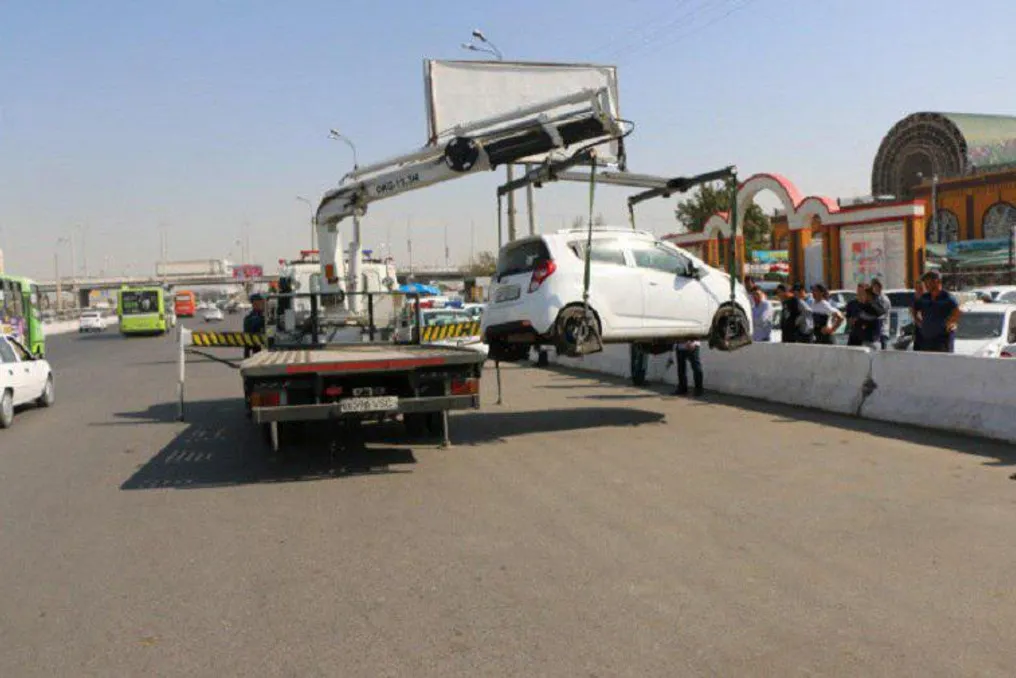
The procedure for returning vehicles that were in impound lots is changing in Uzbekistan. Instead of traditional paper permits, owners will now be provided with an electronic QR code. Additionally, information about the storage of these vehicles will begin to be automatically transmitted to tax authorities.
According to the Cabinet of Ministers' decision, obtaining a vehicle will require issuing a permit through the special information system 'Zharima maydonchasi'. This permit will be accompanied by a QR code generated by the bodies responsible for reviewing administrative offenses, as well as enforcement agencies. Without this digital confirmation, issuing the vehicle will become impossible.
In parallel, data on all vehicles held at impound lots will begin to flow automatically to tax authorities. This system will record details such as the vehicle's license plate number, the time of arrival and release, and the amount paid for storage.
Within two months, the Ministry of Internal Affairs, the Ministry of Digital Technologies, and the Tax Committee are obliged to complete the integration of the 'Zharima maydonchasi' system with the tax authorities' databases. Impound lots must also comply with new standards: they will be equipped with video surveillance cameras and automatic license plate recognition systems, and all accounting and charges will transition to electronic format. Any violation of these new requirements or illegal parking of vehicles at the lot will be considered an offense.
The new rules will come into force in October of this year. It should be noted that the same Cabinet resolution plans the launch of a test version of the unified E-bozor market digital platform before October 1st, which will also integrate processes related to the functioning of impound lots.