A scientific team succeeded in converting human and monkey stem cells into sperm precursor cells using a structure that mimics a testis. This discovery has the potential to improve the understanding of male infertility issues.
A scientific team succeeded in converting human and monkey stem cells into sperm precursor cells using a structure that mimics a testis. This discovery has the potential to improve the understanding of male infertility issues.
The research was detailed in the journal Cell Stem Cell and established an experimental setting capable of replicating early stages of sperm formation in primates, which previously represented a major laboratory challenge.
The work began with the use of induced pluripotent stem cells (iPSCs), obtained from both human blood samples and connective tissue from rhesus monkeys. These cells have the characteristic of differentiating into various cell types upon the application of appropriate stimuli.
By applying specific chemical signals, the team managed to transform these iPSCs into cells analogous to primordial germ cells (PGCLCs), which are responsible for the genesis of sperm-producing structures.
The next step involved recreating the ideal medium for the continuation of this cellular development. To achieve this, scientists integrated the germ cells with support cells extracted from fetal mouse testes. This union resulted in the formation of a three-dimensional structure called xenogeneic reconstituted testis (xrTestis), which exhibited fundamental characteristics of a natural testis, including the appearance of seminiferous tubules, sites of sperm production.
The process of spermatogenesis is intrinsically long and complex, beginning at the embryonic development stage. Interruptions in this sequence may be linked to male infertility. Although animal models, such as rodents, have contributed to science, they cannot fully replicate the particularities of primates, making this new methodology a tool more aligned with human biology.
To sustain cellular development for an extended period, the created structures were implanted into the kidneys of immunodeficient mice, where they remained active for a period of eight to nine months.
The central results of this study include the conversion of stem cells into sperm precursor cells, the construction of a three-dimensional environment similar to testicular tissue, the unprecedented generation of monkey spermatogonia from stem cells, and the identification of crucial proteins for maintaining the life of germ cells. The cells derived from monkeys showed a similarity of up to 97% with natural cells found in primates.
Additionally, researchers discovered that the proteins NANOS3 and DND1 play a vital role in preserving germ cells, preventing their differentiation into other cell types. It was also found that retinoic acid, a form of vitamin A, acts as a signaling molecule to initiate the maturation of these cells.
Despite the significant progress, the technique is still far from being applied as a clinical treatment. The current focus of the investigation lies in creating a more robust platform to examine the genetic causes of male infertility and evaluate potential future therapies. This advance represents a new vector for the study of human reproduction in a laboratory setting, enabling the observation of stages of sperm development that were previously difficult to monitor.
Researchers announced the first confirmation of an atmosphere on a rocky planet located in the habitable zone of a different star. This advance represents a significant milestone in the search for worlds with the potential to host life.
For decades, scientists have dedicated efforts to identifying planets with conditions favorable for the emergence of life, searching for celestial bodies with characteristics analogous to Earth. Although habitable zones have been mapped in various stellar systems and over six thousand exoplanets cataloged, none until now had gathered the complete set of terrestrial requirements.
For known life to thrive, a planet must possess a rocky structure, exhibit liquid water on its surface—which implies a moderate temperature—and, crucially, be capable of retaining an atmosphere. This gaseous layer is vital as it regulates the climate, protects the surface from radiation, and sustains the conditions necessary for biological existence.
The situation changed with the detection of a rocky planet with an atmosphere in the habitable zone of another star. This achievement was made by researchers from Harvard University and published in the scientific journal Science on July 16. It is important to note that although no life has been found on the planet, the essential elements for its emergence have been identified.
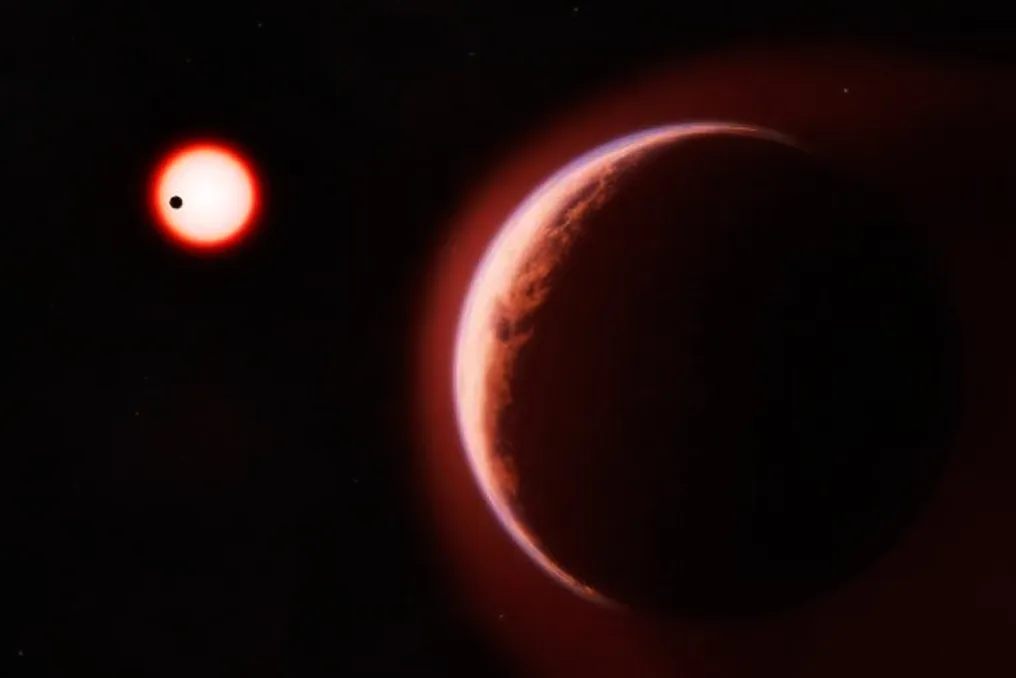
The object studied is the exoplanet LHS 1140 b, which was discovered in 2017. It orbits a red dwarf, located approximately 48 light-years from Earth, within its habitable zone. Red dwarf stars are notorious for emitting intense radiation and destructive flares, but the specific star in this system proved to be less active, allowing the planet to conserve its gaseous layer.
Atmospheric detection was made possible by the use of a theoretical model created by Collin Cherubim, the lead author of the study. This model projected the composition of the planet's atmosphere, suggesting that LHS 1140 b possessed an upper atmosphere rich in helium, which would be gradually escaping into space. To validate this prediction, the team employed the WINERED spectrograph, an instrument that confirmed the presence of this escaping helium around the planet, thus proving atmospheric retention.
David Charbonneau, head of the Department of Astronomy at Harvard University, commented that Collin predicted the helium atmosphere after analyzing known planets, organized observation time with telescopes, collected the data, and that the detection was considered statistically robust.
According to the study, this atmosphere may have been present for more than three billion years. However, there are important distinctions between LHS 1140 b and Earth; the exoplanet is larger, more massive, and colder. Additionally, it completes an orbit in only 25 days and exhibits synchronized rotation, keeping one side always facing its star.
The researchers now plan to investigate the composition of this atmosphere in detail and search for other signs of habitability, such as the possible existence of liquid water on the surface. The model developed by the team will also be applied to the study of other exoplanets.
Last Friday (17), the office of the San Francisco city attorney sent formal notifications to both Apple and Google. The objective was to demand the removal of thirteen face-swapping applications linked to the creation of artificially generated nudity images without the consent of the people depicted.
The municipal action specifically targets tools that use artificial intelligence to modify individuals' photographs, resulting in sexualized material. According to the city hall, these digital platforms profit from such services through payments made within the applications themselves.
This initiative arises after investigations revealed that applications initially presented as simple image editors could be used in the production of sexually explicit deepfakes. The victims most affected by this type of content are women and girls.
The letters addressed to the two tech giants were signed by San Francisco City Attorney David Chiu. He emphasized that generating intimate images without permission constitutes an illegal and harmful practice, requiring Apple and Google to prevent the use of their digital ecosystems to facilitate abuse.
The city representative also requested that the companies terminate any business relationships with developers responsible for these types of applications. Furthermore, the demand extends to the payment systems of the virtual stores, where the companies receive part of the revenue generated by this software.
Both Apple and Google stated they have strict guidelines against pornography, harassment, and any abusive content on their respective platforms. Apple communicated that it has removed three of the applications pointed out by the city and has already begun the process of suspending the accounts of the involved developers. The company warned that other creators may also be excluded if they do not correct the detected infringements.
For its part, Google announced the removal of hundreds of applications containing 'nudification' features for violating its policies. The company also reported suspending similar tools and implementing restrictions on search terms related to this service within the app store.
The surveys cited in the municipal investigation indicated that the problem is not limited only to applications clearly labeled as artificial nudity tools. The studies discovered face-swapping programs that, despite being presented as common editing features, enabled the creation of sexualized images without effective protections.
A survey mentioned in the text identified hundreds of face-swapping applications available on the Apple and Google stores. A considerable portion of these programs allowed the creation of nude montages, even if they were not officially advertised for that purpose.
This proliferation of tools occurred parallel to the advancement of generative artificial intelligence systems, which significantly reduced the technical complexity required to produce realistic fake images. Experts cited in the article noted that just one reference photo and a few commands are enough to generate this type of content.
The City of San Francisco declared that it will continue to evaluate legal actions against companies that allow the circulation of these tools. The stated purpose of the agency is to force the platforms to improve their analysis mechanisms before making new applications available.
Xiaomi announced the introduction of the Watch S5 46mm to the Brazilian market. This new smartwatch is designed to meet users looking for advanced health functionalities, physical activity monitoring, and integration with other devices.
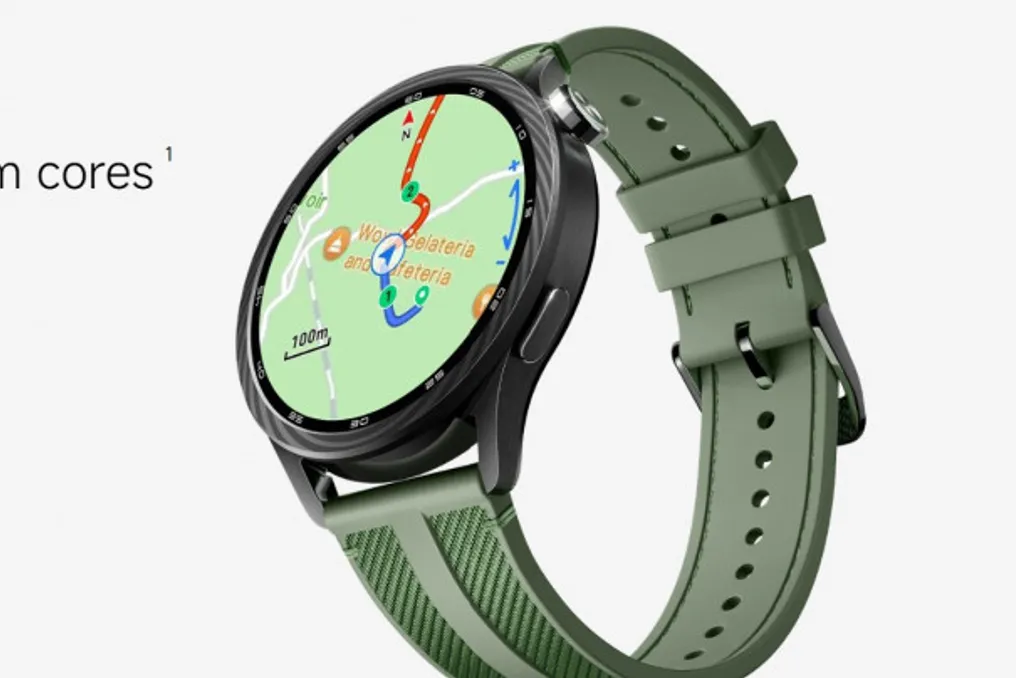
The official launch in the country is scheduled for July 27, 2026. The smartwatch features a 316L stainless steel finish and has a 1.48-inch AMOLED screen. The manufacturer emphasizes that the product combines refined aesthetics with high autonomy, allowing greater user freedom away from power sources.
Initially, the Watch S5 46mm will be available in Black and Silver colors, priced at R$ 2,599.99, and will be sold through Xiaomi's virtual stores in Brazil, authorized resellers, and physical points of sale.
Developed with a 316L stainless steel structure, the device weighs approximately 46 grams without the strap and has a thickness of 10.99 mm, aiming to provide comfort during prolonged use. On the front, there is a 480 x 480 pixel AMOLED panel, capable of reaching a maximum brightness of 2,500 nits. Xiaomi noted that the screen bezels have been reduced to 2.6 mm compared to previous generations, and the device has water damage protection.
A strong point of the model is its energy durability. The 815 mAh Xiaomi Surge battery guarantees up to 21 days of operation with light use, about 14 days with normal use, and up to nine days when the Always-on Display feature is active.
The watch is equipped with an updated sensor to track heart rate and blood oxygen levels. For this, it employs a set composed of four LEDs and four photodetectors, using proprietary Xiaomi algorithms to interpret the collected data. Internal company tests indicate that the system can achieve an accuracy of up to 98.4% in heart rate monitoring. Additionally, it monitors blood oxygen levels, stress, and sleep patterns, also offering guided breathing exercises.
For athletes, the Watch S5 46mm supports over 150 sports modes. It uses dual-band GNSS and five satellite systems to ensure accurate route tracking, even in areas with potential signal interference. An enhanced cycling feature allows the smartphone to function as a cycle computer, displaying data such as speed, distance, heart rate, and elevation gain. The watch is also compatible with Bluetooth power meters and can transfer heart data to other equipment.
The smartwatch operates on the Xiaomi HyperOS 3 operating system, which enhances communication between the watch, phone, and other smart devices from the brand. Features include controlling the phone camera, locating the device, managing headphones, and synchronizing health and training metrics. Integration with Xiaomi Home enables direct control of compatible smart products via the watch. In terms of compatibility, the model has 5 ATM water resistance and works with Android phones version 8.0 or higher and iPhones with iOS 14.0 or later.