One month after conducting the largest Initial Public Offering (IPO) in US history, SpaceX is facing a period of increased reservation from investors. After a launch marked by a strong rise and market euphoria, the shares of Elon Musk's company began to show consecutive declines, returning close to the issue price and raising questions about the speed of business expansion.
Post-IPO Stock Performance
On Monday (13), the company's securities reached their lowest point since the public offering. Following a 4.51% retraction on Friday (10), the shares fell another 4.24% on Monday, approaching US$ 135 (equivalent to R$ 695.21), the value established by the company itself as the IPO price. Despite this recent devaluation, the stocks still maintain a gain compared to the official offering price, although they are about 7% below the US$ 150 (R$ 772.45) reached during the first trading session.
Debut and Initial Optimism
When SpaceX was listed on the American stock exchange on June 12, there was a rush of investors to acquire shares in the company, which is led by Musk. Although the official price was set at US$ 135 per share, the shares opened at US$ 150, reached a peak of US$ 176 (R$ 906.35) on the first day, and closed the trading session quoted at US$ 160.95 (R$ 828.84). In the following week, the appreciation persisted, with shares reaching an intraday high of US$ 225 (R$ 1,1 thousand), allowing the company to surpass Amazon and Microsoft in market value.
Keith Snyder, an analyst at CFRA, commented in an interview with the BBC that the enthusiasm was fueled both by Musk's presence and the perception that the company represented an investment in the artificial intelligence (AI) sector. He stated that 'in the case of Elon Musk, any company he is involved in generates excitement.' Snyder added that 'this was also the first time people felt they could invest in something being marketed as an AI-related business.' Willy Lee, an investor at Neosteller, agreed, stating that 'everyone saw SpaceX as an artificial intelligence case.'
Space Focus Versus AI
This year, SpaceX incorporated Musk's AI startup xAI, which was renamed SpaceXAI and is known for the Grok chatbot. Furthermore, the company began making its data center capacity available to other technology corporations. However, its primary activity remains the manufacturing and launching of rockets and satellites for the Starlink network. As investors began to better understand the company's revenue source, the initial fervor started to decrease.
One example of this occurred when Starlink announced a price cut in the Memphis region, Tennessee state, due to concerns related to a large data center project. On the same day, SpaceX shares suffered an 8% drop.
Impact of Inclusion in Nasdaq-100
Volatility also increased in recent weeks. After being included in the Nasdaq-100 index on July 7, SpaceX shares fell 4.4%, while the general index dropped 1.7%. Previously, entry into the FTSE Russell index had generated a slight positive boost for the shares. According to CNBC, the addition to the Nasdaq-100 attracted a new wave of passive investors, as funds tracking the index were obliged to buy the company's shares to mirror its composition. This inclusion was possible because the stock exchange recently modified its rules to allow newly listed companies to enter the index just one month after the IPO.
Analyst Perspectives and Divergences
At the end of the first month of trading, shares were trading around US$ 145, representing a drop of about 18% from the first-day high and 35% from the historical peak. Snyder suggested that those who bought shares in the first few days are likely at a loss, comparing the stock's behavior to a 'meme stock,' driven by social media and enthusiasm, rather than financial fundamentals, citing GameStop and Wendy's as examples.
Snyder predicts that the shares could fall to approximately US$ 115 (R$ 592.22), valuing the company at about US$ 1.5 trillion (R$ 7.7 trillion). On the other hand, Samuel Kerr, an analyst at Mergermarket, emphasizes that the impact depends on the time of purchase, stating that 'if you are an IPO investor, it's fine,' referring to direct buyers at the US$ 135 price or previous holders. However, he warns that those who bought in the first few days 'are probably not very happy now.'
Musk's Confidence and Future Goals
Despite the recent decline, Musk maintains his confidence in the company's projections. After the IPO, which temporarily made him the world's first trillionaire, the businessman stated that SpaceX could generate US$ 1 trillion (R$ 5.1 trillion) annually by 2030. Currently, however, the company is still operating at a loss. The IPO financial documents showed that SpaceX obtained revenue of US$ 18 billion (R$ 92.7 billion) in the previous year, a figure significantly lower than the goal projected by Musk.
Musk also demonstrated an intention to use the stock appreciation as a strategy. On June 16, when the shares rose, the company announced the acquisition of Cursor, an AI robotics startup for programming, in a transaction valued at US$ 60 billion (R$ 309 billion). For Kerr, this acquisition evidenced a 'level of market sophistication that almost no other issuer [of shares] possesses.' Despite this, the shares began to decline again.
Next Steps and Regulation
Currently, investors' attention is focused on SpaceX's first public financial report. Although the exact date has not yet been disclosed, analysts expect this to happen in early August, coinciding with the end of the lock-up period, when employees who received shares as part of their compensation can freely sell them on the market. Analysts predict that the increase in the supply of shares, combined with more detailed financial data and growth plans, could cause new price fluctuations.
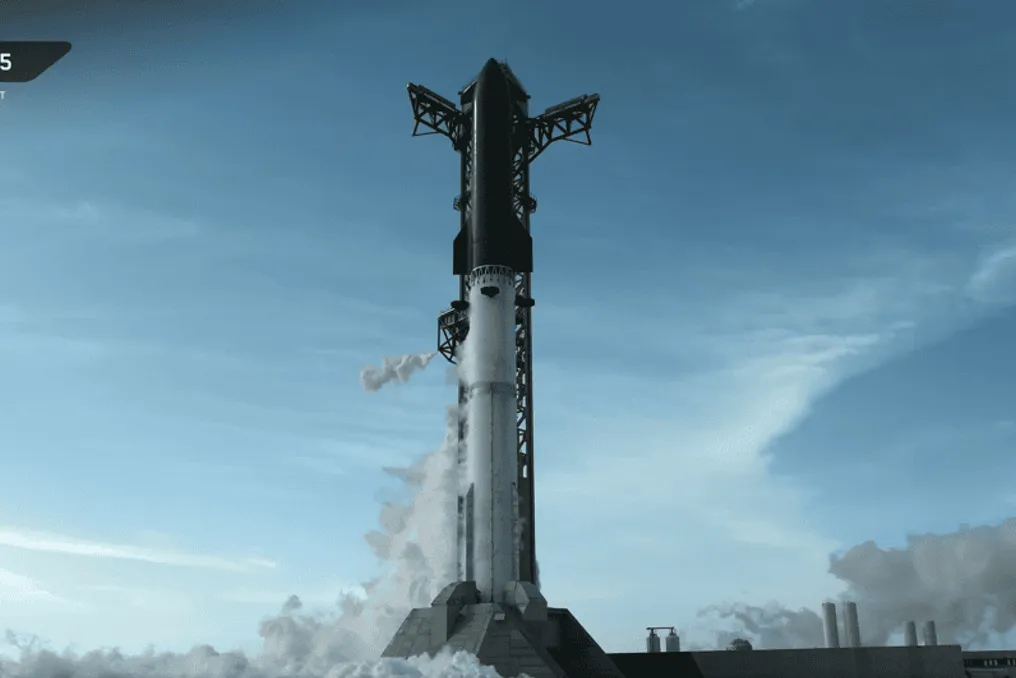
Kerr concludes that 'if SpaceX manages to do everything it says it will, yes, investors will be faced with the most valuable company of all time,' but warns that 'there is still a lot of work to be done to get there.' Simultaneously, the stock drop occurred on the same day that the FAA concluded its analysis on the failure of the Starship propellant return during a test flight in May. The regulatory body accepted the conclusions and corrective measures proposed by SpaceX after the investigation, authorizing the company to prepare for the 13th Starship test flight, provided all safety and licensing requirements are met. The launch window for this mission is scheduled to begin on Thursday (16) at 7:45 PM (Brasília time).