Kylie Jenner has unveiled her new bikini collection. Appearing on social media, she showcased her 'dreamy bikinis,' which meet the expectations for a celebrity collection launch: they are shiny, minimalist, and evoke a yachting vacation look.
Kylie Jenner has unveiled her new bikini collection. Appearing on social media, she showcased her 'dreamy bikinis,' which meet the expectations for a celebrity collection launch: they are shiny, minimalist, and evoke a yachting vacation look.
One of the most discussed models is the Elena Micro Metallic Bikini. This design features adjustable shoulder straps, thin back ties, and minimal coverage, intended to reduce the visibility of tan lines. The bikinis are available in Chrome, Pink Chrome, Black Chrome, and Vintage Leopard colors. The metallic finish is designed to create an effect of liquid shine in sunlight.
However, buyers have been alarmed by the high price tag. The bikini top costs $110, while the matching bottoms range from $90 to $95. Thus, a complete set will cost approximately $200, equivalent to about R3,300. Many consumers have begun comparing this design with more affordable alternatives, such as those found on Shein, for significantly less money.
The collection is positioned as a blend of vintage silhouettes with modern metallic accents. The material consists of 85% recycled polyester and 15% elastane. Despite the marketing strategy, which implies purchasing a lifestyle and image, many buyers question whether the design justifies such a high price.
In recent years, game consumers have become accustomed to complaints about price increases in the industry. This trend began with the transition from $50 to $60, followed by an increase to $70. Currently, it is common to find thousands of criticisms on social media directed at the first titles launched at the $80 price point.
The discussion gained prominence after Nintendo announced games for the Switch 2 in this new price range, leading other publishers to suggest that this could become the new standard for major releases. This movement was actually expected, given that production costs have grown drastically while prices remained stagnant for a long period.
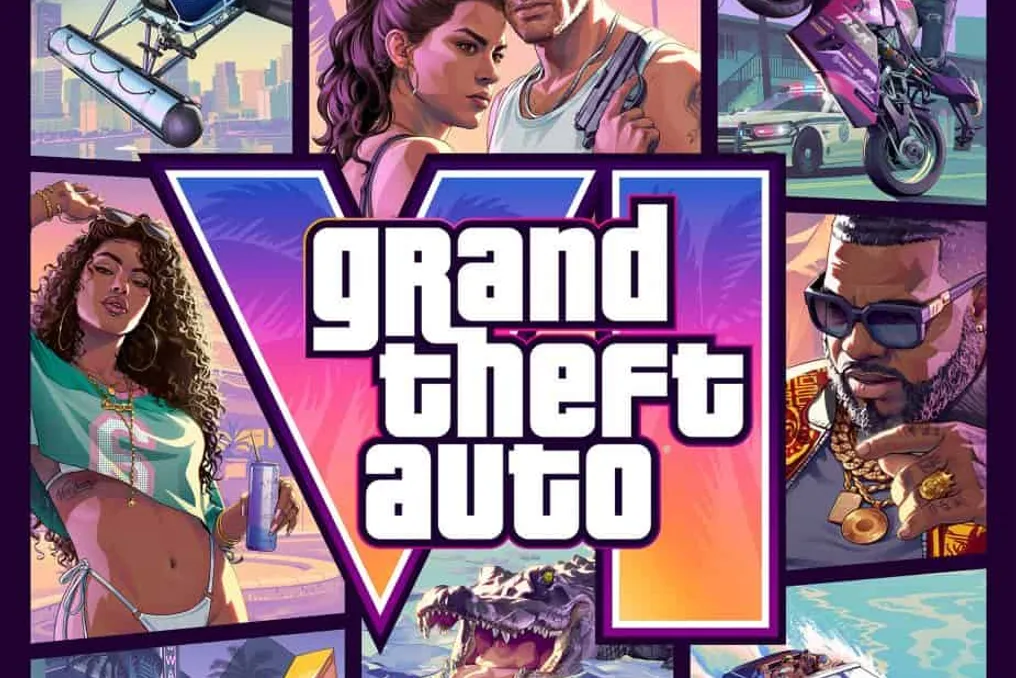
Developing a major hit title today requires global teams composed of thousands of specialists, production cycles exceeding five years, and investments comparable to those of major Hollywood productions. A notable example is Grand Theft Auto VI. Although Rockstar Games has not disclosed the official budget, industry estimates suggest that GTA VI could become the most expensive game in history, considering development, marketing, and all the necessary infrastructure over more than a decade.
GTA VI is not an isolated case. Titles such as Cyberpunk 2077, Marvel’s Spider-Man 2, Call of Duty, Assassin’s Creed Shadows, and The Last of Us Part II represent a new wave of highly ambitious productions, characterized by motion capture, voice acting in numerous languages, vast worlds, global servers, and continuous post-launch support.
Parallel to this, there has been a transformation in consumer behavior. Today, the player does not just acquire a game, but a complete experience. By paying $80, the consumer expects a well-finished, stable product with hundreds of hours of content to justify the investment.
The core of the debate, therefore, has never been exclusively about the price, but about the perceived value. The industry has managed to accustom the public to accepting higher values, but it has also created a market where incomplete games, reliance on 'day one patches,' sale of additional content (DLCs), or models full of microtransactions were common. In practice, many players do not object to paying more, but they are bothered by paying more for something of lower quality.
Curiously, when a game meets its promises of quality, the conversation changes radically. Titles such as The Witcher 3, Elden Ring, Baldur’s Gate 3, or Red Dead Redemption 2 are rarely questioned in their value, even years after release, because they delivered extensive entertainment, high technical quality, and memorable experiences. This demonstrates that the consumer evaluates what they receive in return, and not just the displayed price.
A relevant factor in this discussion is the Brazilian context. While $80 generates debate in the United States, in Brazil this amount can easily exceed R$ 450, depending on the exchange rate and platform. For many Brazilians, acquiring a new release has become a planned decision, no longer a momentary impulse. This scenario reinforces the importance of subscription services, such as Game Pass and PlayStation Plus, which offer an alternative for those who want to play without significantly compromising their budget.
The future points towards greater market segmentation: major productions costing $80 or more, AA category games in intermediate ranges, and independent games (Indies) offering creativity at more accessible prices, complemented by subscription services as an access point for millions of players.
Ultimately, perhaps the question asked is incorrect. The central issue is not whether $80 is expensive, but what the value of a game that demanded almost ten years of production, involved thousands of professionals, and promises hundreds of hours of fun is. If GTA VI fulfills all of Rockstar's promises, the focus of the debate will shift from price to who can keep up with the new standard established by the industry. After all, in the gaming market, the challenge has never been to charge more, but to convince the player that the investment is worthwhile.