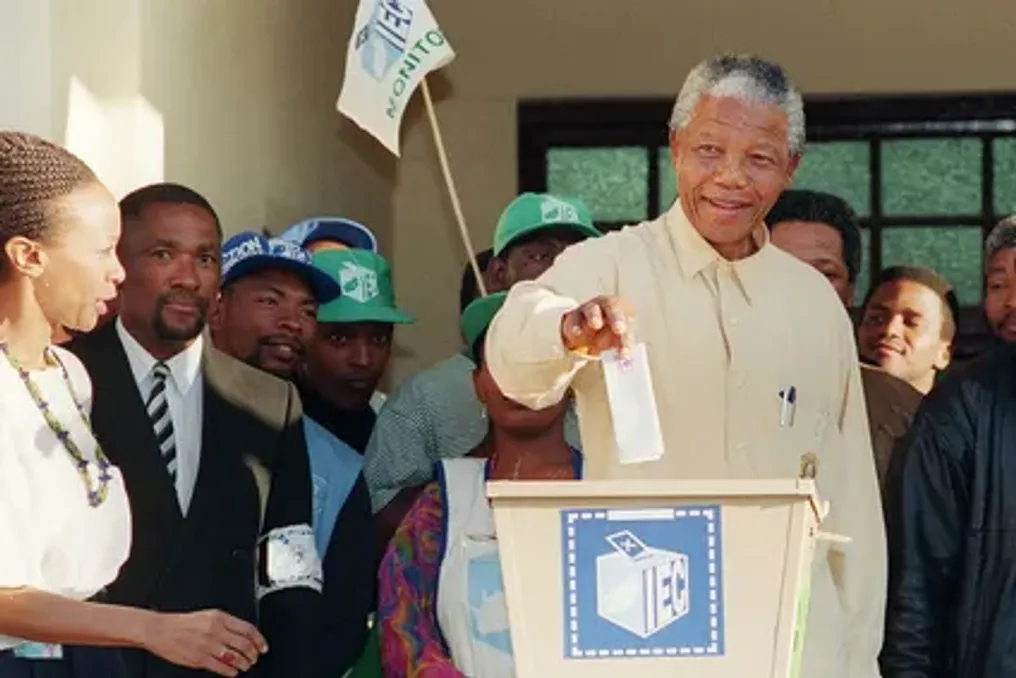
South Africa is at a critical juncture in its democratic journey. Thirty-two years after establishing democracy, the country has achieved significant successes, building democratic institutions and protecting constitutional rights, demonstrating to the world that a deeply divided society can choose reconciliation over revenge.
New Challenges for a Generation
However, history teaches that the fate of a nation is determined not only by its past but also by its future. Therefore, the article's author suggests posing a complex but necessary question: who will lead South Africa over the next twenty years, and are we preparing suitable leaders for the desired future? It is also important to define the qualities these leaders must possess.
For a long time, the national dialogue focused on dismantling apartheid, promoting reconciliation, and correcting historical injustices. These themes remain relevant as inequality persists and the promise of economic inclusion has yet to be fulfilled.
Contemporary Citizen Concerns
Nevertheless, the new generation of South Africans faces different anxieties. Parents worry about job security in five years, youth doubt whether a university degree guarantees employment, and entrepreneurs question the possibility of competing with long-established companies. Families struggle with the rising cost of living, tuition, healthcare, transport, and housing. Society lives in constant fear of violent crime, drugs, gender-based violence, and deteriorating public services. These issues have become today's reality, not tomorrow's problems.
Economic Development as a Social Issue
Each generation inherits its national task. If parents fought for political freedom, the current generation must ensure economic opportunities. Political freedom without economic participation leaves millions of citizens excluded from democratic promises. Economic growth has ceased to be solely an economic issue; it is a social, familial, and national stability concern. Without genuine economic inclusion, inequality widens, frustration deepens, and hope slowly fades. Consequently, leadership must evolve alongside societal challenges.
Unequal Starting Conditions for Business
As a Black entrepreneur, the author often reflects on the real state of affairs in the South African economy. Imagine starting a business over ten or fifteen years, and then compare that to competing against a company that has existed for fifty years, strengthened by generations of accumulated assets, capital, equipment, intellectual property, supplier networks, and financial reserves. Although both companies should compete under equal commercial conditions, their starting points are different. This situation does not require special privileges, but rather an acknowledgment that true transformation requires creating an environment where new enterprises have a real chance to grow into globally competitive organizations. Supporting entrepreneurship should be viewed not as charity, but as a national economic strategy, as today's small businesses are tomorrow's large employers.
Adapting to a Changing World
The world is changing faster than at any point in modern history. Artificial intelligence is transforming industries, automation is reshaping production, and digital technologies are altering government operations, business competition, and the education system. Climate change affects agriculture, infrastructure, and public health, while cybersecurity has gained importance comparable to national security. Countries like China continue to invest heavily in innovation, advanced manufacturing, and technology, while the United States remains a global leader in research and entrepreneurship. European and Asian countries are also investing in future industries, scientific research, and digital infrastructure. South Africans must answer a simple question: what place does our country hold in this rapidly changing global landscape? Are we preparing our youth for the jobs of tomorrow? Do our educational systems meet the demands of the future economy? Are we investing enough in science, engineering, technology, entrepreneurship, and innovation?
Understanding the Needs of Modern Families
Modern leadership requires more than just political experience; it requires understanding how ordinary families live. Parents worry not only about elections but also about mortgage payments, health insurance, the ability to cover educational expenses if they earn too much for aid but not enough to afford it comfortably themselves. They are concerned about children's safety in schools, the infiltration of drugs into communities, unreliable public infrastructure, healthcare, and crime. Good governance begins with understanding these daily realities, as politics only matters when it improves people's lives.
Thinking Beyond Elections
One of the main weaknesses of modern politics is the tendency to think only until the next election. Great nations are built by leaders who plan twenty or thirty years ahead. Singapore was not built in five years, China's economic transformation took decades, and South Korea consistently invested in education and industrial development. Rwanda engages in long-term national planning. Successful states create institutions that outlive individual leaders. South Africa must adopt the same approach so that national development does not depend solely on personalities but is based on a shared vision that withstands changes in political leadership.
Defining Leader Qualities
Perhaps our biggest mistake is asking if we have good leaders before deciding what leadership should look like. Before choosing leaders, the qualities they must possess need to be agreed upon. South Africa needs leaders with impeccable integrity who understand the economy as deeply as they understand politics. They must embrace technology and innovation, value education, and encourage entrepreneurship rather than hindering it. They must be able to unite diverse communities around a common national goal, welcome accountability rather than fearing it, make evidence-based decisions, and invest in the next generation, not in short-term popularity. Most importantly, there is a need for leaders who genuinely understand that every political decision ultimately affects the families around the dinner table across the country.
A Vision for South Africa by 2040
Imagine a South Africa where unemployment has sharply decreased due to the flourishing of entrepreneurship. Imagine schools graduating world-class students. Imagine safer communities, top-tier digital infrastructure, and public service based on professionalism, not patronage. Imagine an economy where innovation is one of the greatest export goods, and young South Africans choose to build their future here because they believe this country offers opportunities equal to any other nation. This vision is achievable, but it will require exceptional leadership.
The Necessary National Conversation
Perhaps we have been asking the wrong question all along. Instead of asking, 'Who should lead South Africa?', we should first ask: 'What kind of leadership will allow South Africa to compete, thrive, and inspire confidence by 2040?' Only by answering this question honestly can we begin to define, develop, and elect leaders capable of realizing this vision. The future of South Africa is not predetermined by chance; it will be shaped by today's choices. History will one day ask what our generation did in the face of uncertainty. The author hopes that our answer will be to choose to think beyond politics, beyond personalities, and beyond the next election, choosing to build a nation whose greatest legacy is not merely surviving democracy, but ensuring opportunity, dignity, and hope for every subsequent generation.