In the 'Sulaymon Saikal' farm in the Khatirchi district of Navoi region, drones are being used to treat cotton. The country is paying special attention to modernizing agriculture and widely implementing digital technologies and innovative solutions.
In the 'Sulaymon Saikal' farm in the Khatirchi district of Navoi region, drones are being used to treat cotton. The country is paying special attention to modernizing agriculture and widely implementing digital technologies and innovative solutions.
Thanks to the reforms led by the President, the use of resource-saving and highly efficient technologies in the agrarian sector is constantly expanding. This contributes to increasing labor productivity and the yield of farms.
In the spring, 22 hectares were sown for this year's cotton harvest at the farm. On 20 hectares, a drought-resistant variety 'XinLuZao-87', adapted to climatic conditions using the Shenzhou technology from China, was planted, and modern agrotechnologies are used for its cultivation.
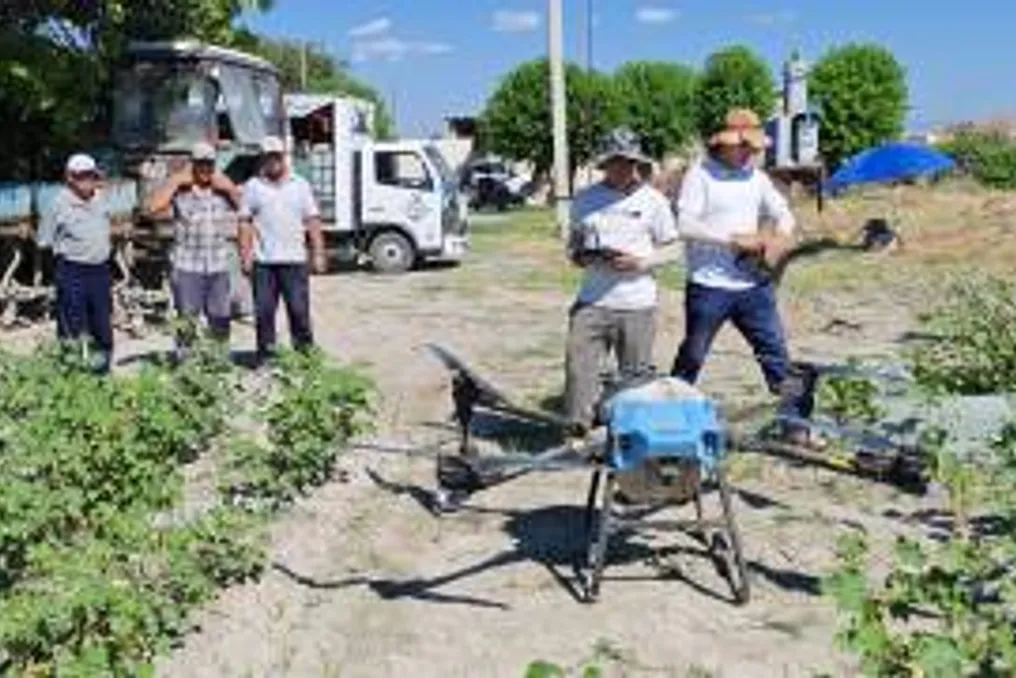
Currently, specialized drones are being used on these cotton fields for plant fertilization and pest control. The modern unmanned aerial vehicle allows for the spraying of microelements and plant protection products in precise doses and in a short time. This not only improves the quality of agrotechnical measures but also eases human labor.
Farmer Sulaymon Zulfiqorov notes that one of the main advantages of using drones is saving time and resources. This method allows for work to be done significantly faster than traditional equipment, which reduces fuel and labor costs. Furthermore, the effectiveness of pest control increases due to the uniform coverage of the plant leaves both from above and below.
Another important point is that the drones perform treatment without driving into the field rows, thus avoiding damage to the plant rows, as tractors do. This guarantees the preservation of every cotton stalk, increases final yield, and provides economic benefit to the farmer.
The reforms being implemented in the country to develop digital agriculture, apply scientific achievements, and produce innovative technologies demonstrate such practical results. The drone technology being tested in the Khatirchi district is one of the key steps towards transitioning cotton farming to a new stage, increasing labor efficiency, rational resource use, and forming a competitive agriculture.
Of course, the spread of this advanced experience will contribute to the development of the country's agrarian sector based on modern technologies, strengthening food and raw material security, and increasing the effectiveness of the New Uzbekistan reforms.
The Competition Committee learned about an advertisement posted by 'ANOR BANK' JSC on its Instagram social network based on a citizen's application from the Tashkent region.
The citizen's appeal noted that the advertisement regarding the promotion announced by the bank did not fully disclose the terms of the promotion. The investigation revealed that important information necessary for consumers to make decisions regarding financial services was not provided in the advertisement.
The missing information includes the conditions for the promotion to be valid, the set limit, and information about the commission fee applied if the limit is exceeded. Therefore, the Committee's Special Commission initiated proceedings against 'ANOR BANK' JSC because the requirements of Articles 16, 21, and 43 of the Law of the Republic of Uzbekistan 'On Advertising' were violated.
As a result of reviewing the case, a financial fine was imposed on the bank. Additionally, the bank was issued an instruction that must be fulfilled to eliminate the violation and ensure that such situations do not recur in the future.
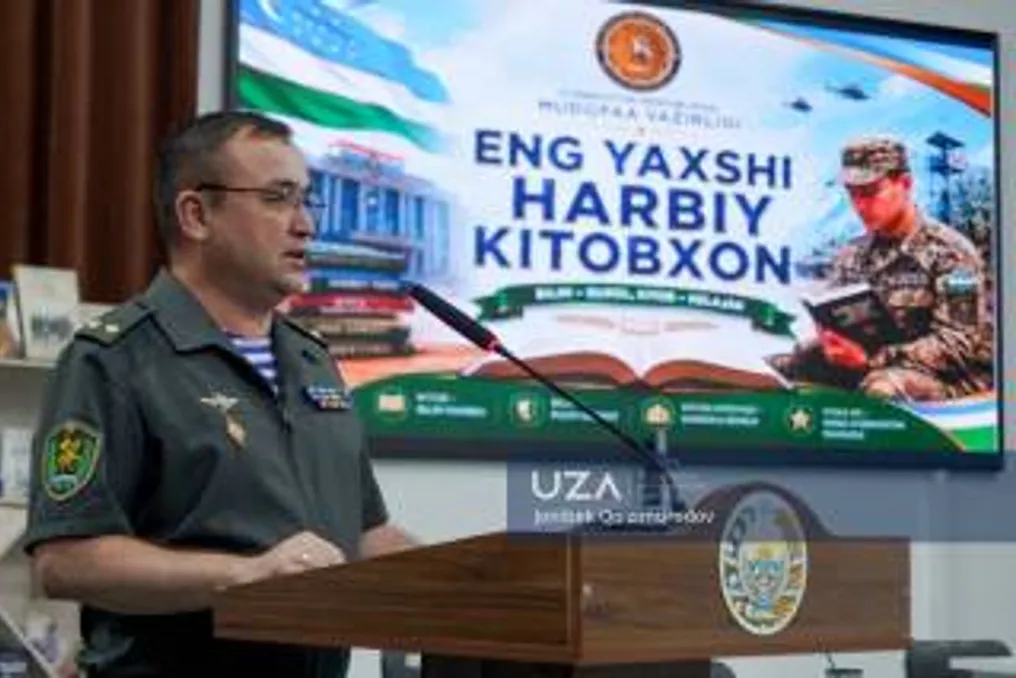
The qualification stage of the 'Best Book Lover' contest took place at the Southern Operational Command within the Southern Military-Western Special Military District. This contest was organized to ensure the execution of the head of state's decree from January 15, 2026, 'On measures for developing a culture of book-loving and increasing public interest in reading books,' and the corresponding order of the Minister of Defense.
Military personnel serving on mandatory duty, as well as officers and sergeants serving under contract up to the age of 30, participated in the contest. Participants exchanged knowledge and ideas in the fields of education and thinking.
Participants were tested based on two criteria. The first criterion was 'Quick Question-Answer,' where each participant answered four randomly selected questions quickly and accurately. This stage was evaluated on a 100-point scale.
The second criterion, 'Expert in Literary Works,' required participants to read excerpts and episodes from various literary works. They demonstrated their knowledge by naming the work, explaining its content, essence, idea, and educational significance. This stage was also graded on a 100-point scale.
Following the competition, participants who achieved prize places gained the right to participate in the contest to be held at the Ministry of Defense level. At the conclusion of the event, winners, prize-winners, and actively participating military personnel were recognized with honorary certificates and commemorative gifts from the Southern Operational Command.