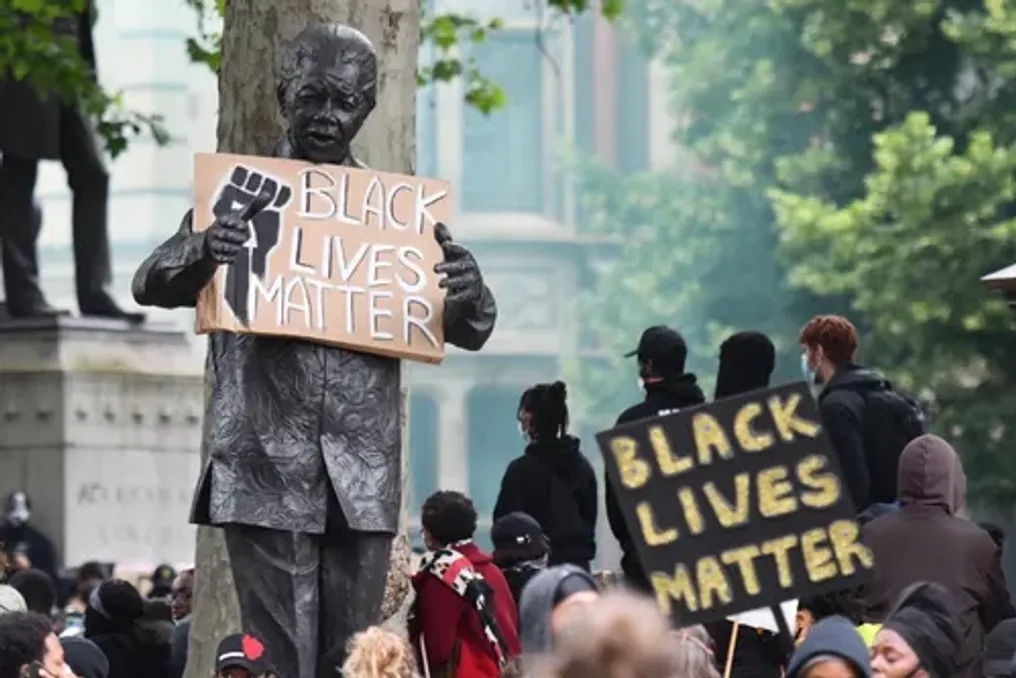
According to the author, Madiba Day should serve as a renewal of commitment to building an economy that provides decent work, strengthens state institutions, and distributes prosperity more fairly.
The Significance of Madiba Day
Every year on July 18th, Madiba Day prompts South Africans to dedicate 67 minutes to serving their communities in honor of the first democratic president's selfless commitment to justice, human dignity, and solidarity. This gesture holds significant symbolic value, but the spirit of Madiba Day demands a deeper resolve for the restoration of South Africa.
Ongoing challenges such as extremely high unemployment, entrenched inequality, widespread economic instability, and pervasive social violence continue to affect communities across the country. This requires the same courage, determination, and collective purpose that defined the struggle against apartheid.
The Need for Structural Change
Today, instead of relying solely on resistance, it is necessary to advocate for restoration to achieve the inclusive and prosperous South Africa envisioned by Madiba and his generation. The fight against poverty and inequality begins with addressing the deep structural problems that constrain the country's development. South Africa possesses vast natural resources, including minerals and fertile agricultural land, which contribute significantly to the economy.
However, much of this wealth benefits only foreign shareholders and a small local elite, while millions of South Africans live in poverty, facing rising prices for food, fuel, and basic services. Citizens must drive the change in economic direction. Prioritizing the Reserve Bank of South Africa's inflation target does not adequately account for employment and inclusive economic development.
Development Inhibitors and the Role of Business
Additional structural obstacles include financial polarization and monopolistic capital. Large amounts of capital remain concentrated in financial markets rather than being invested in productive sectors capable of creating decent jobs. Economic activity is concentrated among a relatively small number of large firms across various sectors, while small businesses, cooperatives, and social enterprises face barriers such as limited access to finance, procurement opportunities, and affordable credit.
Supporting the development of cooperatives and expanding local procurement can help diversify economic participation and create community jobs. Consumers also play a role by supporting local businesses where possible, thereby strengthening local economies. While government procurement should be used to support small, micro, and collective enterprises, the state should not outsource core functions to the private sector.
Government contracts have repeatedly been used by politically connected elites to siphon public funds while often providing low-quality services. Turning vital public functions into commercial venues deprives citizens of their rights and turns a public need into private profit. Strengthening state institutions, increasing accountability, and direct investment in state capacity can reduce losses, improve service delivery, and ensure that public resources serve the public interest, not private enrichment.
Energy and Water Sectors
The current energy system demonstrates a catastrophic risk of subjecting strategic operations to public-private partnerships. Instead of socializing South Africa's abundant solar and wind energy reserves, the state has allowed private capital to commodify the climate, selling us its own sunlight and air for profit. What began as a hidden privatization of energy production has led independent power producers to drain Eskom through predatory, fixed tariffs, while South African coal fuels the imperialist genocide of Palestinians and aggression in Lebanon and Iran.
The ongoing fragmentation of Eskom, now targeting the national transmission grid, represents an ideological appropriation of our collective heritage. We must resolutely oppose the transfer of the foundation of our energy network to market forces. Capitulation to energy liberalization deprives the public of the right to plan, direct, and insulate the economy for the benefit of all society.
The transition in Komati must be the starting point for restoring state sovereignty in Eskom. Despite the constraints imposed by World Bank's restrictive, market-driven loan of $497 million, it offers an opportunity to create a fully state-owned green industrial enterprise that goes far beyond electricity generation. Expanding this model into a larger regional industrial hub could help offset local economic difficulties caused by the closure of coal-fired power stations, while ensuring workers receive significant retraining and new opportunities, rather than dependence on external consultants. Communities themselves must play an active role in shaping a socially just, local, and economically inclusive energy transition.
South Africa now faces a risk of a similar trajectory in the water sector as in electricity, as Operation Vulindlela extends to municipal services. Insufficient infrastructure maintenance and deteriorating water quality are symptoms of the state abandoning its core functions, which directly benefits predatory water syndicates. Water must remain under democratic state ownership and accountability.
Land and Housing Issues
The issue of land remains equally pressing. Land scarcity, spatial inequality, and the housing crisis continue to define the daily lives of millions of South Africans. Vacant buildings in Johannesburg and Cape Town remain derelict, while families suffer in overcrowded informal settlements, unsafe living conditions, and homelessness.
State land and abandoned properties must be used more effectively to meet social needs. Suitable plots should support community gardens that strengthen local food security, and vacant urban buildings should be converted into high-density, multi-functional social housing, allowing more people to live closer to jobs, public transport, and essential services.
International Context and Civic Engagement
As the pursuit of Madiba's vision and that of his contemporaries, it is important to understand that they always viewed South Africa within a broader African and international context. Madiba understood that South Africa was part of a wider African community shaped by shared histories of colonialism, solidarity, and liberation. Addressing the Organization of African Unity Summit three decades ago, Madiba acknowledged continental support, stating: 'We owe you for fighting on our side as brothers and sisters for the restoration of our common dignity.' This commitment to international solidarity remains relevant today.
Creating a great South Africa requires confronting the structural causes of its problems, not managing their consequences. Therefore, Madiba Day must inspire something more than acts of charity. It must renew our commitment to building an economy that creates decent work, strengthens state institutions, and distributes prosperity more fairly.
Nelson Mandela understood that democracy depends on active, organized citizens who shape the future beyond the ballot box. Voting on November 4th is mandatory, but by also strengthening civil society organizations, demanding accountable governance, and promoting community solidarity, South Africans can help realize the democratic, socially just, and inclusive society originally envisioned by Madiba and the generations of freedom fighters.