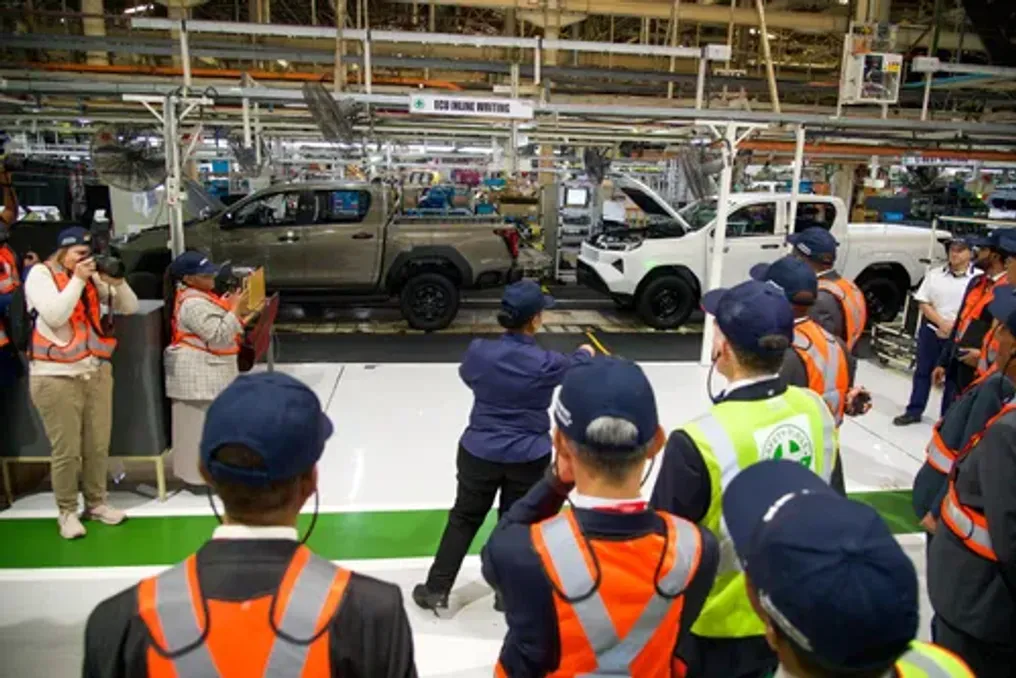
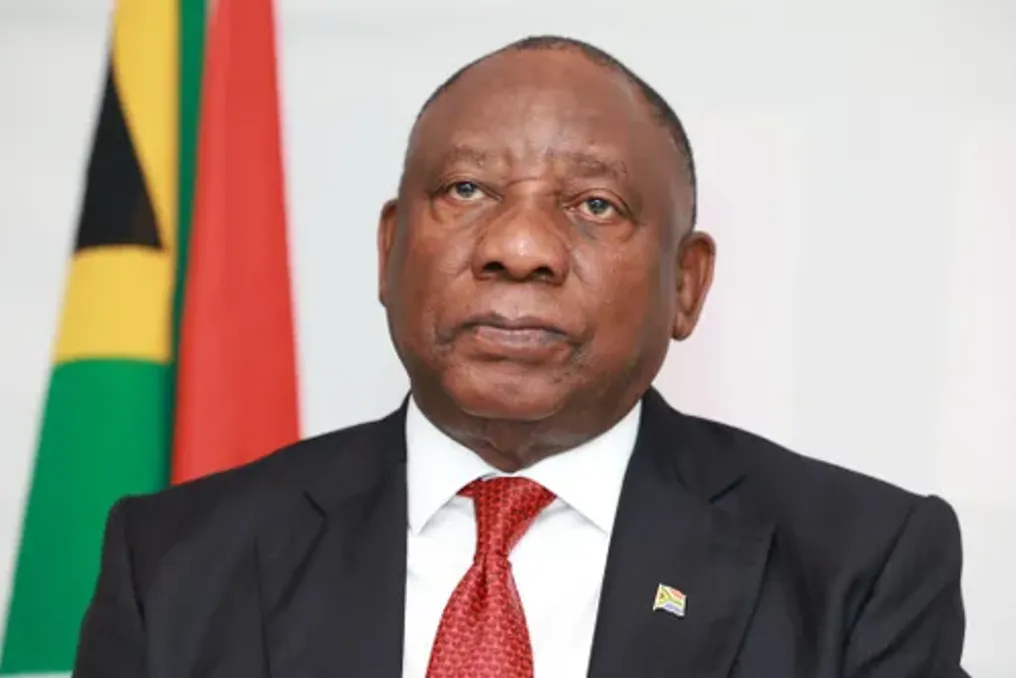
President Cyril Ramaphosa welcomed the R10.4 billion investment by Toyota South Africa Motors into the ninth-generation Hilux program. He emphasized that this project demonstrates confidence in South Africa's manufacturing sector, workforce, and economic potential.
Significance of the Investment for the Economy
Speaking at the official launch of the new Toyota Hilux at the company's plant in Prospecton, located in Eastwekini, on Thursday, Ramaphosa noted that this investment goes beyond simply launching a new vehicle. He stated that it reflects confidence in South Africa, the value of long-term investments, and the strength of local workers, engineers, technicians, and entrepreneurs.
Ramaphosa recalled that the Hilux has been part of South Africa's history, having been manufactured locally for over half a century and exported from the country. Despite the vehicle carrying one of the world's most recognizable automotive brands, the president noted that South Africans perceive it as a local product because it is 'designed for our conditions, made by South Africans, and exported from South African shores.'
Economic Benefits and Support
According to the president, Toyota's recent investments demonstrate the kind of long-term commitment that South Africa seeks to attract. He clarified that the value of these investments exceeds the manufacturing facility itself, as they create opportunities for workers, suppliers, and youth entering the economy. Ramaphosa stressed that the true value lies in the opportunities created, in the thousands of South Africans whose livelihoods depend on this factory, as well as in the growing skills of workers and the expanding production capacities of supplier companies.
The president also noted that the project demonstrated how investment commitments can translate into economic results. He reminded that at the sixth South African Investment Conference earlier this year, he had said that investors reward execution, not just promises. He added that completed projects, expanded factories, installed equipment, employed jobs, and exports leaving the ports are as important as investment announcements.
Development of Local Manufacturing
Toyota's investment also strengthened the potential of local suppliers: about a third of the sum was directed towards supplier development and equipping, while the suppliers themselves invested an additional R2 billion in localization. Ramaphosa called this a way to build sustainable industrial ecosystems and deepen domestic manufacturing capabilities. He also noted that the automotive sector remains a key element of South Africa's industrial economy, accounting for about 5% of the gross domestic product and supporting over 115,000 direct manufacturing jobs and more than half a million jobs in the value chain.
The president stated that South Africa's status as the 21st largest automotive producer in the world was achieved through the collaboration of government, manufacturers, organized labor, and suppliers. Recognizing global shifts in the automotive industry driven by cleaner mobility and new technologies, Ramaphosa urged the country not just to react to these changes but to lead them where competitive advantages exist.
Government Support and Infrastructure
The government is strengthening support for the sector through stimulating component production, developing the battery value chain, research, innovation, and upskilling related to new energy vehicles. Ramaphosa pointed out that South Africa's reserves of critical minerals give the country the potential to become a global hub for future mobility when combined with advanced manufacturing and technological innovation. He also emphasized the need to improve logistics infrastructure, including ports and railways, as a necessary condition for competitiveness.
The president welcomed improvements at Transnet terminals in Durban, Gqeberha, and East London, which processed over 792,000 fully assembled vehicles in ten months leading up to February. Ramaphosa believes that closer partnership between business and government will help strengthen South Africa's position as an export platform.
Future and Competitiveness
Acknowledging the increasing intensity of competition for investment amid global uncertainty, Ramaphosa stated that South Africa will compete by creating a stable macroeconomic environment, implementing structural reforms, improving infrastructure, strengthening institutions, and expanding partnerships with investors who share the country's long-term vision. He thanked Toyota South Africa Motors, government departments, trade unions, suppliers, contractors, and the Prospecton factory workers for their contribution to this achievement. The president concluded that behind every Hilux leaving the production line is the skill, discipline, and pride of the employees, and that the launch demonstrated South Africa's ability to compete globally while remaining open to business.