Oil markets are showing a state of confusion as they cannot clearly determine the source of their concerns. The rise in global oil prices was triggered by military actions initiated by the United States and Israel against Iran.
Oil markets are showing a state of confusion as they cannot clearly determine the source of their concerns. The rise in global oil prices was triggered by military actions initiated by the United States and Israel against Iran.
If a trader had looked at the July price chart in June, they would have expected serious problems. The price of Brent crude was falling, approaching the $70 per barrel mark—the lowest level since February when military actions began between Iran and the US. However, the price then sharply jumped almost 7% in a single session after Washington resumed bombing Iranian targets, just a few weeks after the signing of a memorandum of understanding that was supposed to end the conflict. In a short period, Brent exceeded $80 before starting to decline again. This market behavior reflects a situation where the market cannot decide whether the crisis is over or merely paused.
This sharp volatility is more significant than any specific price because it reveals a structural problem: the history of raw oil supply and processed product no longer aligns. The global supply of crude oil appears stable, even abundant; in June, stocks rose for the first time in four months, and forecasters anticipate a surplus by the end of the year, provided shipping through the Strait of Hormuz remains open. Nevertheless, refining capacities are not keeping pace with this trend. Exporting refineries in the Middle East, which were shut down during the conflict, have not fully resumed operations, and Russia's capacity remains limited due to ongoing attacks on its facilities. Furthermore, Asian refineries are operating below normal levels. The result is the achievement of a refining margin of a four-year high, even with the decrease in the cost of crude oil itself. The widening of diesel and gasoline spreads is due to insufficient capacity to convert abundant crude oil into the fuel demanded by consumers.
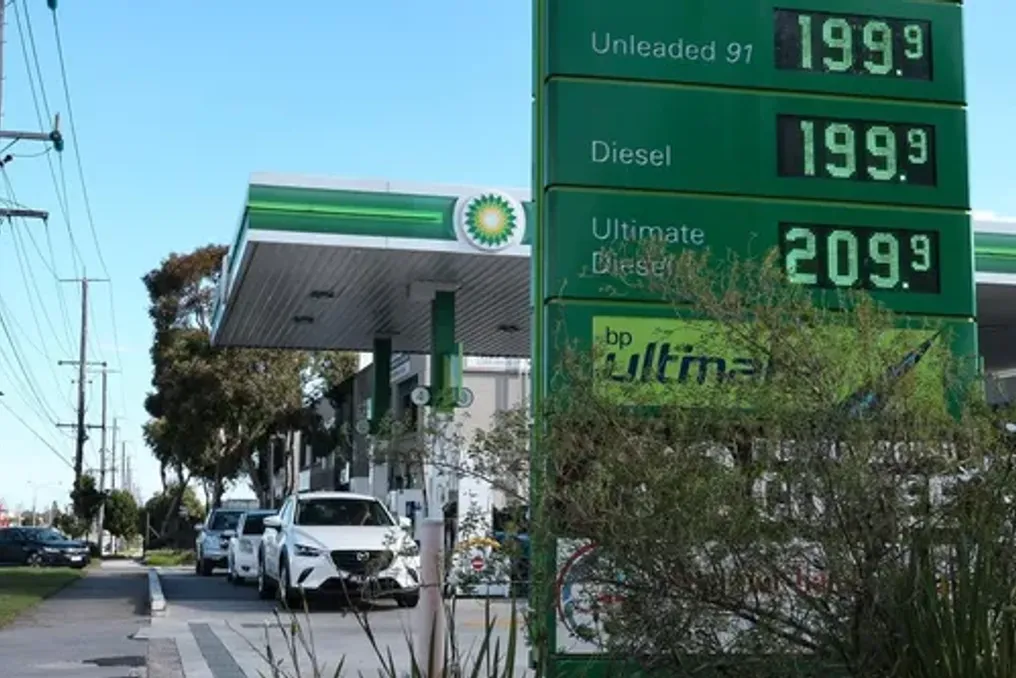
This imbalance matters to ordinary consumers. A drop in crude oil prices is usually seen as good news at the pump. However, if bottlenecks in processing persist, the gap between the cost of crude oil and the retail price of fuel may remain stubbornly wide, meaning drivers may not feel relief even if the oil futures market looks bearish. This serves as a reminder that the price of crude oil and the price of gasoline are related but are not the same commodity category, and currently, they are moving according to almost entirely different logic.
A larger question hanging over the entire market is whether the US-Iran memorandum of June 18th was a real exit from the crisis or just a pause button. Markets initially perceived it as reliable enough to restore shipping and push prices back to pre-conflict levels, which was a real relief after months of war whose premium was baked into every barrel. The resumption of attacks in early July quickly undermined this optimism, and traders are now pricing in a level of uncertainty that the signed agreement was supposed to eliminate. This may be a more important signal than any single price spike: the diplomatic document failed to sustainably reduce risk because the fundamental military situation did not change sustainably. Markets learned this lesson at a high cost.
For producers, this period presents a complex planning situation. US forecasts for 2026 production have slightly increased: the EIA now projects 13.78 million barrels per day, assuming most halted production returns to normal by early 2027. This is a reasonable baseline scenario, but it is based on the assumption of a ceasefire that markets have just seen collapse in real time. Any producer, refinery, or government basing its budget on current forward curves is betting on a de-escalation that has already proven false once this year.
None of this means that the war premium will be permanent or that oil will return to $100. It means that the market has stopped trusting individual data points—ceasefire signings, strong OPEC+ compliance figures, refinery restarts—as indicators of price direction. Until the Strait of Hormuz demonstrates a sustained, continuous period of normal tanker traffic, expect crude oil to fluctuate based on headlines rather than fundamental metrics, and the difference in price between crude and product to remain the most interesting indicator to watch.
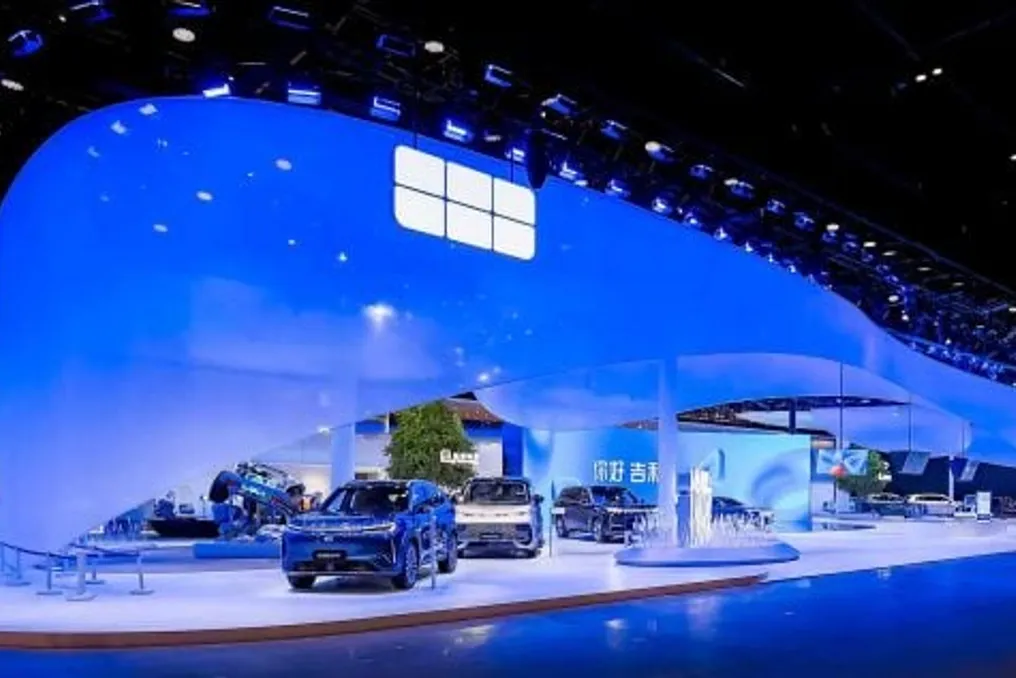
China's automotive industry is demonstrating an unprecedented pace of new product launches, significantly outpacing the markets in Europe and the United States. In the first half of 2025 alone, approximately 650 new models appeared in China, corresponding to an average frequency of over 3.5 launches per day.
This volume, calculated by the Chinese platform Dongchedi and published by Bloomberg, exceeds the combined output of the US and Europe for an entire year. Although the data pertains to the previous year, it likely reflects trends for 2026 as well.
The comparison with mature markets shows a significant gap. According to a Car Wars study by Bank of America Securities, only 159 new models are expected to be introduced in the US between 2026 and 2029; there were only 29 in 2024. The situation is similar in Europe: the Association of European Vehicle Logistics reports that the continent receives between 35 and 50 completely new models annually.
Despite the impressive figures, it is important to consider the context of the Chinese market: this includes not only entirely new vehicles but also updates to existing products, such as new configurations, colors, and versions. Even when considering only absolutely new models, the pace remains astonishing: about 30 models were released per month since January, totaling approximately 180 new models in the first half.
This high pace contributes to the development of fierce competition among Chinese manufacturers, which is sustained by a relentless price war. This forces brands to constantly accelerate their development.
Behind this high speed lies years of price competition and a change in the perception of the car, which has transformed from a simple means of transport into a complex technological product. To maintain consumer attention, manufacturers are forced to constantly update their range, which has allowed them to drastically reduce development times. Now, new batteries, driver assistance systems, and other technologies are brought to market much faster than was possible just a few years ago.
Pressure on the industry is increasing amid slowing domestic demand. In June, passenger car sales in China fell by 23% compared to the same month last year, according to data from the local manufacturer association (CPCA). Nevertheless, the industry is not slowing down; aggressive portfolio renewal remains a key way of survival in a market where interest in any release quickly fades, requiring each company to present the next novelty before the previous one loses relevance.
TakealotMORE is being introduced—a membership program from Takealot Group designed to make life in South Africa simpler, faster, and more economical. This program combines the best offers from Takealot Group, one of the popular membership programs in South Africa.
Household difficulties often arise not from large purchases, but from small, unexpected needs: running out of dog food, needing to urgently buy a child's birthday gift, or simply lacking the energy to cook late in the evening.
TakealotMORE was created specifically to solve such problems. While many know Takealot as one of South Africa's favorite online stores, and Mr D as a grocery delivery service, TakealotMORE brings all these services together in one place.
For a monthly fee of 39 South African Rand (R39), users receive free nationwide delivery without restrictions, as well as access to exclusive discounts on items ranging from burgers to diapers on both Takealot and Mr D.
There is also a premium option for 99 Rand per month (R99 p/m). Members at this level receive additional bonuses, special MORE offers created exclusively for participants, as well as a free subscription to News24, which costs 109 Rand per month.
Within a typical week, the membership allows for solving many issues: on Monday, when coffee machine capsules run out, a Nespresso order is delivered to the office in under an hour for free. On Wednesday, when there is no desire to cook, food is quickly delivered via Mr D. On Thursday, if a children's party is planned for the next day, a gift from Toy Kingdom will be sent on time. On Friday, if dog food runs out, restocking the order through Absolute Pets on Mr D ensures the pet has food for the weekend, and a large bag can be ordered separately through Takealot, avoiding the need to carry heavy loads.
According to Takealot Group's own data for the past financial year, active membership in TakealotMORE increased by 74% compared to the previous year. The group reported that members collectively saved nearly 700 million Rand through discounts and reduced delivery costs, and TakealotMORE members' orders now account for approximately a quarter of the total sales volume on the platform.
It is important to note that the program is aimed not at increasing purchases, but at making everyday tasks—whether buying coffee, pet food, a gift, or dinner—significantly easier and less burdensome.
Users can start a one-month free trial anywhere in South Africa to take advantage of the benefits of Takealot and Mr D.