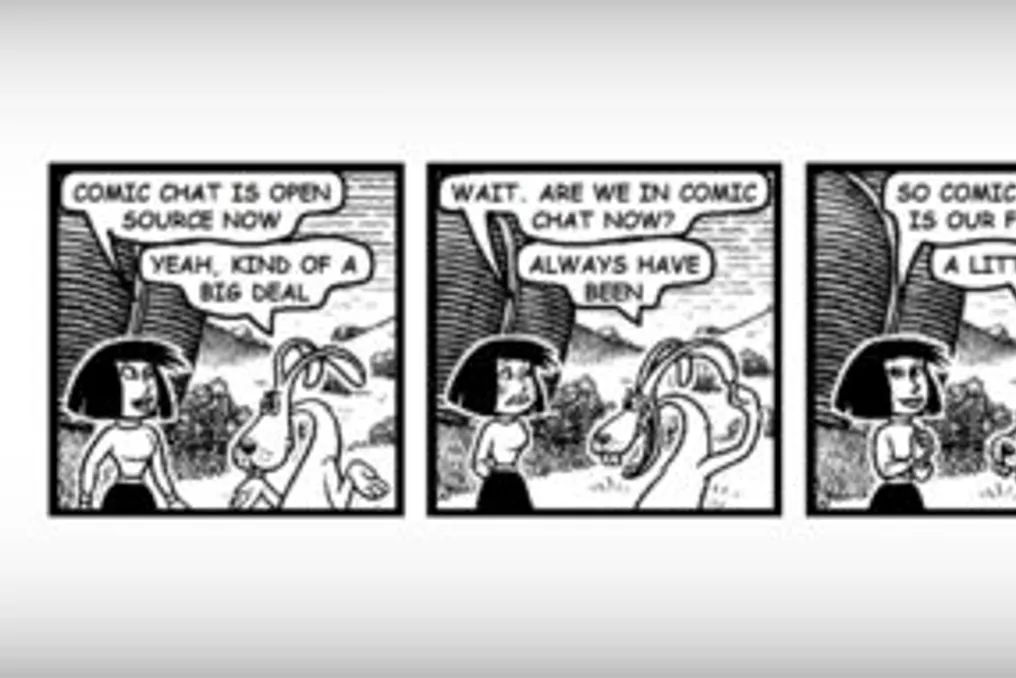
Microsoft has made the source code of Comic Chat public, a Windows chat client that used the IRC protocol and featured the functionality to convert conversations into comic book format.
Features and Historical Context
Originally launched in 1996, Comic Chat allowed dialogues to be presented with different characters and speech bubbles. The software's proposal was to simulate a visually rich experience, similar to modern applications like WhatsApp or Facebook Messenger, but using IRC infrastructure.
IRC, which stands for Internet Relay Chat, is a real-time communication service based on server interconnection and was introduced in 1988. Although it was very popular during the 90s, it gradually lost ground to other services such as ICQ, MSN Messenger, and webchats.
How Comic Chat Worked
To use an IRC service, client software was required, with mIRC being one of the most well-known. Comic Chat also attracted users by transforming purely textual conversations into visual scenarios. Each participant was represented by a comic character, and texts appeared in bubbles. Microsoft demonstrated that the software could bring interactions to life, such as having a character point to themselves when reading a message like 'I liked this.'
Comic Chat was initially released for Windows 95, accompanying Internet Explorer 3. Its appearance was notable considering the graphical limitations of the time, before the existence of emojis or like buttons. The company also released the tool for Windows 98, seeing it as a way to stimulate internet usage, which was not yet as widespread as it is today.
Microsoft's Motivation
Microsoft justified opening the source code as an initiative to preserve a relevant aspect of software history and offer the community the chance to study it, learn from it, and develop new functionalities.
Although the original Comic Chat was developed using Visual C++ 4.0 and MFC, the version made available on GitHub was adapted for compilation with current Visual Studio tools. This facilitates both code exploration and the ability to connect the tool to contemporary IRC servers. The code is available under the MIT license.
Trivia about the Font
Microsoft also clarified a possible association between the software's name and the Comic Sans font, stating that this font found its first suitable environment in Comic Chat because its informal and handwritten style perfectly matched the program's speech bubbles.