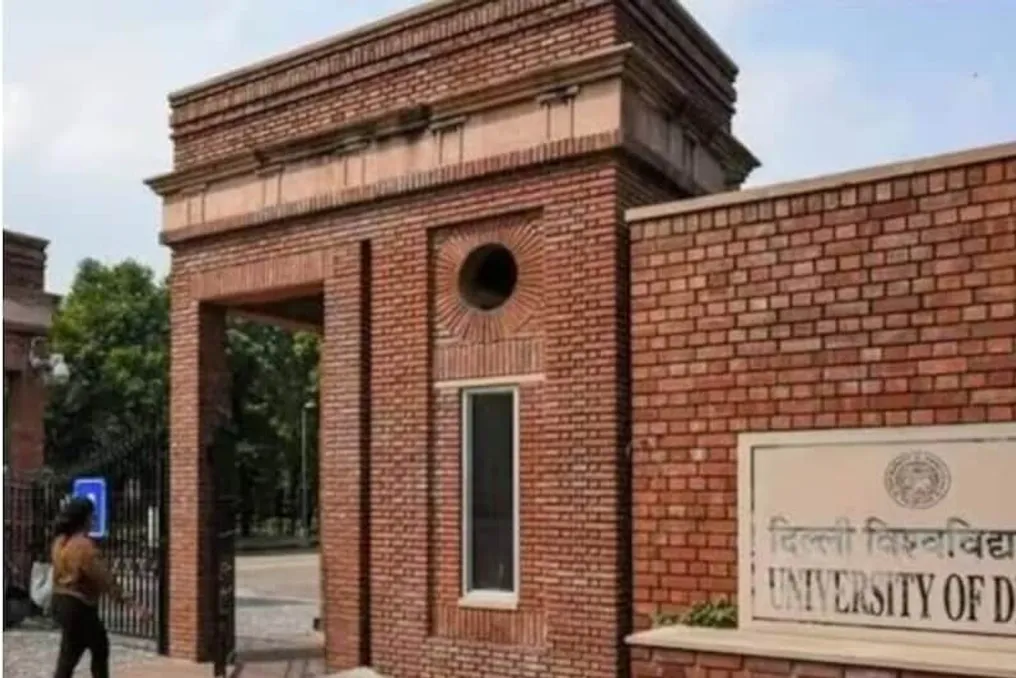
Currently, admissions are open at Delhi University (DU), and the process of seat allocation is causing anxiety among applicants due to difficulties with cut-off scores and competition for a place in this prestigious higher education system. However, information obtained through a Right to Information (RTI) request revealed a worrying fact: no new traditional college has been opened at DU in the last 31 years.
History of DU College Openings
The last traditional college offering a general undergraduate program in arts, sciences, or commerce was established in 1995 as 'Bhaskaracharya Applied Science College'. After this date, all new institutions joining the university have been specialized, such as medical, dental, or physiotherapy institutes. Thus, since 1995, no educational institution providing general higher education, which is a core characteristic of DU, has been created.
Admissions Statistics and Competition
In the current year, 273,751 candidates registered for undergraduate programs at DU. Of these, 218,284 students passed the first stage, and 208,043 students recorded their preferences for courses and colleges. Furthermore, only 71,624 seats are available across 69 colleges and departments at DU for 73 programs. This means that there are approximately 3.8 registered applicants per seat. Even considering only those who recorded their choices, the competition is around 2.9, meaning almost three students are competing for one spot. The lack of annual expansion in the number of colleges increases pressure on students.
Three Phases of Delhi University's Development
According to RTI data, the development of DU can be divided into three distinct periods. The first phase (1881–1946) was a period of laying foundations, during which 8 colleges were established, becoming well-known institutions. St. Stephen's College was founded in 1881, followed by Hindu College in 1899, Ramjas College in 1917, Indraprastha Women's College in 1924, Zakir Hussain Delhi College in 1925, and Shri Ram College of Commerce (SRCC) in 1926.
The second period (1947–2000) was marked by a boom in expansion after gaining independence, when DU developed at an unprecedented pace. Hansraj College and Miranda House were opened in 1948. This was followed by the opening of Lady Shri Ram College for women in 1956, Kirori Mal College in 1957, Shri Venkateswara College in 1961, Gargi College in 1967, and Jesus and Mary College in 1968. This rapid growth continued until the end of the 20th century, including the establishment of Shahid Sukhdev College of Business in 1987 and Dina Dayal Upadhyaya College in 1990. The culmination of this golden period was the opening of Bhaskaracharya Applied Science College in 1995, which became the last traditional undergraduate college of DU.
Period of Stagnation and Specialization
The third phase (2001–2019) is characterized by a slowdown in expansion, with only seven new institutions added over two decades. All of them were professional colleges related to healthcare, education, or rehabilitation. These include the School of Rehabilitation Sciences (2002), Durgabai Deshmukh College of Special Education (2006), Holy Family College of Nursing (2011), Maulana Azad Institute of Dental Sciences (2013), and Florence Nightingale College of Nursing (2019). None of these colleges represented a traditional institution in the fields of arts, sciences, or commerce.
Expansion Policies of Different Governments
RTI data shows that the approach to opening traditional colleges remained consistent regardless of changes in government. During Atal Bihari Vajpayee's tenure (1998–2004), three institutions were added, all related to healthcare: Institute of Human Behaviour and Allied Sciences (1998), Amar Jyoti Physiotherapy Institute (1999), and School of Rehabilitation Sciences (2002). Under Manmohan Singh's rule (2004–2014), five new institutions appeared, such as Durgabai Deshmukh College of Special Education (2006), Holy Family College of Nursing (2011), Chacha Nehru Children's Hospital (2012), Army Hospital Nursing College (2013), and Maulana Azad Institute of Dental Sciences (2013), highlighting a focus on nursing, dentistry, and special education.
After 2014, under Narendra Modi's rule, only one institution was added to DU—Florence Nightingale College of Nursing in 2019, which was also a specialized medical college.
Hopes for the Future: Vir Savarkar College
The situation may change with plans to open Vir Savarkar College. Prime Minister Narendra Modi initiated the construction of two new DU campuses on January 3, 2025, and announced the creation of this college. Since this college is not yet fully operational, it is absent from RTI statistics. Nevertheless, according to recent reports from June 27, 2026, this college, which will be built in Najafgarh, may start operating this year, although its classes will not be held in its own building. As the campus construction is not yet complete, DU plans to conduct classes for this new college on the premises of DDU. DDU has agreed to this request from DU, and official approval from the university is now expected. According to the plan, initially, classes will only be conducted for first-year students. If this happens, it will be the first instance since 1995 where the number of undergraduate seats for traditional programs at DU will increase.