Chwayita Momoza, a student at the University of KwaZulu-Natal (UKZN), has been selected to represent South Africa at the Middle East, Pakistan, and Africa Student Entrepreneurship Competition (MEPA).
Chwayita Momoza, a student at the University of KwaZulu-Natal (UKZN), has been selected to represent South Africa at the Middle East, Pakistan, and Africa Student Entrepreneurship Competition (MEPA).
The competition is scheduled to take place in Cape Town from July 27 to 28 and will bring together over twenty leading student entrepreneurs from these regions. Participants aim for a chance to advance to the final global stage.
Momoza, who is a co-owner of an online furniture store, passed three previous stages of the competition: the university, provincial, and National GSEA South Africa competition before reaching MEPA. She noted that receiving the national invitation and being chosen as one of two South Africans to participate in MEPA were unforgettable moments, confirming her diligent work in developing her furniture business alongside her studies.
While pursuing a Bachelor of Science in Computer Science and Information Technology, Momoza emphasized that her studies taught her strategic thinking and the creation of scalable systems. She explained that the skills acquired during her education directly influence the management and growth of her business, including data analysis, improving operational processes, understanding digital platforms, and e-commerce.
Originally from Matatile in the Eastern Cape, Momoza noticed a gap in the South African online furniture market. She founded the company to solve common customer problems such as unreliable delivery, inconsistent quality, damaged goods, and poor after-sales service, while creating a modern and reliable furniture brand.
The company operates on a hybrid model, combining local manufacturing, international sourcing, and e-commerce, and currently employs seven staff members. Momoza manages strategy, branding, marketing, operations, logistics, customer experience, and business development, ensuring quality products and exceptional customer service. The business, launched in July 2025, is only one year old but has already achieved significant growth: expanding its product range, opening its first warehouse complex, strengthening quality control processes, and earning over 700,000 Rand in revenue.
Momoza is participating in the MEPA competition due to its reputation as a platform that brings together the world's most promising young entrepreneurs. She sees the competition as an opportunity to test her business internationally, receive mentorship from experienced entrepreneurs, and grow both personally and professionally. She anticipates valuable mentorship, international exposure, and access to global business networks provided by the competition.
Dr. Norma Zondo, Executive Director of Corporate Relations, congratulated Chwayita on her achievement. She stated that the student's participation in the competition among the world's most promising young entrepreneurs is a source of pride for the University, as Chwayita's journey reflects the creativity, resilience, and entrepreneurial spirit that UKZN strives to cultivate.
More than four thousand students remain in limbo due to incomplete NSFAS funding investigations, prompting the Deputy Minister of Higher Education and Training, Yusuf Kassim, to demand an acceleration of action from the financial aid scheme.
The intervention occurred after a meeting between Kassim and NSFAS administrator Professor Khlengani Mathebula. During this meeting, serious concerns were discussed regarding prolonged delays in funding investigations, unresolved student appeals, benefit payments, and uncertainty related to second-semester registration.
NSFAS reported that it is still awaiting academic data from educational institutions concerning the cases of 4138 students currently under GAP investigation. This verification process is used to confirm registration data, academic eligibility, residency, and enrollment.
Kassim criticized the prolonged delays, stating that students should not have to wait months for answers. The Department of Higher Education and Training emphasized that while the Deputy Minister respects the GAP investigation and verification processes conducted by NSFAS to prevent fraud and confirm beneficiaries' academic suitability, he finds it unacceptable for students to wait up to five months for these investigations to conclude.
NSFAS informed that out of over 10,000 cases, 2361 GAP investigations have been processed, which has allowed funding to be restored to affected students. In response, Kassim requested a list of affected students per institution and instructed the university department to assist NSFAS in obtaining missing academic information to finalize the investigations.
As a result of the meeting, NSFAS committed to finalizing 1515 Unisa GAP cases by Friday and urgently resolving funding issues affecting over 400 Nelson Mandela University students enrolled in advanced programs. The Deputy Minister also expressed concern about the funding for Unisa students who need to register for the second semester, starting next week.
According to the department, NSFAS has not yet provided guarantees for second-semester registration funding, citing funding shortages and ongoing work on submitting materials to the ministry. The Deputy Minister expressed dissatisfaction with this delay and intends to monitor the process to ensure it continues without further setbacks.
Kassim also questioned the timelines for NSFAS benefit payments to educational institutions, arguing that delays in fund transfers cause students to receive benefits late. He specifically called for an improvement in the payment schedule for the R316 care allowance for Unisa students.
Student complaints and service issues were also discussed. NSFAS informed the Deputy Minister that appeals are now handled directly by the educational institutions following the abolition of the appeals tribunal in the current administration. During his visit to the NSFAS call center, Kassim found that some student queries take months to resolve. Kassim stated the need to improve the speed of responding to student inquiries and promised that his office would collaborate closely with NSFAS for more effective student assistance.
The intervention has already led to NSFAS deploying teams to the Central Technological University to assist students living in unaccredited accommodation who faced delays in receiving benefits. Despite the concerns raised, NSFAS assured the Deputy Minister that there are currently no overdue benefit payments, including those intended for TVET college students.
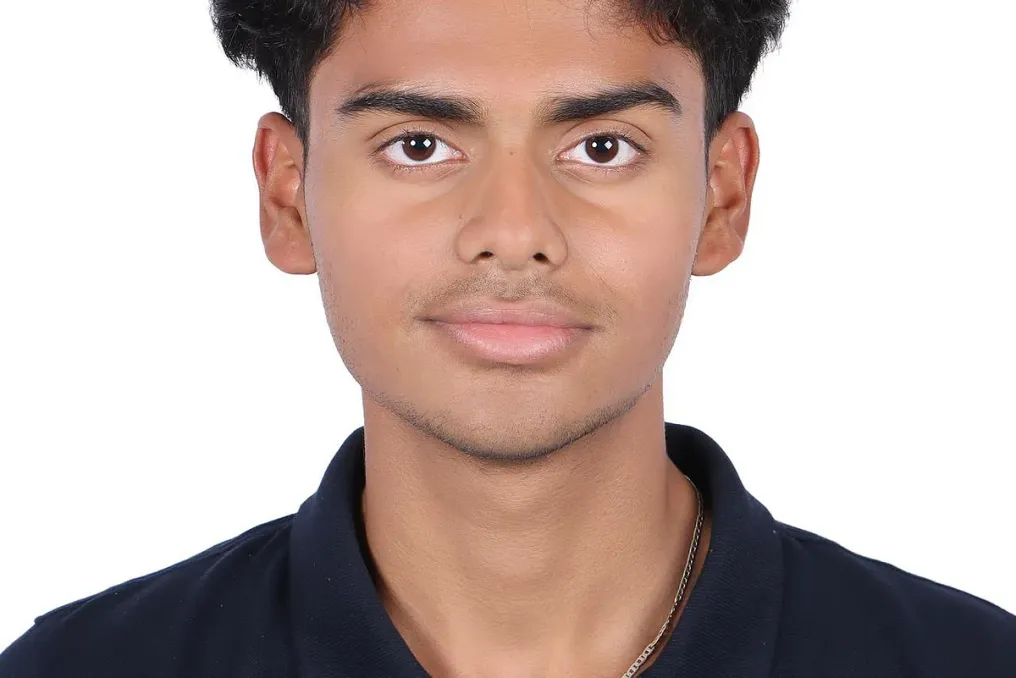
When the NEET exam was postponed, Sankalp Sandeep Naik considered giving up because he had completely lost interest in studying. However, his mother refused to let him stop trying, and his father provided support. His brother gave up their shared bedroom every night so that Sankalp could study without interruption.
After several months, the student, who studies at Ascentria and also attends the private school JSS in Dubai, secured the position of the highest-ranked candidate among those taking the National Entrance Examination (NEET-UG) 2026 in centers outside India. He scored 650 out of 720, achieved an All India Rank (AIR) of 1398, and topped the 'Outside India' category in the list of top graduates published by the National Testing Agency. His report card also shows an overall percentile of 99.9253.
The 18-year-old Sankalp noted that the exam postponement was the most difficult part of his journey. He told Khaleej Times: 'The exam postponement is very difficult for students. It affects their mindset. When the exam was postponed, I completely lost interest. I thought I should stop. But my mom, dad, and brother kept pushing me. Then I continued. I am grateful to everyone who supported me.'
Sankalp joined the Ascentria coaching center in Dubai in 12th grade under the guidance of biology mentor Ms. Alki. Initially, he focused on CBSE exams, but in the last few months before the test, he completely shifted his focus to NEET. He mentioned that he prepared seriously for about five months, and regular tests and institute training helped him consistently improve his results.
Despite the excellent result, it was backed by the support of his entire family. During his preparation, his brother moved into the living room every night so that Sankalp could study peacefully. His father also took leave from work several times to support him during critical months before the exam. Sankalp added that his whole family provided him with immense support. Furthermore, the path to his goal required him to give up many hobbies; he stopped attending his cricket academy when studies became more demanding, although he sometimes played for school. He also missed several family events, including his 18th birthday, as he was studying that day.
When asked which day of his NEET journey he would relive, Sankalp replied that it was the day he finished writing the exam, because then he knew all the pressure would be over, and he could enjoy freedom again. Although he felt confident after the exam, he admitted that there was some nervousness while waiting for the results. He emphasized that the biggest challenge is the lifestyle change, as people only see the grades but do not see the sacrifices involved in transitioning from constant leisure to daily six-to-seven-hour sessions. He advised future applicants to focus more on revising material than trying to cover as many topics as possible, stating that studying one chapter five times is better than studying five chapters once.
Sankalp, whose father is an engineer, said he always dreamed of becoming a neurosurgeon. He now plans to complete admission formalities before returning to Dubai in August, and his preferred choice is AIIMS Nagpur, where he hopes to begin his journey toward this profession.
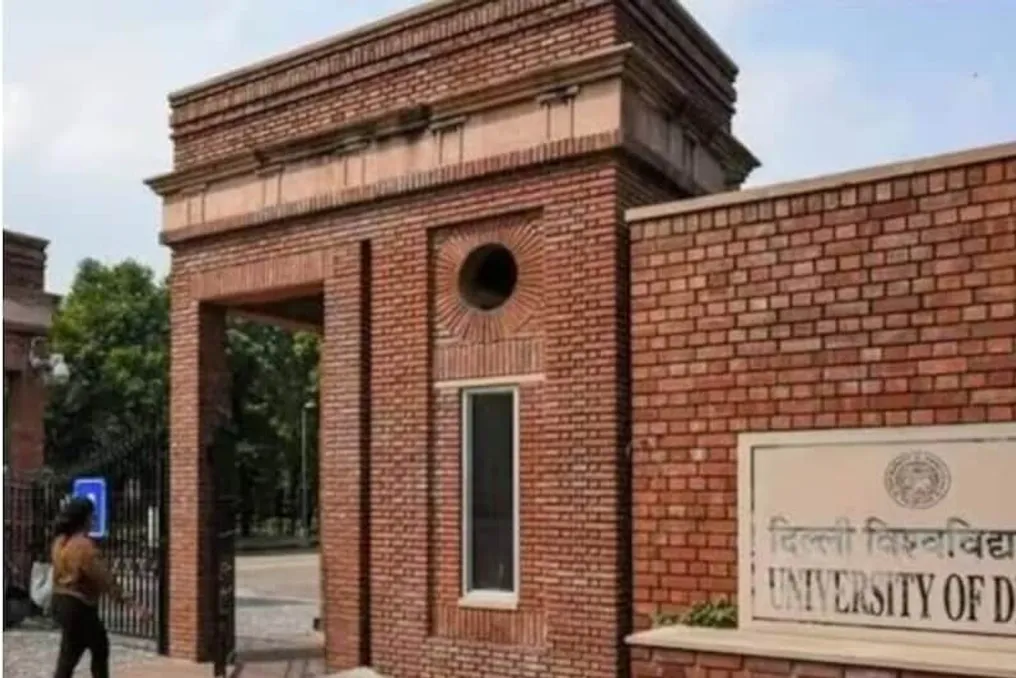
Currently, admissions are open at Delhi University (DU), and the process of seat allocation is causing anxiety among applicants due to difficulties with cut-off scores and competition for a place in this prestigious higher education system. However, information obtained through a Right to Information (RTI) request revealed a worrying fact: no new traditional college has been opened at DU in the last 31 years.
The last traditional college offering a general undergraduate program in arts, sciences, or commerce was established in 1995 as 'Bhaskaracharya Applied Science College'. After this date, all new institutions joining the university have been specialized, such as medical, dental, or physiotherapy institutes. Thus, since 1995, no educational institution providing general higher education, which is a core characteristic of DU, has been created.
In the current year, 273,751 candidates registered for undergraduate programs at DU. Of these, 218,284 students passed the first stage, and 208,043 students recorded their preferences for courses and colleges. Furthermore, only 71,624 seats are available across 69 colleges and departments at DU for 73 programs. This means that there are approximately 3.8 registered applicants per seat. Even considering only those who recorded their choices, the competition is around 2.9, meaning almost three students are competing for one spot. The lack of annual expansion in the number of colleges increases pressure on students.
According to RTI data, the development of DU can be divided into three distinct periods. The first phase (1881–1946) was a period of laying foundations, during which 8 colleges were established, becoming well-known institutions. St. Stephen's College was founded in 1881, followed by Hindu College in 1899, Ramjas College in 1917, Indraprastha Women's College in 1924, Zakir Hussain Delhi College in 1925, and Shri Ram College of Commerce (SRCC) in 1926.
The second period (1947–2000) was marked by a boom in expansion after gaining independence, when DU developed at an unprecedented pace. Hansraj College and Miranda House were opened in 1948. This was followed by the opening of Lady Shri Ram College for women in 1956, Kirori Mal College in 1957, Shri Venkateswara College in 1961, Gargi College in 1967, and Jesus and Mary College in 1968. This rapid growth continued until the end of the 20th century, including the establishment of Shahid Sukhdev College of Business in 1987 and Dina Dayal Upadhyaya College in 1990. The culmination of this golden period was the opening of Bhaskaracharya Applied Science College in 1995, which became the last traditional undergraduate college of DU.
The third phase (2001–2019) is characterized by a slowdown in expansion, with only seven new institutions added over two decades. All of them were professional colleges related to healthcare, education, or rehabilitation. These include the School of Rehabilitation Sciences (2002), Durgabai Deshmukh College of Special Education (2006), Holy Family College of Nursing (2011), Maulana Azad Institute of Dental Sciences (2013), and Florence Nightingale College of Nursing (2019). None of these colleges represented a traditional institution in the fields of arts, sciences, or commerce.
RTI data shows that the approach to opening traditional colleges remained consistent regardless of changes in government. During Atal Bihari Vajpayee's tenure (1998–2004), three institutions were added, all related to healthcare: Institute of Human Behaviour and Allied Sciences (1998), Amar Jyoti Physiotherapy Institute (1999), and School of Rehabilitation Sciences (2002). Under Manmohan Singh's rule (2004–2014), five new institutions appeared, such as Durgabai Deshmukh College of Special Education (2006), Holy Family College of Nursing (2011), Chacha Nehru Children's Hospital (2012), Army Hospital Nursing College (2013), and Maulana Azad Institute of Dental Sciences (2013), highlighting a focus on nursing, dentistry, and special education.
After 2014, under Narendra Modi's rule, only one institution was added to DU—Florence Nightingale College of Nursing in 2019, which was also a specialized medical college.
The situation may change with plans to open Vir Savarkar College. Prime Minister Narendra Modi initiated the construction of two new DU campuses on January 3, 2025, and announced the creation of this college. Since this college is not yet fully operational, it is absent from RTI statistics. Nevertheless, according to recent reports from June 27, 2026, this college, which will be built in Najafgarh, may start operating this year, although its classes will not be held in its own building. As the campus construction is not yet complete, DU plans to conduct classes for this new college on the premises of DDU. DDU has agreed to this request from DU, and official approval from the university is now expected. According to the plan, initially, classes will only be conducted for first-year students. If this happens, it will be the first instance since 1995 where the number of undergraduate seats for traditional programs at DU will increase.