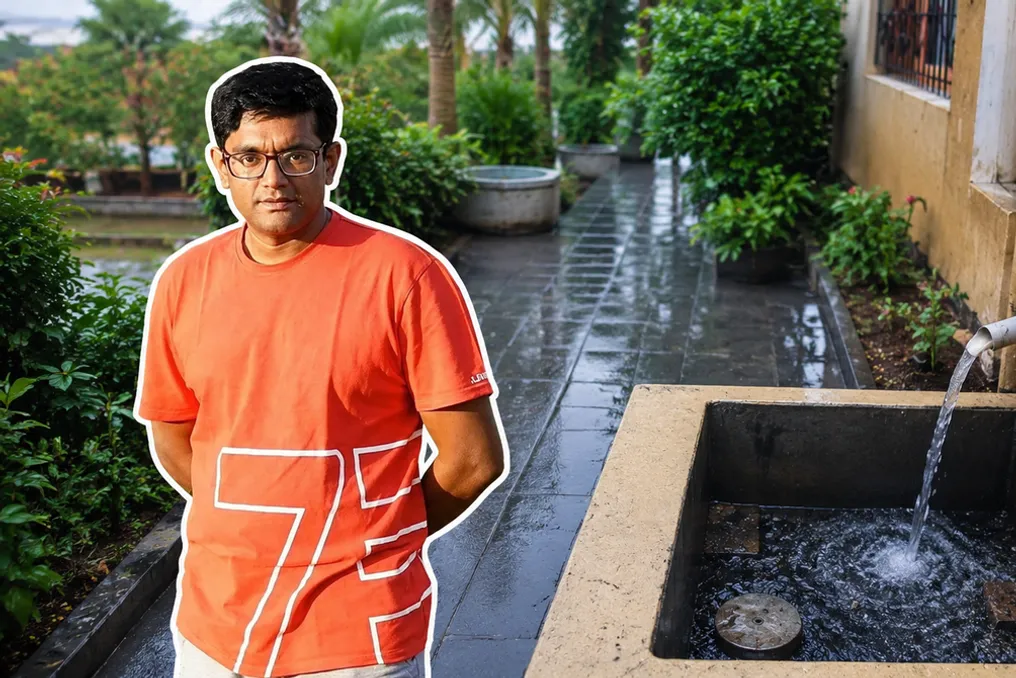
A Mumbai resident, Chetan Surendji, developed and installed a rainwater harvesting and well replenishment system that not only solved water quality issues in his home but also helped restore water reserves for his neighbors.
Water Supply Problems
In Chetan Surendji's area, there was initially one well serving three houses. However, as the number of residential buildings grew, so did the number of wells. Initially, the wells were 30 feet deep, but over time, they reached 80–100 feet.
Despite his house having a deep well (100 feet), residents faced water shortages in the summer. Chetan, who works for a multinational company, notes that water drawn from shallow wells tasted good, whereas with increasing depth, the water became brackish. Furthermore, the low water quality often led to plumbing damage.
Solving the Problem with Rainwater
In search of a solution, Chetan decided to install a rainwater harvesting and well replenishment system. His research showed that reducing water salinity is possible by collecting rainwater and raising the groundwater level. Since the house is 50 years old, installing the system required minimal changes to the structure.
He connected his house roof to a 30-foot well via a pipe so that rainwater would flow directly into it. Additionally, he built a percolation pit where water from the roof collected to replenish the groundwater. He also connected the condenser output pipe from the air conditioner to this pit, transferring about 25–30 liters of water daily during the summer after filtration.
System Expansion and Ecology
Furthermore, Chetan directed two pipelines to an undeveloped plot next to the house so that the rainwater would enter the ground instead of the drainage system. He emphasized that since most garden water is used to replenish groundwater, the use of chemicals is strictly prohibited to prevent contamination of groundwater reserves.
Installing the system did not require significant financial expenditure, as Chetan used pipes and fittings already present in his house. He mentioned that due to water scarcity, the old well had become unusable, but after installing the water collection system, even the old well began to refill year-round, and the problem of water salinity was also eliminated.
Benefit to Community and Nature
The restoration of groundwater thanks to Chetan's initiative benefited not only his family but also his neighbors, whose two wells were replenished. Residents rely on the municipality only for drinking water, while their other needs are covered by these two wells. Moreover, his efforts contributed to the revival of nearby springs that had dried up due to active construction in the vicinity. Now, streams of crystal-clear water can be seen there.
Chetan's house also features an extensive garden where he grows various fruits such as papaya, coconut, mango, mulberry, jamun, chestnut, squamosa, and papaya. Among the flowering plants are Spanish cherry, six varieties of jasmine, Raat Rani, hibiscus, Indian rose, vinca, gardenia, aboli, peony, anthurium, balsam, and marigolds. Vegetables, including Mangalore cucumber, chili pepper, beans, and others, are also cultivated. Thanks to Chetan's innovations, all these plants receive sufficient moisture even in hot weather.
Chetan's terrace resembles a mini-forest with various climbing plants. Papaya is the main attraction of the garden. This green area was initially created to provide natural shade protection for the building, protecting the upper floor and the structure itself from intense summer heat. Chetan believes that rainwater is the best source of water and urges its careful conservation, advising to store roof runoff in a small reservoir if significant funds cannot be spent.