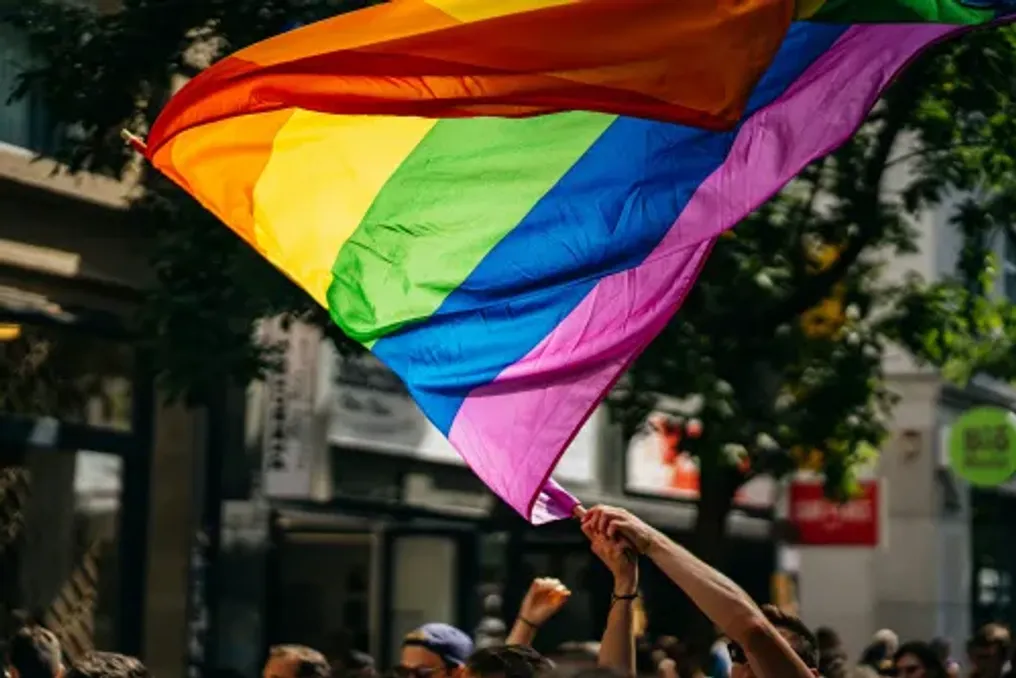
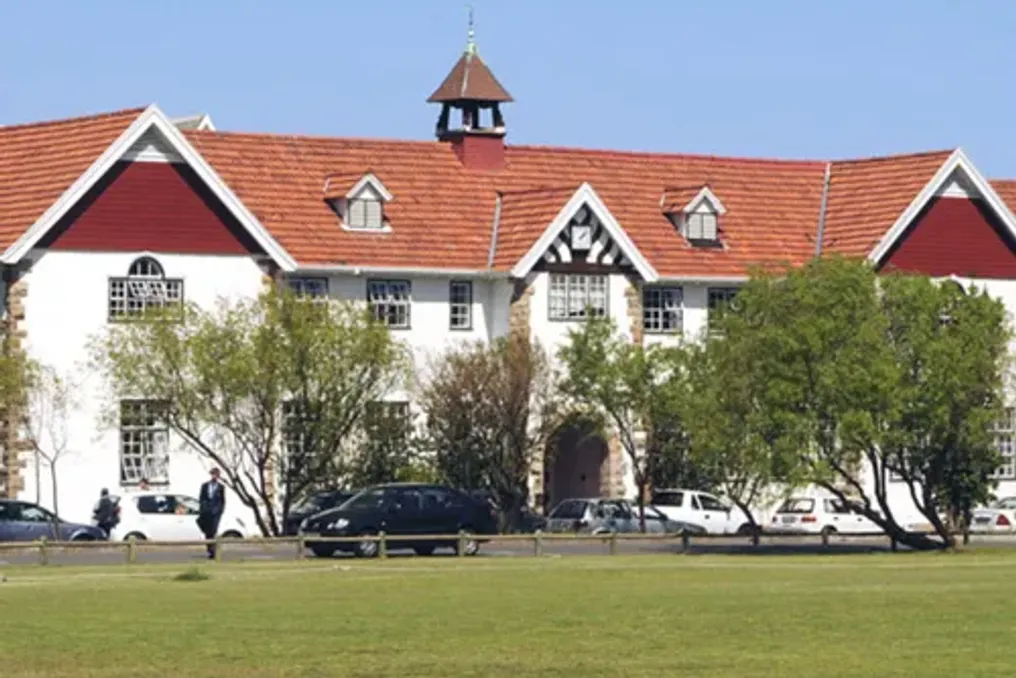
In the context of South Africa's evolving society, a conflict between tradition and inclusivity principles is being discussed regarding whether the Pride flag should be displayed at Bishops College for several days a year.
The Context of the College Dispute
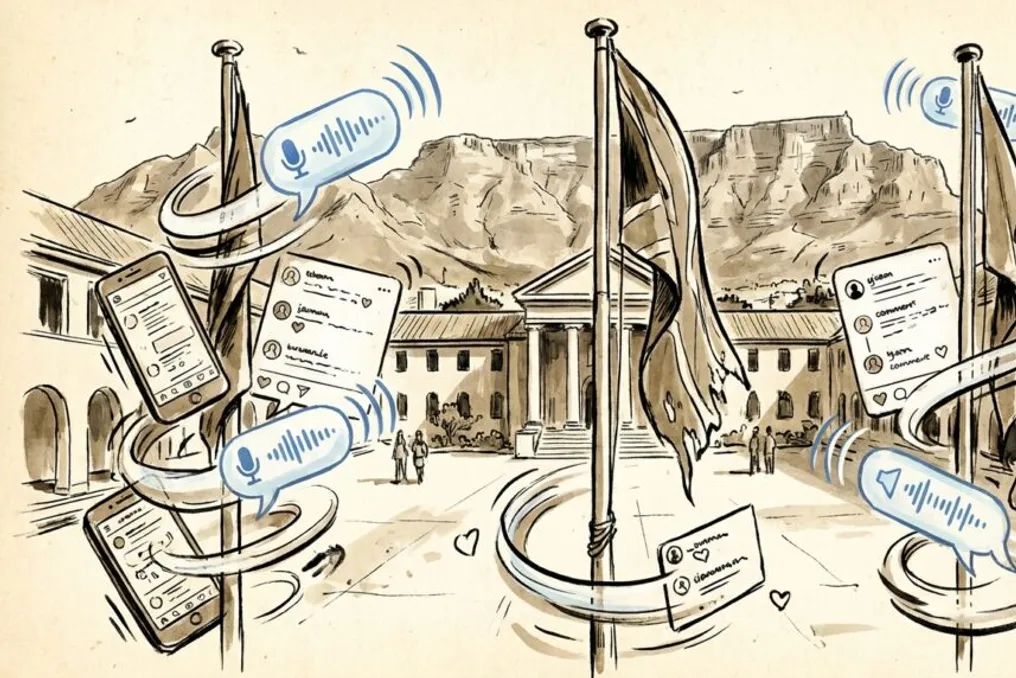
Bishops College, like much of South Africa, faces another contentious issue that seems impossible to resolve. The school uses three flags: the national flag, the school flag, and a third flag that rotates between the St George's flag and various flags reflecting issues that Bishops believes should prompt boys to think.
In 2021, the Bishops Pride club was established, an initiative proposed by the graduating class of 2020 as part of a memorandum presented to the school during the Black Lives Matter protests. The college and school leadership immediately supported this initiative.
Positions of the Parties
However, in subsequent years, the Student Representative Forum (SRF) voted against raising the Pride flag. Despite numerous votes against the flag and letters requesting action from the school, Bishops continues to fly it two days a year during Pride Week. As expected, many who disapprove of the flag feel unheard.
This year, a group of Old Delvers (ODs) approached the school asking for a neutral policy regarding flags, specifically highlighting the Pride flag as controversial and thus a serious impediment to unity within the Bishops community. A week later, Rob Hersov, a Bishops parent, published an open letter on the topic in BizCommunity, advocating for organizational neutrality at Bishops.
The Father's Opinion
As a father at Bishops, initially hearing the proposed solution regarding the controversy surrounding the Pride flag, the author of the letter felt disgust and anger. Like any concerned parent supporting pride, he voiced his opinion in a group chat for fathers. To his surprise, he encountered a mixed reaction: one faction supported the Pride flag (the Progressives Team), while the other advocated for no flags at all (the Unity Team).
The Unity Team promotes the idea of organizational neutrality, citing a global Pew Research Center survey which showed that only 55% of South Africans accept homosexuality, arguing that flying the Pride flag falsely represents the collective opinion of the community. Their argument is based on social consensus and conflict avoidance.
The Progressives Team advocates for the explicit inclusion of LGBTQ+ members, given that these individuals have historically faced bullying and marginalization at Bishops and similar schools. By actively and publicly marking Bishops with the Pride flag, the school signals to the boys that they are safe. All their arguments are primarily based on protecting the homosexual minority, which has historically been vulnerable.
Historical Context of Changes
South Africa previously dealt with similar statistics accompanied by the discomfort felt by the Unity Team. In 1991, when the author was seven years old, he was forbidden from calling his favorite snack by its actual name—[N-word] ball. He was told to call it a 'black candy,' which seemed like unnecessary complication to him. In 1995, during the famous Rugby World Cup, one year after the adoption of the new South African flag, the author recalls people carrying the old South African flag to matches. For some, it was rebellion; for others, it was simply heritage, and criticizing it seemed like an attack on innocent things.
Thirty years later, all of the above is difficult to understand. What seemed trivial then now appears as an expression of human dignity. It is hard to believe that we ever tried to protect a [N-word] ball or a flag representing the 'Bad Old Days.' This is what causes discomfort in the Unity Team versus Progressives Team saga. Part of what we are proud of or consider trivial can one day seem unthinkable. We do not know if the Pride flag will become the new flag of 1994 or the one to be reviewed next. 'Unity' is timeless, but 'Progress' demands constant discomfort, reevaluation, and, in most cases, final acceptance.
Risks and International Experience
From a marketing perspective, the Unity Team was associated with being branded by the pride movement without consent. Nevertheless, although the flag sparked internal debate from the start, over six years it attracted little external attention, and it cannot be proven that it caused Bishops any legal reputational damage.
In a country whose Constitution enjoys international respect for protecting gay rights, news that the school will stop flying the Pride flag for any reason would be sensational. Even a strong statement from Bishops about 'organizational neutrality' would be interpreted through the lens of toxic masculinity, as Anton Taylor has already done in his Instagram post. The author believes that removing the flag would create significant reputational risk for Bishops.
He argues that any strategist would advise keeping the flag. If the message of the Pride flag is that 'you have nothing to hide,' then removing that message after six years tells the boy that it was directed in the opposite direction. The Unity Team does not mean that it should imply 'you should be ashamed,' but one cannot remove a symbol without implying its opposite.
Similarly, 'it would be bad to stop' is not equivalent to 'it is right to continue,' but of the two possible paths, only one can worsen the situation. Beyond the concerns of the Unity Team, there are international examples of successful resolution to this situation. Eton, perhaps the world's most prestigious boys' school, supports an established society for its gays and lesbians with an annual pride symposium fully supported by the headmaster. Students at Westminster School also run a Pride Society. Furthermore, the Pride Society notes that the school 'does not always feel' welcoming to young queer boys. Many such schools have chosen this path rather than being forced into it.
Evolution of Acceptance in England
The acceptance of gay men in England has progressed from 'fiercely contested' to 'unremarkable' in the most traditional schools. And this progress happened very quickly, far beyond schools. Back in the 60s, being gay in England was illegal, with discretionary sentences ranging from two years to life imprisonment. The most famous case was Alan Turing in 1952, who brilliantly cracked the code of the Nazi Enigma machine, tipping the war in the West's favor. Britain, while grateful for Alan's contribution, could not ignore his relationship with a man and condemned him for gross indecency, sentencing him to a suspended sentence conditional on chemical castration. Queen Elizabeth pardoned him in 2013—a year after his centenary and 59 years after his suicide.
We have come a long way from chemical castration both internationally and at home. However, not everything is perfect. While the Progressives Team expects the arc to bend and the resistors to lose, the Unity Team expects that once this journey begins, there is no end. For most of the time, both are right. Now that gay rights are normalized, the question has changed. Instead of 'Am I gay?' boys and girls now ask: 'Am I a boy?' And the cycle continues.
Examples of Support and Scientific Data
Neighboring Anglican boys' schools, St Andrew's and St John's, have also begun flying this flag. The director of St Andrew's, Tom Hamilton, addressed the same issue in a letter to his community back in 2003, concluding with Desmond Tutu—a former visitor to Bishops—on the note that 'there are no strangers. Everyone is welcome... men, women, gays, heterosexuals, everyone, everyone, everyone. We all belong to this family, this human family.'
Bishops, like most schools, has flown flags for various causes for years. In its July bulletin, the Bishops director listed the flags currently flown on that rotating third pole, at the appropriate times: '16 Days of Activism,' 'Africa Day,' 'Anti-Racism,' 'Springbok,' 'Breast Cancer Awareness,' 'Gender-Based Violence,' 'International Day of Persons with Disabilities,' 'Movember,' 'Pride,' 'World AIDS Day,' 'World Mental Health Day.' Over these years, among all these flags, no principle of institutional neutrality has been found. No letters. No petitions. No appeals.
Bishops has flown flags opposing racism, gender-based violence, and even breast cancer, and the community lived under all this without a management crisis. If the objection truly related to the institution's stance on controversial issues, the anti-racism flag should have caused such a dispute long ago. On constitutional grounds, this is an identical case.
Some may argue that homosexuality is a different matter, but being gay is not a choice, nor is it a habit that a school can encourage or suppress. A study by Hanna, published in the journal Science in 2019, was the largest in history on this matter, covering nearly half a million people. It did not find a single 'gay gene' but confirmed that sexual orientation is shaped by multiple interacting genes alongside other biological factors, none of which are chosen by a person. This is not a marginal finding. The American Psychological Association asserts that sexual orientation is not a choice that can be changed at will, and is likely the result of a complex interplay of biological, cognitive, and environmental factors formed in early life. Homosexuality cannot be predicted, taught, or refuted in anyone. A boy does not decide to be gay the way he decides to be left-handed, tall, or black.
The reason the author brings this up is that the Unity Team claims that flying the Pride flag is taking a position as if 'gay' is something to believe or not to believe. Being gay is an unchosen fact about a person, present in every population that has ever existed, in any country, regardless of whether that country celebrated it or imprisoned people for it.
In all boys' schools in South Africa, few issues are as controversial as race and sexuality. In 2023, a shocking incident of internal racial discrimination occurred at Rondebosch Boys High School (300 meters from Bishops). A Stonewall's UK School Report showed that approximately two-thirds of LGBTQ students experienced homophobic bullying, and homophobic language ('that's so gay,' 'you are so gay') is almost ubiquitous in schools. Surveys in the style of US GLSEN report similar high rates of homophobic remarks.
This is why our Constitution includes sexual orientation in the equality clause alongside race. Both race and sexual orientation have been used for millennia as grounds for treating a person unfavorably. Thus, the Pride flag does not take sides. It tells the boy that what he did not choose, and for which he might be punished elsewhere, is not something he needs to hide here. He can be proud of who he is, regardless of anything.
The fact that only 55% of South Africans accept homosexuality means we are far from living and breathing the Constitution, not that we should stop openly defending a minority carrying this genetic expression. If we went back to the 1900s, we would see similar or worse acceptance rates for Black people. And what a tragedy it would be today if everyone maintained neutrality.