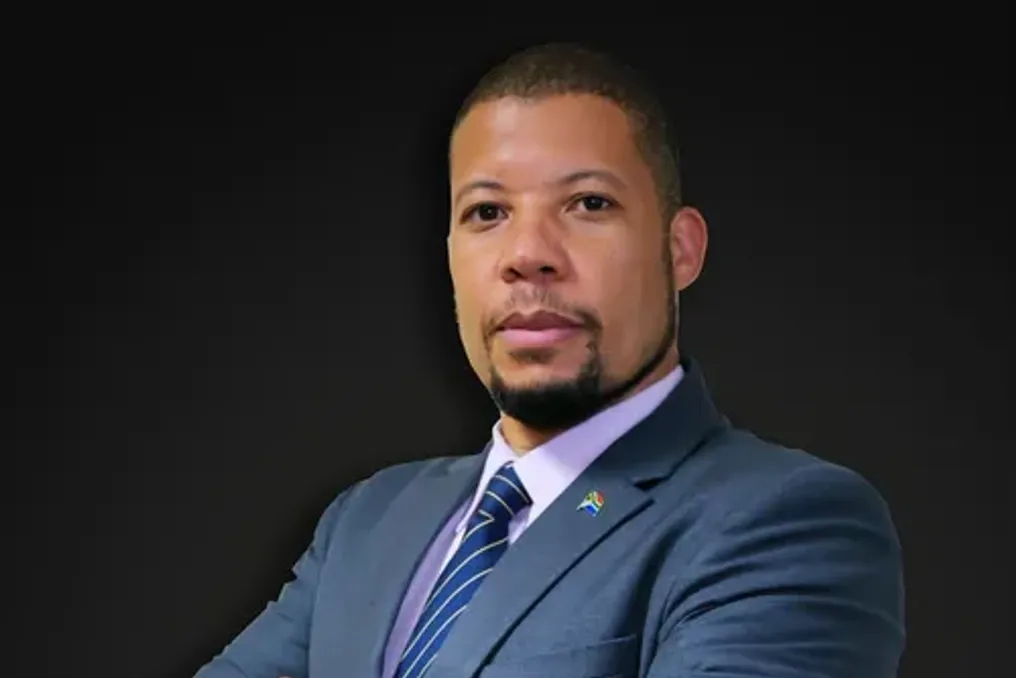
Some conclusions are better left in the draft. A few weeks ago, the author analyzed a significant period in Innocent Abojie's life and the involvement of the African Finance Corporation (AFC) in this process, viewing it as a moment of sovereignty that is easily oversimplified.
Differences in Interpretation of Events
However, Abojie offered a different interpretation. In comments on LinkedIn, he pointed out to the author a 25-minute conversation with Tage Kene-Okafor during the AA4 Accelerate Africa Demo Day on May 30, 2026. After watching this chat, the author realized that it is difficult to understand Abojie unequivocally, as he plays multiple roles simultaneously.
Abojie's Multifaceted Role
He serves as a General Partner (GP) of the fund, acts as a business angel, represented the interests of LPs, and became an advisor shaping policy, similar to a senior statesman. This wide range of activities allows him to move between different concepts and beliefs without losing focus. The author admits that viewing him through a single lens can lead to erroneous conclusions.
Analysis of Investment Deals
The first observation is that Abojie is correct regarding the question he answered. The author initially interpreted the roots of Lightrock Africa Fund II in Liechtenstein as evidence that African founders do not need international flights to attract capital. However, from the perspective of one of the fund's main sponsors, this is a reverse interpretation. AFC, being an African institution, acts as an anchor in Lightrock Africa II, as noted by Lightrock's CEO, who welcomed this commitment. Thus, the old European institution accepts African institutional funds as its cornerstone.
Nevertheless, this is not the only way to look at the situation. For a growth-stage founder raising funds from the fund, what matters more is not so much that they are an LP anchor, but the checkbook they receive. This checkbook is issued by a management company based in London with roots in Liechtenstein, which has decision-making power and a stake, regardless of who originally funded the fund.
Abojie's Stance on Venture Capital
The author also shares thoughts on Abojie personally. In his previous work, he questioned whether Abojie's advisory role in the new Africa Employment Fund served the interests of Future Africa, thereby softening the criticism of venture capital as a relevant asset class for Africa. The conversation he pointed out largely dispelled the author's concerns about Abojie's intentions.
When asked if his warning about the need to revise venture valuations before 2022, given market changes, applied to Future Africa, he answered affirmatively. A fund manager who publicly weakens their own instrument does not seem to be protecting their fund (or their pride) at all costs. The author highly values his willingness to openly share his GP strategy, speak frankly about the difficulties faced by African tech venture capital in capital repatriation, and admit that even his fund is not immune to emerging market shifts.
Questions on Fund Allocation
Nonetheless, observing, some points remain ambiguous. AFC provided Lightrock with $25 million and Future Africa with $15 million. The larger initial check was given to an internationally focused manager, and the smaller one to a local one. There are non-obvious reasons for this: a longer track record, a less risky hypothesis, or the fact that such funds absorb more capital per commitment. Nevertheless, it remains a question: why was the larger commitment directed to a manager whose ownership and control are furthest from home?
Furthermore, the question arises about who supports the anchor. AFC is sometimes perceived as a sovereign instrument, but it is a multilateral institution: African central banks, financial institutions, and private investors participate in its shareholder registry, with the Central Bank of Nigeria being the largest holder. AFC raises most of its capital on international debt markets, including dollar Eurobonds, which must maintain an investment rating from S&P and Moody's. The capital that AFC supports Lightrock is itself partially raised on external markets and rated by external agencies. AFC reduces risks for Lightrock. It can be argued that global markets reduce risks for AFC.
Sovereignty vs. Agency
The author's view is that perfect financial sovereignty is a myth everywhere. What is real and worth fighting for is agency. Rare instances of self-determination that benefit the country, which external interests alone probably would not achieve, deserve to be registered as progress. The author doubts that this is the conclusion Abojie wanted to draw from this publication.
Paradigm Shift in the Economy
This conversation is less about one deal than about the paradigm shift that, according to Abojie, the ecosystem should adopt. He describes how the digital economy was first based on talent, and now it is based on intelligence, leading to a revaluation of almost everything that was previously supported. His argument is built on three stages: first, steam provided Europe with industrialization on a large scale; then, manufacturing gave China the same; and finally, intelligence at scale is Africa's turn, which is cheaper here because the continent is young and has almost zero know-how that can be disrupted.
This leads to Abojie's view on jobs. He views work as a function of productivity, not charity. If a young African is given the same AI tools as a Stanford graduate, cost will decide the rest. This is an attractive argument, and the most important point for further reflection is his assertion that the model still works on a price differential.
Evolution of Venture Business
He acknowledges that African founders were once a cheaper destination for global capital. However, the new approach points to the same price advantage in global intellectual work. The working mechanism of opportunity conversion remains the same, although it uses something new. As for whether this gap persists as markets mature and how long it will last, the author does not provide an answer.
Nevertheless, the path his own firm is taking is telling. It seems Future Africa is moving away from trendy applications to become infrastructure for founders, talent, payments, and regulatory channels, rather than just issuing checks. He presents this as the maturation of venture capital. It resembles Venture Studio 2.0 or 3.0.
The picture of venture capital under pressure, which the author painted in January, aligns well with Abojie's sentiments. Undoubtedly, many funds are under pressure and resort to various portfolio consolidation tactics to show sponsors results for 2022. It was insightful to hear from such a well-known fund manager as Abojie about this pressure from the inside, and to learn about his decision to rebuild the firm instead of defending his metrics or trying to save some imaginary notion of how venture capital should work in Africa.
In the end, the author is left with fewer verdicts than at the beginning, which seems appropriate. Abojie tested his viewpoint, softened suspicions about his motives that the author might have leaned towards, and presented an argument with which he partially agrees and will patiently wait for time to test.
Nevertheless, the question of sovereignty arises again upon deeper consideration. The productivity argument is based on a price gap that may or may not last long enough to bring dividends to those who bet entirely on it. And the builder (of enterprise/ecosystem) that could be considered to be defending its territory turns out to be the one dismantling (and restructuring) parts of it in front of everyone.