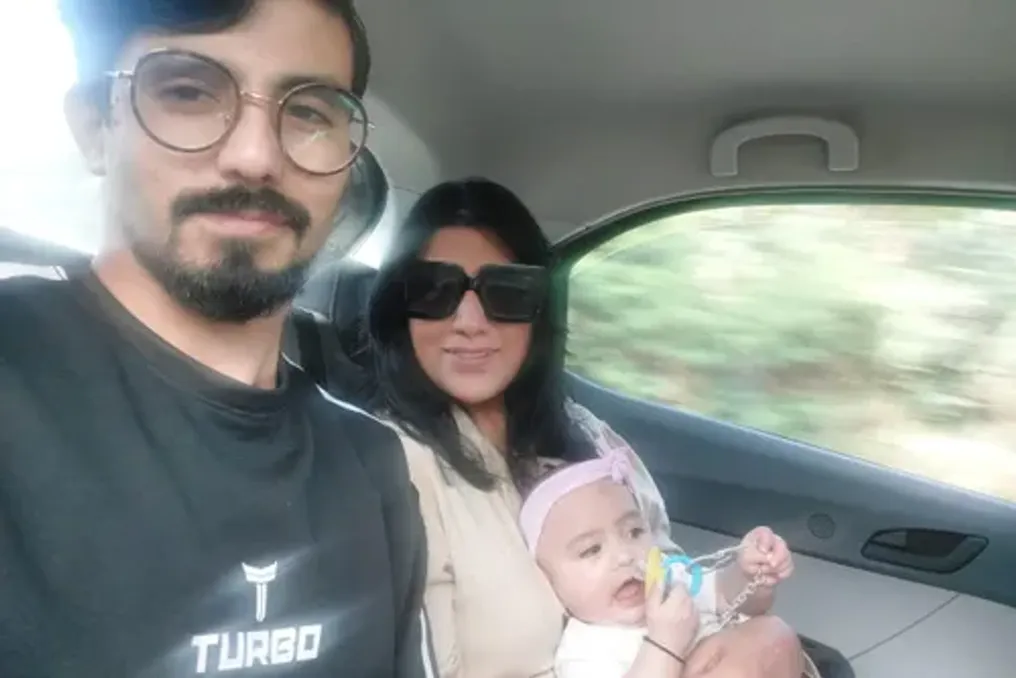
A mother from Durban shared her extremely difficult three-week experience of obtaining a passport for her seven-month-old daughter, who was born in Pakistan. She stated that she was constantly refused and ignored by the immigration department.
A mother from Durban shared her extremely difficult three-week experience of obtaining a passport for her seven-month-old daughter, who was born in Pakistan. She stated that she was constantly refused and ignored by the immigration department.
Rezwana Rishad Sher, a South African citizen, recounted marrying Malik Omar Sher, a Pakistani citizen. They lived in Pakistan until she returned to South Africa in March of this year. During her pregnancy, she experienced discomfort, and her husband, who is a doctor, advised her to move to Pakistan for her care. Their daughter, Sarish, was born there.
After the birth of the child, they obtained a Pakistani birth certificate and approached the South African embassy in Pakistan to apply for a Pakistani passport for their daughter. However, they were informed that the process would take time, and if they planned a trip to South Africa, they should obtain a visitor visa, which they secured for themselves and their husband for three months.
Upon arriving in South Africa, they immediately visited the immigration department to register the marriage and obtain the child's birth certificate. This stage proceeded without issues, and she received the document by May. After this, her husband mentioned that he needed to return to Pakistan for work, and she needed to return to work, although he allowed her to return when she was ready.
At the end of June, Sher went to the immigration department on uMgeni Road to submit documents for her daughter's passport. She decided to resolve the matter as she did not know when they could leave again. At the first visit, she clarified the required documentation. Her husband, while abroad, prepared all the necessary paperwork, including forms that were supposed to be filled out at the South African embassy in Pakistan, and also provided notarized consent for the child's passport application.
The embassy sent all documents to the immigration office via email to prevent fraud or corruption. Nevertheless, during a subsequent visit, she was told that the documents were unacceptable because they lacked the necessary stamps in certain sections of the forms that should have been placed at the embassy. Following this, they contacted the embassy, but were informed that the stamp could only be affixed in the applicant's personal presence before a commissioner. Since the child was with her in South Africa, the embassy sent back the document with an explanation on its letterhead as to why they could not affix the stamp. The immigration department staff refused even to consider this explanation, demanding that she return to the embassy. According to Sher, the embassy began to show irritation, even circling the relevant section in red and writing the reason for the inability to stamp it.
Despite her attempts to explain the situation, she was rejected again last week. She noted that she had visited the immigration department five times. She felt growing frustration trying to simultaneously care for her child, carry bags, and deal with paperwork. The employee who supposedly helped her simply said she could not help and that she needed to return to the embassy for the stamp. When she demanded to speak with management, the employee walked away and called security, who escorted her out. Sher felt intense shame.
While outside, one of the security guards, who had previously been kind to her, asked what happened. After she explained the situation to him, he gave her the contact details of the department director. However, this did not bring immediate relief. Subsequently, Sher wrote to the 'Democratic Alliance', the Immigration Department, and the High Commission of Pakistan in South Africa, and also shared her story on TikTok. On Monday, she received a response from the 'Democratic Alliance' stating that they would raise the issue with the Immigration Department. On the same day, she was contacted by an influential businessman who offered assistance, saying he would speak to the director personally. The next day after this, he asked her to come to the department, and she was able to submit the application. Nevertheless, she noted that the interaction with the staff remained very rude.
Sher expressed hope for change, emphasizing that no one should have to go through such an ordeal. She does not deny the diligence of the staff but believes some should realize that they are public servants whose duty is to assist citizens. She added that they should not decide whether or not to help them, and that they must behave professionally and politely, considering that their salaries are funded by citizen taxes.
Immigration, Refugees and Citizenship Canada (IRCC) has announced the suspension of accepting new applications for the Parent and Grandparent Sponsorship Program (PGP). This decision was made to maintain the immigration system, which is described as 'well-managed and sustainable.'
According to IRCC, interest in the PGP continues to exceed the available number of spots. Consequently, no new expressions of interest will be accepted, and no new invitations for applications will be issued until further notice.
The Ministry clarified that the analysis of existing processes is ongoing. It is planned to approve up to 15,000 people for permanent residency under this program by 2026, aligning with the Immigration Levels Plan for 2026–2028.
Currently, approximately 60,500 applications are under review, with an average processing time of about 33 months, which can reach 66 months in the province of Quebec.
The PGP was launched in 2020 when over 200,000 Canadian citizens and permanent residents expressed a desire to sponsor one of their parents or grandparents for permanent residency in Canada. Since then, the Government has annually sent invitations to selected candidates from this initial group to formally submit sponsorship requests.
The announced suspension does not change the goal set in the Government's immigration plan, which is to accept up to 15,000 parents and grandparents in 2027 through existing processes. The immigration plan published in autumn 2025 provides for the entry of 380,000 permanent residents annually between 2026 and 2028, and it has also reduced targets for temporary residents, including international students and workers.
According to government data, approximately 112,900 people received permanent residency in Canada between January and April of this year through various immigration programs.
The immigration department continues to face significant delays in document processing. As of April 30, over 2.1 million applications were under review, more than 922,000 of which exceeded the standard processing times set by the ministry itself.
Nevertheless, Canadian citizens and permanent residents can utilize the 'super visa,' which allows parents and grandparents to stay in Canada for up to five years on a single entry and make multiple trips within a maximum period of 10 years. IRCC also reminded that this visa regime was recently simplified due to changes in income and medical insurance requirements.
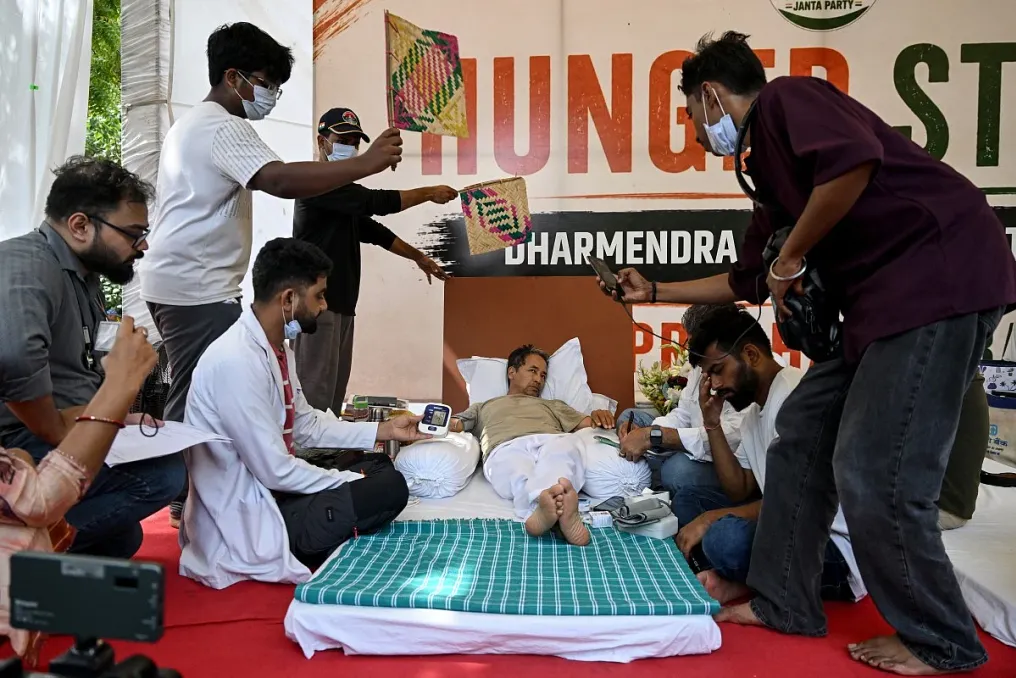
In India's capital, Delhi, social activist Sonam Wangchuk was admitted to the hospital as his condition deteriorated on the twenty-first day of his hunger strike. He initiated this protest demanding the resignation of the federal Minister of Education.
Wangchuk, aged 59, has been on a hunger strike since June 28 in solidarity with the youth party Cockroach Janta Party (CJP). This party demands that Education Minister Dharmendra Pradhan resign due to examination paper leaks in May that affected millions of students.
Delhi police reported that Wangchuk was transferred to the hospital 'for necessary medical care' based on a court order following his health decline on Saturday. Previously, on Thursday, the Delhi High Court had directed authorities to closely monitor his health and intervene if necessary, in response to a petition calling for forced feeding as his health weakened.
Protesters from CJP announced plans to march to the Indian Parliament on July 20, when the monsoon season begins, to press for Pradhan's resignation and push for educational reforms. Wangchuk is a central figure in the CJP protests, lying on a mattress in the middle of the scene while his supporters and visitors move around the protest site.
Last year, the government of Prime Minister Narendra Modi accused Wangchuk of inciting people through provocative statements during violent protests in Ladakh, the federal Himalayan territory to which he belongs. Wangchuk spent about six months in prison before being released in March of this year. He rejected these accusations, stating that the violent protests reflect dissatisfaction with the federal government.
On the third day of his fast, Wangchuk told Reuters that his hunger strike would last six weeks unless he died sooner. He noted: 'But I hope we won't have to go that far. A sensitive government in a democracy listens to the suffering of the people, and I hope they will take action.'
Sonam Wangchuk was removed from Jantkar Mantar on the twenty-first day of the hunger strike and subsequently transported to the hospital. This incident caused unrest.