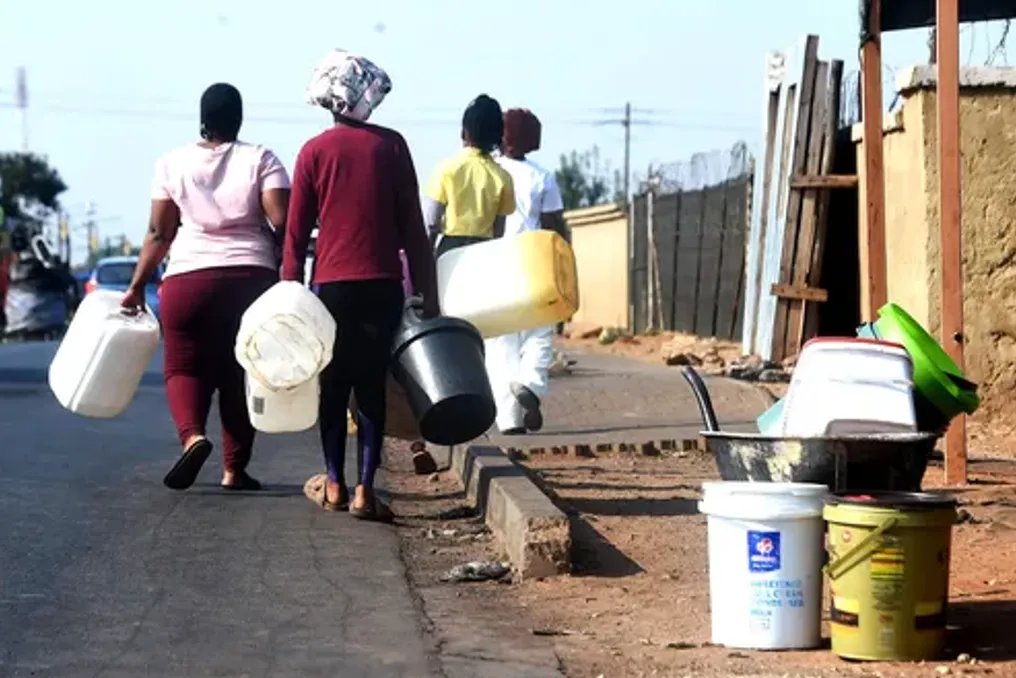
The escalating water crisis in South Africa is attributed not so much to a lack of infrastructure, but rather to weak governance, inefficient financial management, and the inability of municipalities to generate revenue.
Focus on the financial aspect
Shirley Robinson, head of DNA Economics' practice on climate and public economics, emphasized that financing municipal water infrastructure is primarily an issue of municipal finance. She shared these thoughts during the webinar 'Beyond Infrastructure: Financing South Africa's Water Future,' which gathered experts to shift the discussion focus from infrastructure deficit to financial capacity.
Distribution of responsibility in the water sector
The webinar was moderated by Dr. Ochiocheoya Omiunu, a research fellow at the British Academy, and participants included the South African Institute of International Affairs (SAIIA), DNA Economics, GreenCape, and the Infrastructure Finance and Implementation Support Agency (IFISA). Robinson explained that discussions about financing always begin with how the necessary investment will be executed, but they must start with an assessment of the municipality's ability to sustain long-term infrastructure investments.
She clarified that the country's water supply system consists of several interconnected components. The national government is responsible for strategic water infrastructure, including dams and main pumping schemes, which are designed and operated by water boards. Municipalities, on the other hand, are responsible for the infrastructure that directly provides water and sanitation services to end consumers.
Systemic nature of the problem
According to Robinson, each part of the water sector has its own institutional duties, risk profiles, and financing. She stated that financing municipal water infrastructure is fundamentally a municipal finance problem, but more deeply, it is a systemic problem. In her words, funding failures rarely occur due to a lack of capital; they arise because the institutional conditions necessary to absorb, manage, and maintain these investments have not been created.
The expert noted that the success or failure of projects depends not on isolated factors, but on the functioning of planning, budgeting, revenue collection, procurement, asset management, and governance systems. When these systems operate effectively, finances can flow; otherwise, a market failure occurs, and even well-designed projects face difficulties attracting funding.
Barriers to securing funds
Robinson added that the main obstacle to financing municipal water infrastructure is not the availability of capital, but the financial health and institutional capacity of the municipality or sponsor to plan, finance, procure, operate, maintain, and upgrade this infrastructure over the next twenty to thirty years.
She also drew attention to the National Treasury's recent decision to temporarily suspend 'Fair Share' transfers for July for 69 municipalities, which serves as a reminder of the direct link between municipal financial management, institutional trust, service delivery, and willingness to invest. This creates a paradox: despite the acute need for significant investment to restore aging assets, reduce water losses, expand services, and increase climate resilience, many municipalities are simultaneously experiencing decline, revenue collection problems, growing debt obligations, weak liquidity, outdated infrastructure, and limited fiscal capacity. Paradoxically, municipalities with the greatest infrastructure needs are often the least able to attract funding.
Expert views on creditworthiness
Robinson stressed that a project's attractiveness for financing is a characteristic of the environment in which the investment takes place, not an inherent characteristic of the financial instrument itself. She noted that building financially sustainable institutions, reliable management systems, and well-prepared projects begins long before a municipality approaches a lender.
Raldo Kruger, a technical specialist at GreenCape for green finance and the water sector, added that any discussion of municipal creditworthiness must begin with an analysis of the current state of investments and highlighting historical underfunding of infrastructure and the huge need to accelerate investment, especially in the context of increasing climate resilience. He reported that municipalities lose about 35% of the water entering the system due to leaks and losses, which in 2019 was equivalent to a loss of about 10 billion rand in revenue for municipalities across the country.
Kruger defined creditworthiness as the confidence of capital providers that their investments are safe and that they will be able to earn a return. He pointed out that key factors depend on management, revenue management, and expenditure management, all three pillars resting on good governance, leadership, and future planning. Without creditworthiness, municipalities will face serious difficulties in stimulating economic growth through infrastructure investment.