Local South African rooibos tea is preparing for a flight to the International Space Station in October as part of an innovative project. According to the South African Rooibos Council (SARC), this initiative involves exposing local seeds to microgravity and cosmic radiation to study life support systems outside of Earth.
Studying the Impact of Space on Crops
After returning, the seeds will be planted by students from Parkland College and seven schools in the Western Cape alongside control seeds to analyze their germination, growth, and yield. The ultimate goal of this significant experiment is to help solve important agricultural cultivation problems on Earth while simultaneously increasing youth interest in advanced space science.
SARC Director, Douwe de Villiers, stated that the council is expanding its traditional focus on local public health research to study the influence of cosmic radiation and microgravity on this crop. He specified that students will become active partners in the project, tracking seed growth and resilience parallel to ground control crops. The project aims to address current commercial cultivation and yield challenges for local farmers, as well as stimulating youth interest in Science, Technology, Engineering, and Mathematics (STEM).
De Villiers expressed hope that among the young participants, 'a spark will ignite, prompting them to delve deeper into science, technology, engineering, and mathematics.'
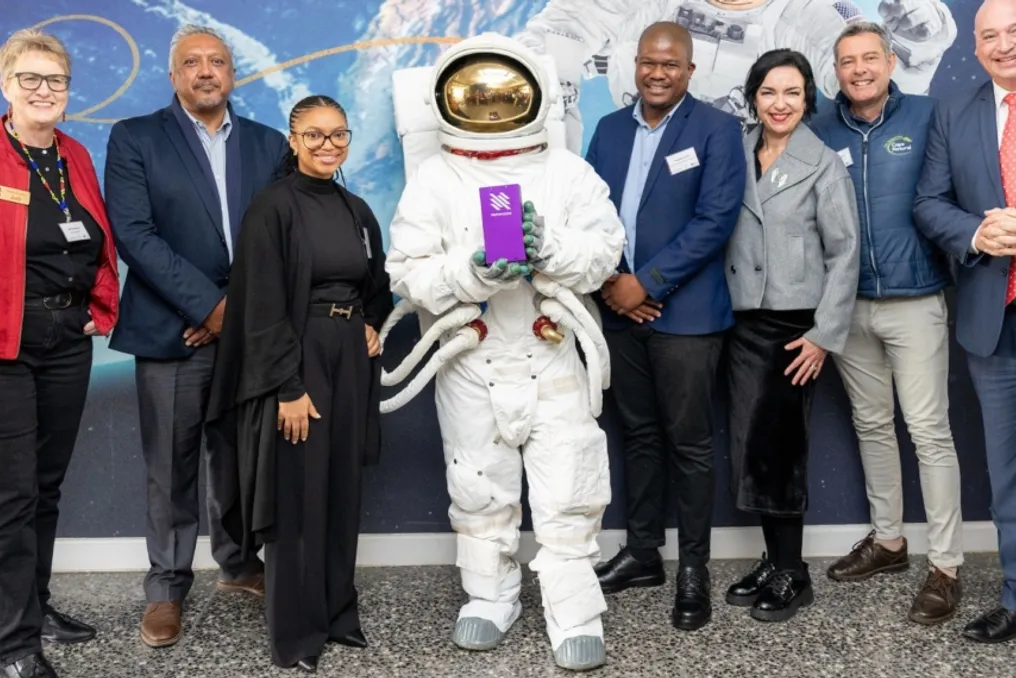
During the launch event, Dr. Kelebogile Gaselakhwa, a postdoctoral researcher at the South African Astronomical Observatory (SAAO) at the University of Cape Town (UCT), urged students to draw inspiration from the journey of this crop.
Inspiration Through Scientific Achievements
Gaselakhwa stated: 'Being rooted deep in the earth and soaring high into the sky, right into space, is a message I want all of you to keep in your hearts.' Speaking about her own journey from Kimberley to becoming an astronomer, she emphasized that South Africa's global scientific facilities, such as the MeerKAT radio telescope, demonstrate the country's global leadership in science. She encouraged students to pursue careers in STEM and use the rooibos experiment to expand their own ambitions.
Gaselakhwa added that 'the seeds are going into space, but the seeds of inspiration we hope to sow in each of you today will help broaden your imagination,' urging students to remain unique and true to their identity while pursuing their dreams.
Involvement of Government and Educational Bodies
The South African National Space Agency (Sansa) supported the project to strengthen local skills development and innovation. Tandile Wuntu, Head of Sansa's Science Engagement Department in Germinus, noted that this initiative creates vital opportunities for youth entering STEM fields. He stressed that 'space science is becoming increasingly integrated into areas affecting daily life, from communication to environmental monitoring.'
Wuntu also pointed out that such projects demonstrate the importance of collaboration between industry, government, academia, and the scientific sector to build a strong pipeline of future scientists, engineers, and researchers. MaxIQ Space facilitates the delivery of this scientific program directly into classrooms by developing an extended STEM education curriculum that introduces students to space science, plant biology, and sustainable agriculture.
Judy Sandrock from MaxIQ Space stated that the initiative's goal is to strengthen access to authentic scientific learning. She noted that the project's value lies in giving students exposure to real-world scientific research processes related to space science, providing a structured opportunity to develop scientific thinking, data analysis skills, and understanding of practical experimentation.
Expanding Participation and Advice for Youth
To increase national participation, students across South Africa are invited to participate in designing the official 'Rooibos in Space' mission badge in July and August, thereby extending the project's reach beyond the primary participating schools. Bertram Loriston, Deputy Director of Curriculum Management and Assessment for the Western Cape Education Department, strongly urged young people to seize every opportunity. Loriston recalled his own experience working at CERN in Geneva, where scientific experiments and data management broadened his horizons. Despite the difficulties of this scientific path, he ultimately chose teaching to inspire curiosity in youth, praising teachers for providing students with opportunities that open doors beyond the classroom. His advice was simple and resolute: 'When an opportunity knocks, you must dance. Take it.'
Applying this advice is Chloe Kosi, a Grade 10 student from Khanyville High School, who said this initiative has already taught her how curiosity can unlock major career and academic opportunities. For Kosi, sending a local South African plant into space is a proud achievement that will help gain international recognition for the country's scientific research.