The social network X has introduced new guidelines to penalize accounts that use copied content from viral posts. These changes aim to redirect revenue generated by plagiarized publications to the original creators.
The social network X has introduced new guidelines to penalize accounts that use copied content from viral posts. These changes aim to redirect revenue generated by plagiarized publications to the original creators.
Nikita Bier, the network's product chief, announced the updates on the platform this Thursday, July 16. X will start employing an advanced version of Grok, the artificial intelligence developed by Elon Musk's xAI, to locate duplicated texts and videos with greater speed and accuracy.
The company claims that the new mechanism can identify stolen material three times faster and more accurately compared to the previous version. Bier clarified that the system will maintain copy recognition even if the user adds watermarks or other visual elements to the content.
Repeated use of copied content can result in the user's exclusion from the monetization program. Detection will also extend to phrases that are constantly repeated on the network, such as the cited example of 'Twitter is like the smoking area of the internet.' Recently, about 1.5 million stolen posts were identified, and X projects that the new rules will allow directing over US$1 million—equivalent to approximately R$5.5 million in direct conversion—that would previously have gone to infringing accounts.
Furthermore, X will strengthen the fight against so-called 'engagement baits,' which are posts created solely to artificially inflate a account's revenue through likes, replies, or shares. Profiles caught posting this type of message three times may be removed from the monetization program.
Bier mentioned examples of such promises, such as 'I will follow back everyone who replies to this post.' After the third infraction, the case may be forwarded to the X policy team for potential account suspension. He reported that on that day alone, about 4 thousand accounts were removed from the monetization program.
In a continuous effort to encourage the creation of original material, Bier had already signaled the intention to decrease the dissemination of recycled posts by presenting new video editing features on the platform. This is because many of the content that goes viral on X are, in fact, copies of existing material on other social networks, such as Instagram and Facebook, especially in the video segment.
In parallel, X has strengthened its blocking and bot identification mechanisms. Bier recalled that in April, the platform's security tools were able to detect and suspend, on average, 208 automated accounts per minute, as reported by TechCrunch.
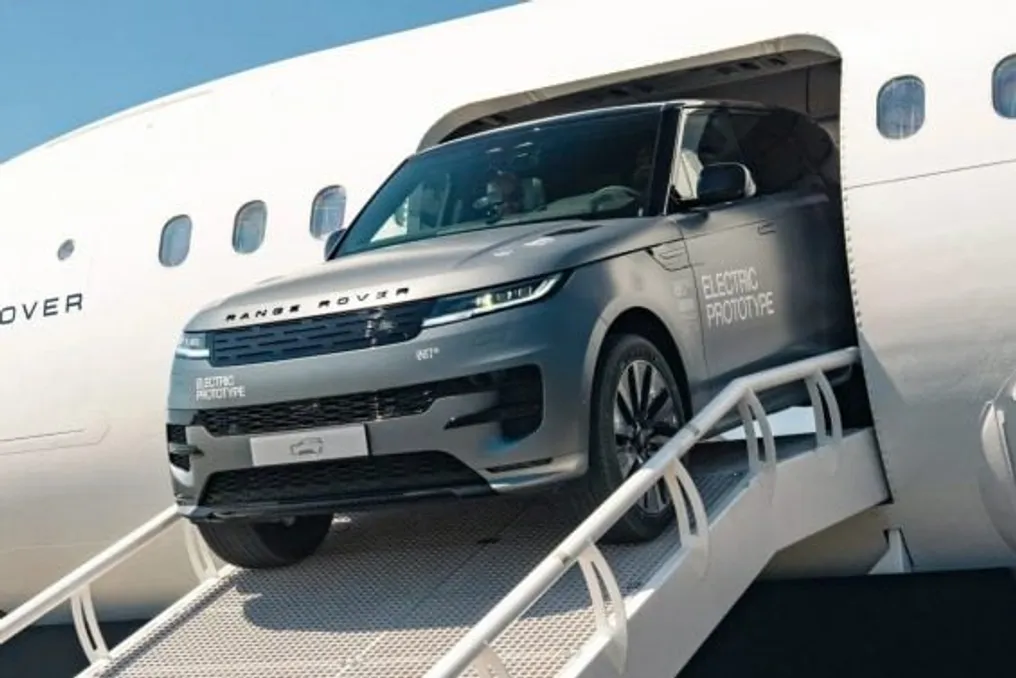
Land Rover presented the first prototypes of the Range Rover Sport Electric, the new all-electric version of the sports SUV, during an exclusive event held at the renowned Goodwood Festival of Speed in England late last week.
To illustrate that the change in powertrain does not compromise the model's performance, the brand conducted an impressive demonstration: one of the prototypes was lifted from an airplane fuselage, another climbed stairs, and the third was dropped onto the track.
The message conveyed by this staging is clear: the electric model can handle the same challenges as its combustion counterparts, and these latter will remain available in the catalog. Land Rover assured that the Range Rover Sport line will maintain the offering of six-cylinder gasoline engines, diesel, the gasoline V8 with mild hybrid system, and the plug-in hybrid (PHEV) versions, thus maintaining the variety of the current generation.
The complete technical specifications of the vehicle are expected to be released only at the end of 2026, possibly along with the line's facelift. Camouflaged prototypes have already been seen at the Nürburgring circuit, featuring renewed bumpers and headlights.
Although the exact power of the electric system has not yet been revealed by the manufacturer, it is expected to resemble the Range Rover Electric, which features two motors (one per axle), all-wheel drive, and approximately 550 hp, surpassing many twin-turbo V8s. According to Land Rover, the SUV incorporates a set of technologies that increase power and torque, complemented by a new chassis tuning and synthesized sound, promising an immersive driving experience on any surface.
Martin Limpert, CEO of Range Rover, stated that the electric version will redefine the high-performance SUV segment once it is launched in dealerships later this year. The prototypes shown at Goodwood still used the bodywork of the Range Rover Sport current since 2022, differentiated only by new alloy wheels and specific courtesy lights for the electric version. Land Rover itself acknowledges that the production version will have a distinct design from what was displayed, and the mid-life update will also bring technological innovations to the cabin interior.
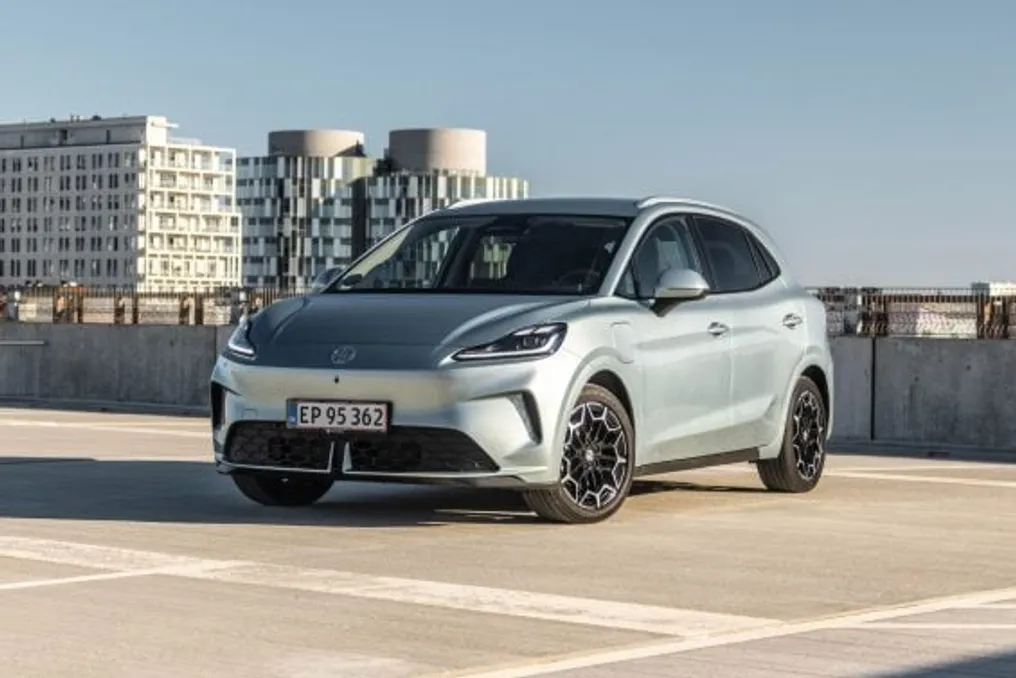
The MG4 Urban, the new proposal from the MG brand, which has English origins but is controlled by the Chinese company Saic, is confirmed to be produced in Ceará. This compact electric hatchback aims to popularize the brand in the Brazilian market and arrives with notable features, including a range that can reach 358 km.
The vehicle will be offered in two trim levels, Comfort and Luxury, with price ranges set between R$ 129,990 and R$ 149,990. The most sophisticated version offers two battery options: one with a 43 kWh capacity and another with 54 kWh.
Although it is a new generation, the previous MG4 model will continue to be sold, but in a higher category. One of the significant changes in the MG4 Urban was the replacement of rear-wheel drive with front-wheel drive, as well as the adoption of a torsion beam rear suspension. In terms of dimensions, the MG4 Urban measures 4.39 m in length, 1.84 m in width, 1.55 m in height, and has a wheelbase of 2.75 m. Its trunk accommodates 477 liters, considering the measurement up to the compartment roof.
The powertrain of the MG4 Urban is efficient, similar to the Geely EX2, optimizing battery energy usage. With the 43 kWh battery, it achieves up to 299 km in the Inmetro cycle. The version equipped with the 54 kWh battery offers a maximum range of 358 km in the same cycle. This latter configuration guarantees the greatest range among electric hatchbacks available in Brazil, surpassing models such as BYD Dolphin Mini, BYD Dolphin SE, and Geely EX2, as well as the GAC Aion UT Premium.
Another strong point of the model is its ability to accept up to 87 kW of power for fast charging, putting it on par with the new GAC Aion UT and above its competitors. This allows the charge from 10% to 80% to be completed in just 30 minutes.
The car uses a three-phase permanent magnet synchronous motor, whose specifications vary depending on the selected battery. The 43 kWh versions (both Comfort and Luxury) deliver 150 hp (110 kW) of power and 25.5 kgfm of torque, with a 0 to 100 km/h acceleration time of 9.6 seconds. The 54 kWh version (Luxury) has 160 hp (118 kW) and maintains the 25.5 kgfm of torque, slightly reducing the acceleration time to 9.5 seconds. Both powertrains reach a top speed of 160 km/h.
The new generation employs front-wheel drive (FWD) and a torsion beam rear suspension, complemented by MacPherson struts at the front. The braking systems are discs on all four wheels. Detailed measurements include 4,395 mm in length, 1,842 mm in width, 1,549 mm in height, and 2,744 mm in wheelbase. The ground clearance is 117 mm. The trunk varies between 568 liters (43 kWh version) and 577 liters (54 kWh version), and both have an additional space of 98 liters under the floor. The curb weight is 1,422 kg for the 43 kWh version and 1,504 kg for the 54 kWh version.
The entry-level version, MG4 Urban Comfort 43 kWh, comes equipped with many standard features, focusing on active safety. It includes projector headlights, daytime running lights, and LED taillights, an integrated rear spoiler, a roof rack, and 16-inch steel wheels. Inside, there is a 7-inch digital panel, automatic digital air conditioning with rear vents, leather-wrapped steering wheel with height and depth adjustment, One-Pedal mode, V2L technology, and keyless entry.
Regarding safety, the ADAS package covers 6 airbags (front, side, and curtain), adaptive cruise control (ACC), autonomous emergency braking (FCA), lane keeping assist (LKA) and emergency lane keeping (ELK), traffic jam assist (TJA), in addition to a rear parking sensor and rearview camera with dynamic lines. Technologically, it features a 12.8-inch multimedia center with wireless connectivity for Apple CarPlay and Android Auto, as well as a native Wi-Fi router and USB-C ports.
The top-of-the-line versions, MG4 Urban Luxury (available with 43 kWh or 54 kWh batteries), elevate the level of comfort and technology. They replace hubcaps with 17-inch alloy wheels (205/50 tires) and add tinted rear windows. Inside, occupants enjoy heated front seats and a 6-position electric adjustment for the driver's seat, customizable LED interior lighting with 64 colors, and wireless inductive charging.
Additionally, the Luxury receives advanced safety features such as a 360° view camera (SVM), blind spot detection (BSD), rear cross-traffic alert (RCTA), rear collision warning (RCW), lane change assist (LCA), and door opening warning (DOW).
MG Motor establishes specific contractual warranties for the MG4 Urban. The general vehicle warranty is 7 years or 150,000 km, while the battery has an 8-year or 160,000 km coverage. It is important to note that, for commercial use purposes, such as taxis and ride-sharing apps, the vehicle warranty is reduced to 3 years or 150,000 km.
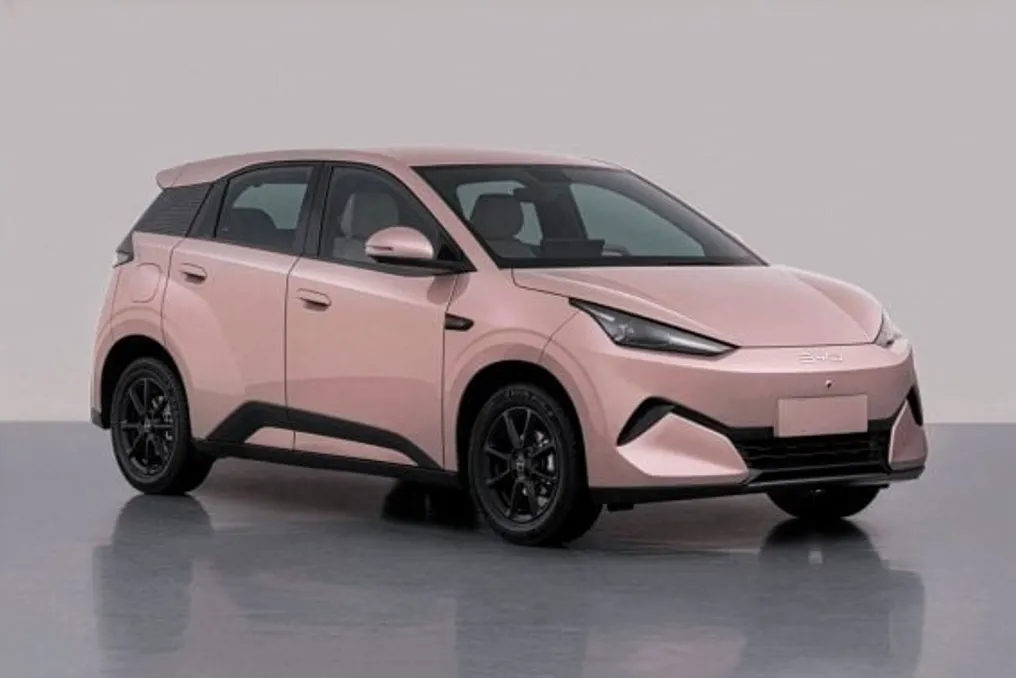
BYD has confirmed the introduction of the new version of the Dolphin Mini in Brazil, an electric hatchback currently sold in China under the name Seagull, which will undergo substantial modifications. This announcement came after China's Ministry of Industry and Information Technology (MIIT) released the first specifications and images of the vehicle on the 10th.
The arrival of this new generation is scheduled for starting in 2028, but the brand's strategy does not foresee replacing the current model. The current Dolphin Mini will remain available as an entry-level option, manufactured in Camaçari (BA) and maintaining its position as the best-selling electric vehicle in the national retail market, having registered over 14 thousand units sold in the first quarter of 2026 alone.
The unprecedented version will be positioned at a higher level in the portfolio, targeting consumers willing to invest more in performance, technology, and space. The changes go beyond aesthetics, as the new hatchback will have a length of 4.20 meters, a width of 1.81 meters, and a wheelbase of 2.65 meters. This represents an increase of 42.5 cm in length and 15 cm in wheelbase compared to the current model, causing it to cease being classified as subcompact to adopt the dimensions of a compact car.
This new size rivals the Geely EX2, a competitor that has been challenging for BYD, given that both share the same 2.65 m wheelbase, but BYD surpasses the competitor by about seven centimeters in length. The power gain is also notable: the mechanical unit will start generating 129 hp, up from the current 75 hp and surpassing the 116 hp of the EX2 sold in Brazil. Furthermore, the approved top speed will increase from 130 km/h to 150 km/h. Aesthetically, the design will be renewed and more fluid, and BYD will choose not to keep the connected taillights, one of its distinctive features.
Although the car's arrival is confirmed, crucial information remains confidential, including range, battery capacity, and the price intended for the Brazilian market. Chinese records only indicate the use of LFP (lithium iron phosphate) chemistry, which is the same used in BYD's Blade family. With its new size, the Dolphin Mini will approach the specifications of the standard Dolphin, which is immediately above in the product line and available in versions such as GS and Plus. This move reinforces the automaker's intention to occupy various price ranges and sizes in the segment. The Seagull, sold as Dolphin Surf in Europe and Atto 1 in parts of Asia, has established itself as one of BYD's best-selling cars globally since its launch in 2023.